Most advertisers are still catching up to how quietly Google has rewired visual advertising. The arrival of Gemini insights inside Demand Gen ads is far from a minor update — it's a structural change to how campaigns get built, measured, and scaled.
Two things are worth understanding before we get into it. First, Demand Gen campaigns are absorbing legacy Google Display Network inventory, making them the new home for visual and social-style advertising across YouTube, Discover, Gmail, and beyond. Second, Gemini's role inside Google Ads is not a separate product or chatbot. It's an AI layer embedded directly into campaign creation and optimization workflows, which changes what advertisers actually do day to day.
If you're managing paid media, this shift affects your budget allocation, your creative process, and how you measure results. Here's what's actually happening and what it means for your ad campaign strategy.
What Are Demand Gen Ads? And Why the Platform Changed?
Before talking about what Gemini does inside Demand Gen, it helps to understand why Demand Gen exists at all and what happened to the campaigns that came before it.
Why Google Funneled GDN Into Demand Gen
The Google Display Network was built for a different era—one that relied on manual audience targeting, contextual placement, and creative formats never designed for social-style feeds. As user behavior shifted toward short-form video, discovery feeds, and in-stream content, the GDN started feeling dated.
The migration to Demand Gen reflects a broader philosophical shift. Rather than discrete audience targeting, Google is moving toward visual and social demand capture—an approach that needed a purpose-built home rather than incremental patches to an aging system.
That home is Demand Gen, designed specifically for YouTube Shorts, the Discover feed, and Gmail. These are environments where users browse, watch, and explore rather than search with intent. The creative formats, bidding mechanics, and measurement tools are all built around that behavior from the ground up.
For advertisers, the practical implication is straightforward: sticking with legacy Display campaigns isn't a viable long-term strategy. The infrastructure is shifting, and teams that plan ahead will have a cleaner transition than those who wait.
Demand Gen vs. Performance Max: Two Tools With Very Different Jobs
A lot of advertisers lump Demand Gen and Performance Max together because both involve automation and both run across Google surfaces. They do very different things.
Performance Max
Performance Max is omni-channel and conversion-focused. It runs across Search, Shopping, Display, YouTube, Discover, and Gmail simultaneously, with Google's AI determining where the budget goes based on conversion signals. It's designed for advertisers who want to maximize conversions across the full Google ecosystem with minimal placement-level control.
Demand Gen
Demand Gen is visual-first and social-feed-oriented. It's built for reaching audiences who aren't yet in purchase mode, using image and video creative in feed environments. The goal is to generate demand and interest rather than capture existing intent.
Conflating the two leads to poor budget decisions and misaligned creative strategies. A short-form video designed for YouTube Shorts discovery won't serve the same function as a Shopping ad optimized for someone who has already searched for a product. Running both without understanding the distinction means you're likely under-investing in one and over-expecting from the other.
Clearing Up the Gemini Confusion: Chatbot vs. Ad Backend Integration
There's a genuine point of confusion worth clearing up. When people hear "Gemini Ads," some assume it refers to a standalone ad management tool, or that ads now appear inside the Gemini chatbot at gemini.google.com. Neither is accurate.
There's no standalone Gemini Ads Manager. The Gemini integration lives inside the Google Ads interface. When you set up a Demand Gen campaign, Gemini's capabilities surface as recommendations, creative suggestions, and optimization guidance within the standard workflow. It's an AI layer inside the tool you already use.
The Gemini chatbot at gemini.google.com shows no ads. Advertisers who confuse the two will misread where AI influence actually operates, which leads to misplaced expectations about targeting, reach, and creative generation. The practical impact of Gemini insight on your Google Ads campaigns happens at the campaign setup and optimization layer, not through a separate interface.
Gemini's Creative Role: From Asset Uploads to Generative Production
Once you understand the structural context, the more interesting question is what Gemini actually does during campaign creation.
1. Real-Time Recommendations During Setup
Before Gemini's integration, setting up a Demand Gen campaign meant making most decisions manually. You chose creative assets based on what you had available. You selected audience segments based on past experience or instinct. You picked a bidding strategy and hoped the machine learning would sort the rest out after launch.
Gemini now intervenes at the planning stage. During campaign setup, it surfaces suggestions for creative assets, audience segments, and bidding strategies before the campaign goes live. That shift matters more than it might sound.
A campaign that launches with a strong structural foundation learns faster and wastes less budget in the early optimization window. Instead of spending the first two weeks burning spend while the system figures out what works, campaigns start closer to an optimized state because the inputs were stronger from the start.
The recommendations pull from Google's best practices and machine learning signals tied to your business goals and historical performance data. For teams without a dedicated ad strategist, this guidance closes a real gap. For experienced teams, it functions more like a structured checklist that catches things easy to miss during a fast-moving campaign build.
2. Generative Resizing and the End of Manual Asset Production
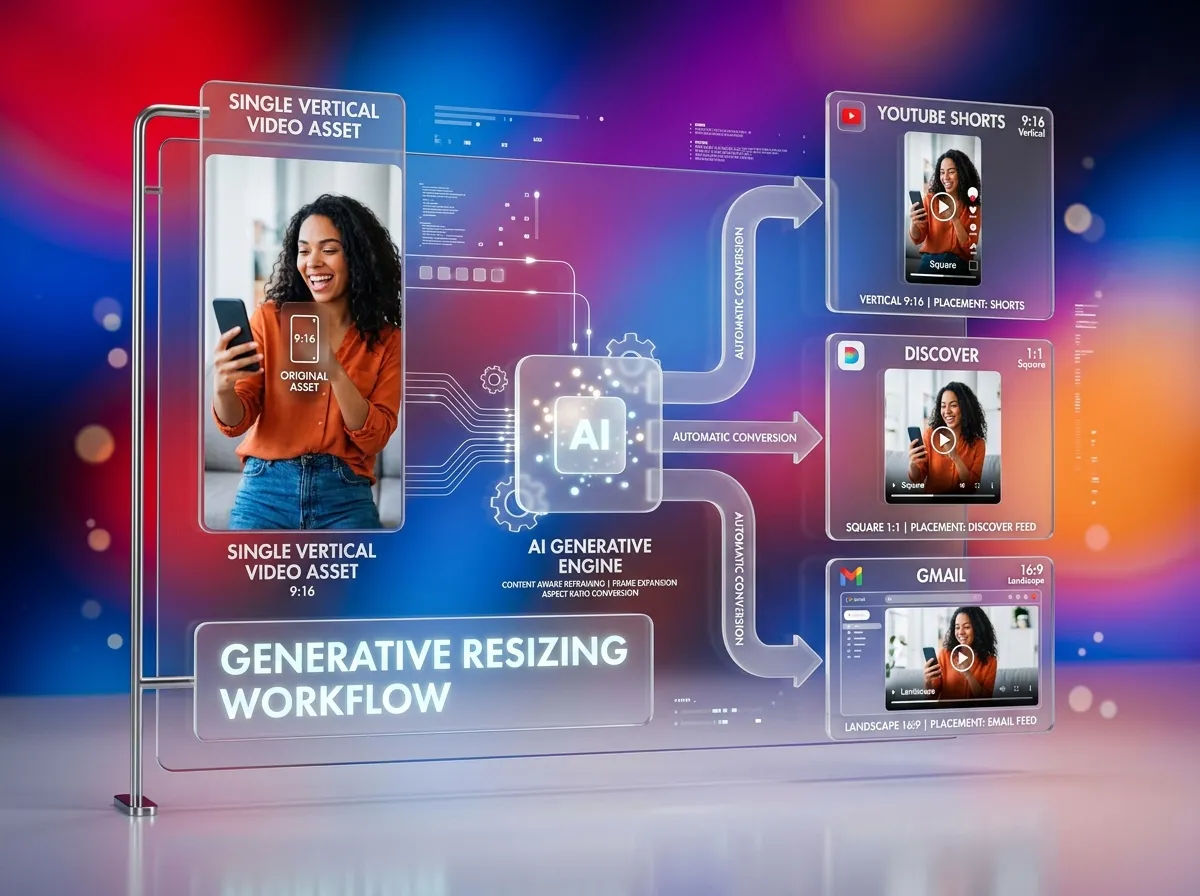
One of the more practical changes is generative resizing. Demand Gen campaigns serve ads across multiple placements, and each placement has different aspect ratio requirements. A vertical 9:16 video for YouTube Shorts doesn't fit a square 1:1 placement without cropping, and cropping usually produces awkward results.
Gemini can now convert creative assets across formats automatically, turning vertical video into square or landscape versions without a separate production pass. For teams running Demand Gen across multiple placements simultaneously, this removes a real bottleneck.
Here's how the creative workflow has changed:
| Workflow Stage | Before Gemini Integration | After Gemini Integration |
|---|---|---|
| Asset selection | Manual, based on available content | AI-suggested assets with performance rationale |
| Format resizing | Manual production or separate design pass | Automated generative resizing across placements |
| Audience selection | Experience-based or historical data review | Real-time AI recommendations during setup |
| Bidding strategy | Marketer-defined pre-launch | AI-guided suggestions tied to campaign goals |
| Campaign optimization | Begins post-launch | Starts at the planning and creation stage |
 ### 3. The Impossible Ad: Using Gemini 2.5 Pro, Veo, and Imagen Together
Google has been positioning what it calls the "Impossible Ad" as a demonstration of what happens when Gemini 2.5 Pro, Veo (video generation), and Imagen (image generation) are used together inside the creative process.
The concept is pretty straightforward: AI tools handle the production work that used to require a full creative team. Veo generates video sequences, Imagen produces static imagery, and Gemini 2.5 Pro connects the creative logic, tying brand inputs to output formats optimized for specific placements.
This doesn't mean human creative direction disappears. What it means is that the production bottleneck between a good idea and a live ad gets significantly smaller. A single creative brief can generate multiple asset variations across formats without multiple rounds of revision. For advertisers testing creative at scale, that's a meaningful change in how fast iteration becomes practical.
Performance Measurement, Product Feeds, and the Agentic Reality Check
Better creative tools and smarter campaign setup only matter if you can measure results accurately. Demand Gen has expanded its measurement capabilities, and understanding them changes how you evaluate ad campaign performance.
Beyond Click Attribution: View-Through Conversions and Missed Opportunity Reporting
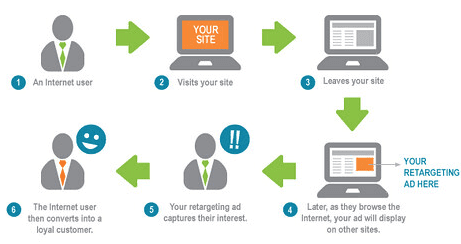
Click attribution made sense when most conversions happened immediately after a click. Discovery-based advertising doesn't work that way. Someone who sees a YouTube Shorts ad might not click, but they search for the product two days later and convert through a different channel. Click attribution assigns zero credit to the ad that started the process.
View-through conversion optimization addresses this by tracking conversions that happen after an ad impression, even without a click. Web-to-app tracking extends this further, bridging the gap between a discovery interaction and a conversion that happens inside a mobile app.
Teams still relying solely on click-based metrics will systematically undervalue what Demand Gen actually contributes. The missed opportunity reporting feature adds another layer, showing where ads could have served but didn't because of budget constraints, bid settings, or creative limitations. This gives advertisers a clearer picture of demand they're leaving on the table.
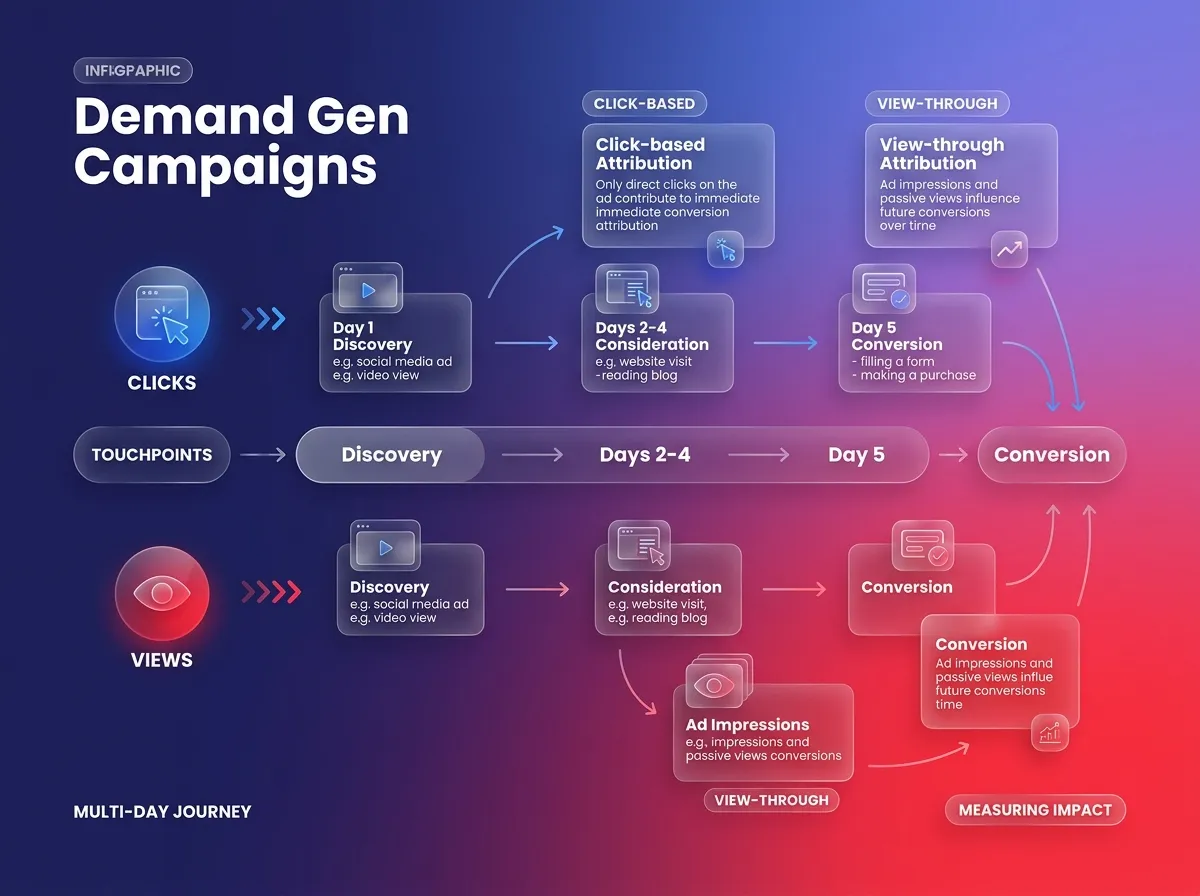 Recalibrating success metrics isn't optional if you want accurate reads on ROI. That means updating how you define a conversion, how you weight assisted conversions in reporting, and how you present campaign results internally.
Product Feeds as Virtual Storefronts Inside Demand Gen
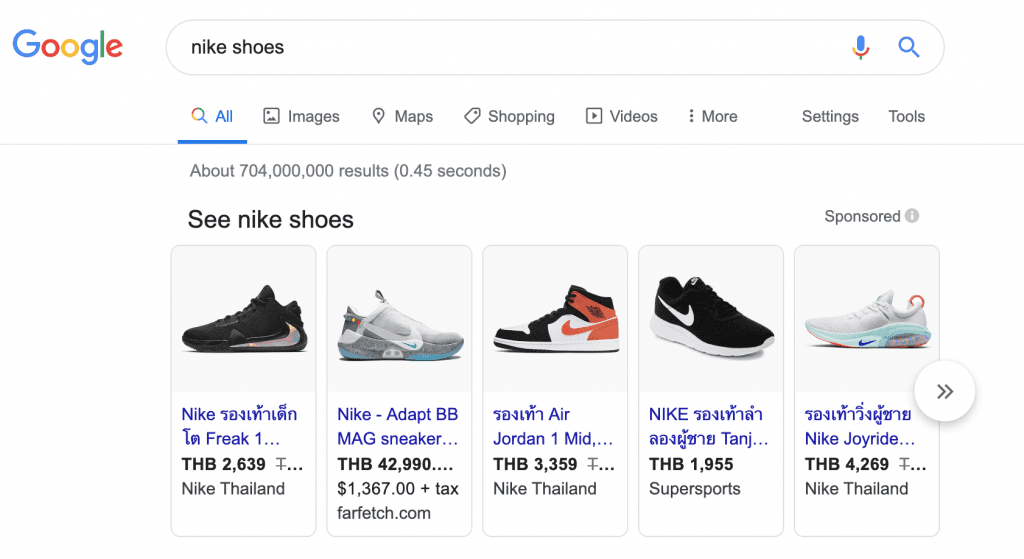
Demand Gen supports product feed integration, turning standard ad units into browsable product displays. Connected feeds surface specific products dynamically based on audience signals, browsing behavior, and inventory data.
For e-commerce advertisers, this means running feed ads that show the exact products a user is most likely to want—rather than generic brand videos that hope to drive traffic. The ad becomes a discovery surface, not just a branding touch.
This also affects creative strategy. Feed-driven campaigns, where product images and prices are dynamically populated, require a different asset approach than static brand campaigns. Both work in Demand Gen, and both interact differently with Gemini's asset recommendations.
Maintaining Human Oversight When AI Steers the Campaign
Gemini's recommendations are strong starting points built on real performance data—but treating them as final answers creates problems.
Brand safety stays a human responsibility. Auto-generated creative can be technically competent but contextually wrong: an AI-generated asset might conflict with brand guidelines, misrepresent a product, or land poorly in context. Hallucination checks aren't optional.
Audience expansion settings also deserve scrutiny. Gemini may recommend expanding beyond your defined segments, which is often reasonable—but for brands with niche positioning or compliance requirements, automatic expansion can cause real problems if nobody reviews it.
The shift toward AI-guided campaign management doesn't reduce the strategist's role. It moves the role toward review, judgment, and quality control. Human decision-making doesn't disappear; it just focuses differently.
Demand Gen and Gemini aren't a future state to prepare for—they're already live inside Google Ads. The advertisers who benefit most will understand the structural changes, update their measurement frameworks, and treat Gemini's guidance as an informed starting point rather than a substitute for strategic thinking.