TL;DR
- Over 60 percent of AI-generated searches end without a single click, and the article separates retrieval, where a page informs an answer, from citation, where the page is named as the source.
- Fan-out query generation splits one question into internal sub-questions, each with its own retrieval pass, so a broadly titled page targeting best CRM software for small businesses can survive none of those passes.
- Semantic atomicity means writing paragraphs that each carry one complete, self-sufficient idea, because RAG systems break documents into chunks, score them for relevance and pass only the best chunks into the model's context window.
- In the citation hierarchy, Reddit threads, YouTube transcripts and community forums feed what a model knows but rarely get a visible attribution link, while high factual density, in-body source attribution, clear authorship signals and schema markup earn the named citation.
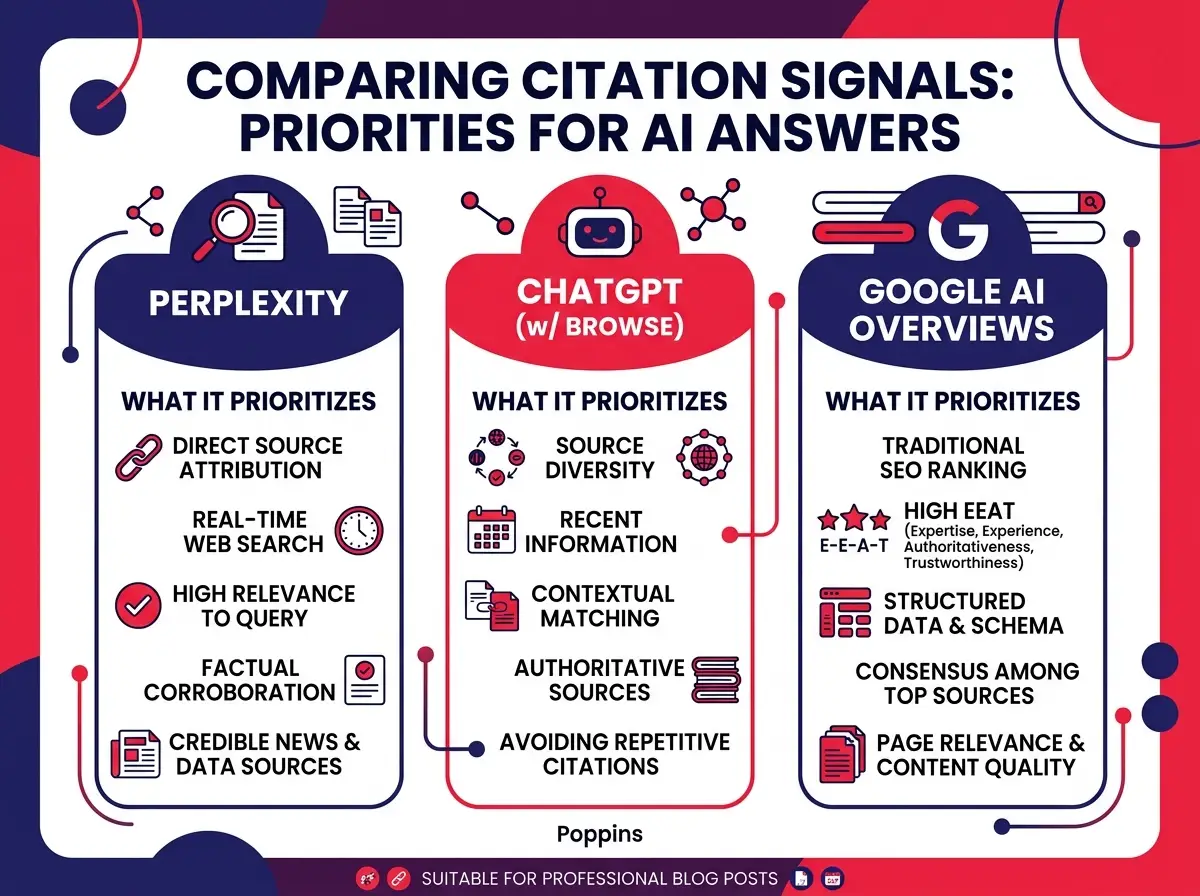
- Platform logic differs: Perplexity favours recency plus community validation, ChatGPT rewards encyclopedic depth with source attribution, and Google AI Overviews lean on traditional index signals such as E-E-A-T, structured headers and schema.
- Retrieval Failure: Why High-ranking Pages Get Ignored by AI Search
- Building Citation-ready Content: From Schema Signals to Platform-specific Tactics
- Measuring what actually matters: AI visibility metrics and no-click reality
Over 60% of AI-generated searches end without a single click, yet brands that understand the difference between being retrieved and being cited are quietly dominating the generated summaries that shape buying decisions. That distinction sounds simple, but it changes everything about how you write, structure, and distribute content.
Here is the problem most SEO teams run into: they treat retrieval and citation as the same thing, which they are not. A page can be crawled, processed, and used to inform an AI model’s response without ever getting a named citation. Meanwhile, a well-structured page from a smaller site can earn repeated mentions across AI Overviews and Perplexity responses simply because it was built to be extracted, not just ranked.
This article breaks down the staged barriers between being found by an AI crawler and being selected as a trusted source. Each stage has its own logic, its own failure modes, and its own fixes.
Retrieval Failure: Why High-ranking Pages Get Ignored by AI Search
Traditional SEO success does not guarantee AI visibility. A page holding a top-three position in Google’s index can be completely skipped during AI retrieval. Understanding why means looking at how large language models actually process queries before returning an answer.
 ### Fan-out Queries
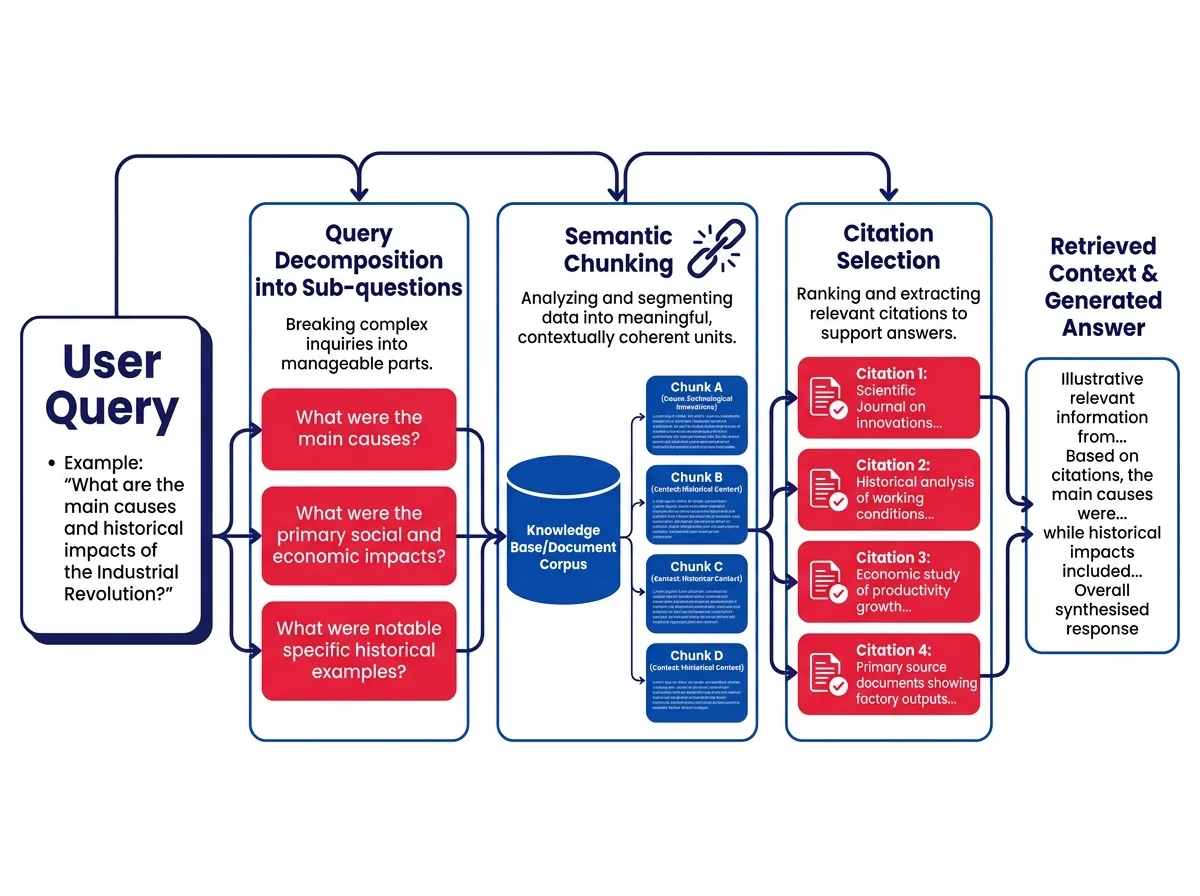
When a user types a question into an AI-powered search tool, the model does not treat it as a single lookup. It breaks that question into multiple internal sub-questions, a process called fan-out query generation. Each sub-question gets its own retrieval pass, pulling chunks of content that best match that specific angle.
This is why your title and URL slug matter more than many SEO teams realize. Say your page targets “best CRM software for small businesses,” but the AI’s internal sub-questions include things like “what CRM integrates with Gmail for small teams” or “CRM pricing tiers under $50 per month.” Your broadly titled page may survive zero of those retrieval passes. The model is not looking for your best-guess keyword. It is matching against precise semantic angles.
For SEO teams, this means auditing content against the sub-questions your target audience is likely to trigger, not just the head term. Tools that surface “People Also Ask” variations and related searches can serve as a rough proxy for fan-out query structure.
Semantic Atomicity
Retrieval-augmented generation (RAG) systems work by breaking documents into chunks, scoring those chunks for relevance, and passing the best chunks into the model’s context window. Narrative prose that buries its main point across multiple paragraphs gets penalized by this process because no single chunk carries enough standalone value.
Semantic atomicity is the practice of writing paragraphs that each contain one complete, self-sufficient idea. Each paragraph should make sense if read in isolation, with no dependency on what came before it.
This is not about dumbing down content. It is about packaging facts and insights in a way that survives the chunking process. A paragraph that opens with a clear claim, supports it with a specific data point or example, and closes with a practical implication is much more likely to be retrieved and passed into a model’s response than one that meanders toward its point. That structure is what gets you into the context window.
Citation Hierarchy
There is a real difference between content that informs an AI model and content that earns a named citation. Reddit threads, YouTube transcripts, and community forums frequently contribute to what a model “knows,” but they rarely receive a visible attribution link in the final output. That kind of content sits at the bottom of the citation hierarchy.
At the top is content with high factual density, explicit source attribution within the body copy, clear authorship signals, and schema markup that helps machines parse the structure. That is what earns the branded citation rather than just contributing to background knowledge.
For AI search and SEO, understanding this retrieval vs. citation distinction is the strategic starting point. Getting retrieved is table stakes. Earning the citation is where brand visibility actually lives.
Building Citation-ready Content: From Schema Signals to Platform-specific Tactics
Once you understand why retrieval fails, the next step is building content that clears the citation threshold. This involves both technical and editorial decisions, and the right approach varies depending on which AI platform you are targeting.
 ### Schema as an Extraction Guide: Moving Beyond Generic Markup to FAQPage and HowTo Types
Generic schema markup tells machines that a page exists and roughly what category it belongs to. Specific schema types like FAQPage, HowTo, and Article go further. They act as extraction guides, making the structure of your content readable to AI parsers in a way that increases the probability of clean retrieval.
FAQPage schema explicitly maps questions to answers. When an AI system encounters that markup, it does not have to guess which part of your page answers a specific query. The answer is pre-packaged for extraction. HowTo schema does the same for step-by-step processes, giving the model a clean sequence that it can surface directly in a generated response.
The practical implication is straightforward: for any content that addresses common questions or walks users through a process, FAQPage and HowTo schema should be treated as standard, not optional.
Platform Differences that Actually Matter: Perplexity vs. ChatGPT vs. Google AI Overviews
A single content approach will underperform across all 3 major AI platforms. Each platform has a distinct citation logic.
| Platform | Primary citation signal | Content format that performs |
|---|---|---|
| Perplexity | Recency + community validation | Fresh, frequently updated pages with community signals |
| ChatGPT | Encyclopedic depth + source attribution | Long-form, well-cited, comprehensive reference content |
| Google AI Overviews | Traditional index signals | Pages with strong E-E-A-T, structured headers, and schema |
Perplexity tends to favor sources that have been recently updated and that carry signals of community trust, such as citations from other publications. ChatGPT rewards content that reads like a reliable reference, with specific facts, clear attributions, and thorough coverage. Google AI Overviews lean heavily on the same trust and authority signals that traditional Google SEO has always valued, including expertise, authoritativeness, and trustworthiness markers.
If you only optimize for one platform, you are leaving a significant share of AI-referred visibility on the table.
Entity Consistency and Citation Drift
Even after earning a citation, keeping it requires ongoing attention. Citation drift happens when AI systems update their knowledge base or adjust retrieval priorities, causing a previously cited page to drop out of generated responses.
The most common reason for drift is entity inconsistency. If your brand name, product names, and key claims are described differently across your own site, your schema, and third-party mentions, AI systems struggle to build a coherent model of who you are. That inconsistency weakens the trust signal over time.
Keeping entity descriptions consistent across every owned channel, and actively managing how third-party publications describe your brand, is a structural defense against citation drift. It is less glamorous than content production, but it matters more than most teams think.
Measuring what actually matters: AI visibility metrics and no-click reality
With zero-click AI responses now dominating a significant share of searches, the old framework of measuring success through direct referral traffic no longer tells the full story. Brands need different KPIs to understand whether their AI search and SEO strategy is working.
Why AI-referred Traffic is a Vanity Metric
Counting click-throughs from AI-generated responses feels like a natural metric, but it is misleading. When a user gets a complete answer from a Perplexity summary or a Google AI Overview, they often do not click through to any source. That does not mean your content failed. It may mean it succeeded so well that the model quoted it directly.
The more telling metric is branded search lift: the increase in direct brand-name queries following AI-generated exposure. When someone sees your brand cited in a generated summary, they frequently do not click in that moment. They search for your brand name later, directly in Google or by typing your URL. That behavior shows up as a lift in branded search volume, and it is a far more accurate signal of whether AI visibility is actually driving business outcomes.
Secondary metrics worth tracking include share of voice in AI-generated summaries for your key topic clusters (trackable through manual audits or emerging AI visibility tools) and direct traffic trends segmented against periods of known AI exposure.
Brand Dominance in Generated Summaries
The practical goal in a zero-click environment is not to get the click. It is to own the mental model. When an AI system repeatedly surfaces your brand as the go-to resource for a specific topic, you are building recognition that converts downstream, through branded searches, direct visits, and word-of-mouth.
This reframes content strategy as brand infrastructure rather than a traffic funnel. A page that earns citation in five thousand AI-generated responses without generating a single direct click may still be responsible for significant pipeline if those exposures are driving branded search lift and direct traffic in the weeks that follow.
Tracking this connection requires tying your AI visibility audits to your branded search trends on a rolling basis. The correlation will not be perfect, but patterns emerge quickly when you are consistently cited in high-volume query categories.
Extending Your Content Strategy to 3rd-party Platforms Where LLMs Source Authority
One of the clearest patterns in how LLMs build their entity knowledge is that off-site content carries disproportionate weight. Third-party placements in trusted publications, expert roundups, and well-curated listicles are not supplementary tactics. They are core infrastructure for how AI systems build trust around a brand.
When your brand is consistently described the same way across sources the model already trusts, including industry publications, review platforms, and expert Q&A sites, the AI develops a more confident entity model for your brand. That confidence translates into more frequent and more prominent citations.
The practical play is to pursue earned and paid placements in publications that already appear in AI-generated responses for your target topics. Advertorials, affiliate-listed placements, and PR-driven earned mentions all contribute, provided the surrounding content is high quality, and the brand description is consistent with how you describe yourself on your own domain.
Consistent messaging across owned and third-party channels is not just a communications best practice. In the context of AI search and SEO, it is a retrieval and citation strategy. Machines learn who you are through repetition across trusted sources, and the brands that control that narrative across the web are the ones that show up when the summary gets written.