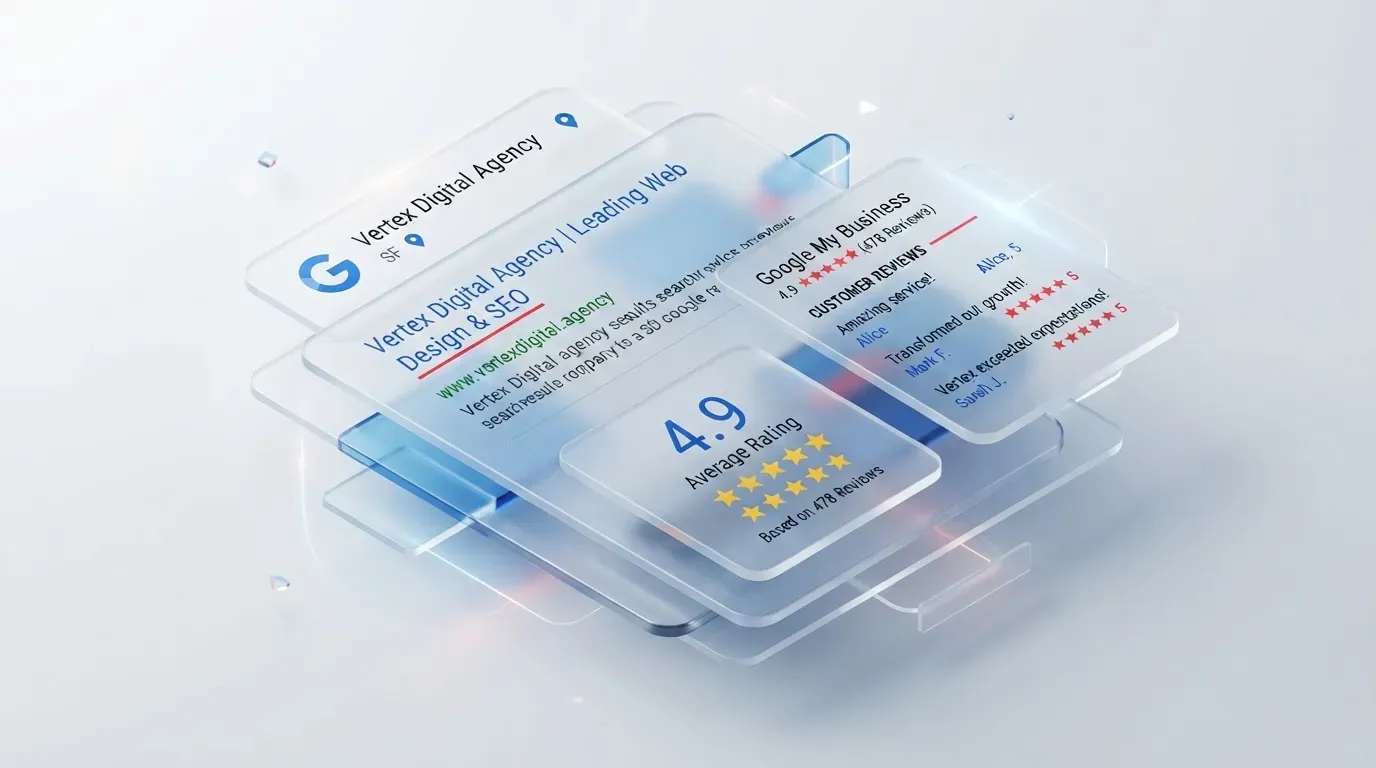
A single unresolved review sitting on Google's first page can cost a company customers, job candidates, and revenue for months before anyone in leadership even notices. It happens quietly. A prospective client searches your company name, sees a two-star complaint from three years ago, and closes the tab without ever contacting sales. Nobody reports that lost deal. It just doesn't happen, and that's exactly the problem.
This is why online reputation has become a core part of digital marketing strategy instead of something you quietly hand off to whoever answers customer support tickets. Search results are now a business's first impression, often long before a website visit or sales call takes place. Business leaders need a structured approach that pulls together search optimization, public relations, and data analysis so they can actively shape what shows up when someone searches their name.
This article walks through what that approach looks like in practice: the case for taking reputation seriously, the specific tactics that keep a brand's search presence clean, and the monitoring systems that catch problems while they're still small.
- The Strategic Role of Online Reputation Management in Digital Marketing
- Five Core Strategies to Build a Resilient Digital Reputation
- Advanced Monitoring, AI Intelligence, and Crisis Mitigation Tactics
The Strategic Role of Online Reputation Management in Digital Marketing
Online reputation management sits at the intersection of three disciplines that used to run in separate lanes: search engine optimization, public relations, and customer experience. All three shape how a company looks online, usually at the same time. SEO decides what content ranks when someone types in a brand name. PR shapes the narrative that outside sources end up publishing. Customer experience decides what people actually say about a company on review sites and social platforms.
Treating these as separate jobs creates gaps. A PR team might land a great feature story, but if nobody built the SEO foundation to support it, that story never makes it to page one. A customer service team might resolve complaints quickly and quietly, but if nobody's tracking sentiment across platforms, the pattern behind those complaints stays invisible until it turns into a real problem.
Real reputation work combines search optimization, digital PR outreach, social listening, and structured customer feedback loops into one coordinated effort. The goal is control over what shows up on the results page, not a passive hope that good work will eventually speak for itself.
Reputation Monitoring vs. Reputation Management
People use these two terms as if they're the same thing. They're not, and the difference matters more than it sounds.
Monitoring is the ongoing, proactive tracking of what's being said about a brand. That includes:
- Setting up alerts for brand mentions across news sites, blogs, and forums
- Tracking sentiment across review platforms like Google, Yelp, and industry-specific sites
- Watching social mentions and tags, including the ones that skip the official hashtag
- Checking search results for branded and product-related keywords on a set schedule
Management is the reactive, strategic layer built on top of that. It includes:
- Responding to a PR crisis with a coordinated statement and follow-up content
- Suppressing outdated or inaccurate negative content through SEO
- Deciding which incoming reviews need a public response versus a private outreach message
- Coordinating legal or platform takedown requests when content breaks the rules
A business that only monitors will see problems coming and still get burned, because seeing isn't the same as acting fast enough. A business that jumps straight into management without steady monitoring underneath it will always be fighting fires instead of catching sparks. Both need to run at once, ideally with someone specific on the marketing or comms team actually owning them.
Why Online Reputation Directly Affects Revenue and Hiring
None of this is theoretical. It shows up in numbers, in three specific places.
1. Conversion rates
Buyers research vendors before they ever pick up the phone, especially in B2B. A prospect who lands on mixed or negative signals on page one is simply less likely to fill out a form or make the call. Even a small cluster of unaddressed negative reviews can quietly drag down conversion on a company's own landing pages, because people cross-check before they commit to anything.
2. Local search rankings
Google's local pack factors in review volume, recency, and average rating when it decides who shows up. A business with a thin, aging review profile will often lose visibility to a competitor with a stronger, fresher review base, whether or not that competitor actually delivers better service. Fair or not, that's how the algorithm reads it.
3. Talent attraction
Candidates check Glassdoor before accepting an offer, sometimes before they even apply. A pattern of unanswered negative employee reviews tells good candidates that leadership doesn't engage with feedback, and that shows up later as higher recruiting costs and slower time-to-hire, especially for roles where candidates have options.
Reputation stopped being a soft metric a while ago. It connects directly to pipeline, to search visibility, and to whether the right people are willing to walk through the door.
4 Core Strategies to Build a Resilient Digital Reputation
Once you accept the strategic case, the next question is what to actually do. Here are the tactics that move the needle, organized around three priorities: owning branded search results, generating reviews the right way, and turning customer feedback into content that reinforces trust.
1. Branded SEO and First-Page Ownership
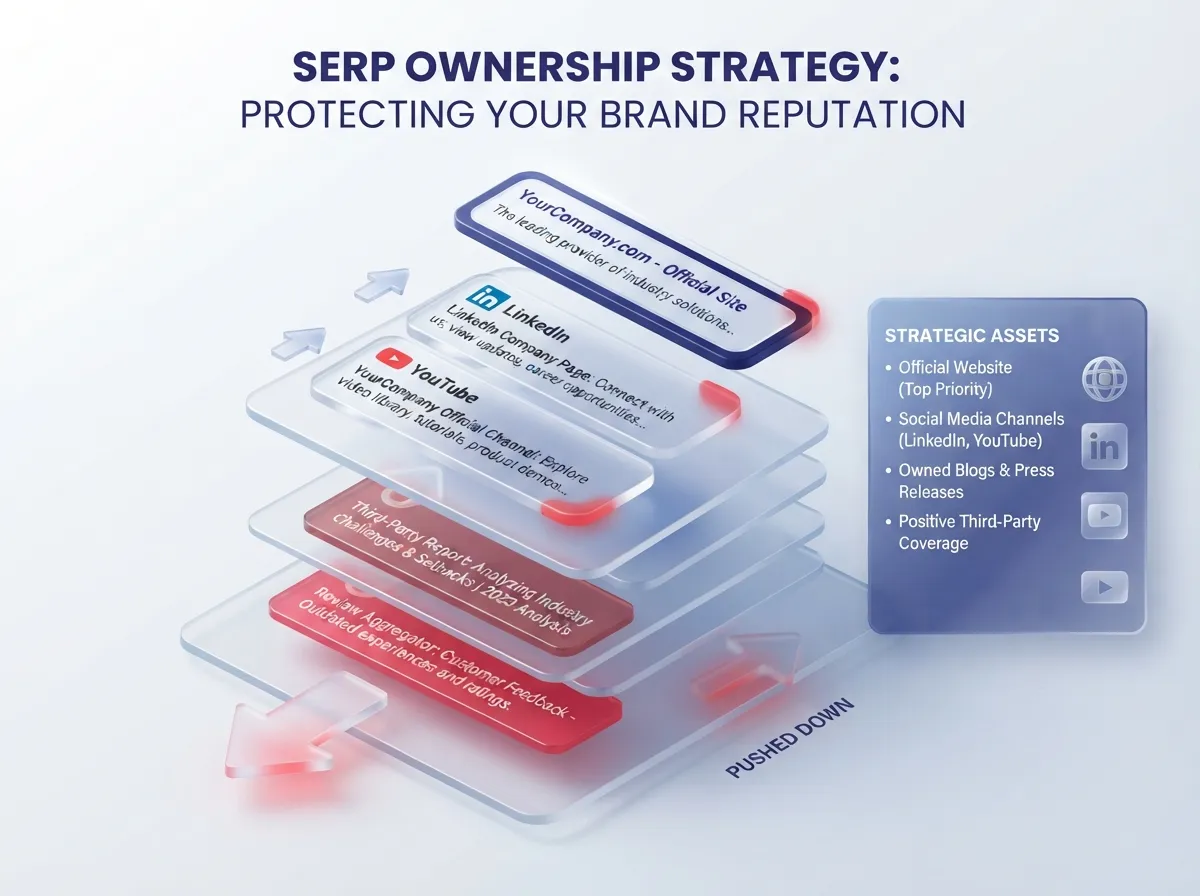
The first-page goal is straightforward: control as many of the ten organic listings as you can when someone searches your company name. Every slot filled by something you own is a slot a negative article or old complaint can't take.
Start with branded keyword targeting. Instead of only chasing generic industry terms, build content around searches like "[Company Name] reviews," "[Company Name] complaints," or "[Company Name] vs [Competitor]." These are exactly the searches unhappy customers, journalists, and curious prospects actually run. Owning that content early keeps outside voices from filling the gap for you.
Prioritize the owned and semi-owned assets Google already trusts:
- Your own website and blog, kept active with fresh, relevant posts
- LinkedIn company pages and executive profiles, which tend to rank surprisingly well for branded searches
- YouTube channels and video content, since video often takes up prominent space on the results page
- Industry directories and press release sites with strong domain authority
Consistency in NAP data (name, address, phone number) matters more than most teams give it credit for. Inconsistent business information across directories confuses search engines and quietly dilutes the ranking strength of listings that would otherwise be pulling their weight. A quarterly audit catches that drift before it turns into a ranking problem.
 ### 2. Ethical Review Generation and Local Search Signals
Review volume and recency feed directly into local search rankings, which makes generating reviews a legitimate SEO tactic and not just a nice customer service habit. The catch is that it has to be done ethically. Google and platforms like Yelp actively penalize manipulation, and getting caught creates a reputation problem far worse than a slow review pipeline ever would.
2 things to avoid:
- Review gating, where a business only asks its happiest customers to leave a public review while quietly routing unhappy ones into a private feedback form. Most platforms consider this a terms of service violation, and if it's discovered, the account penalties can be severe.
- Astroturfing, meaning fake reviews generated through incentives, review farms, or employees posing as customers. Platforms have gotten good at spotting the pattern, and once it's exposed, the trust damage is hard to walk back.
The better approach is building steady, organic review velocity through automated requests sent after every completed transaction or service interaction. Timing actually matters here. A request sent right after a good experience, like a successful support call or a delivery confirmation, tends to get a much better response than a generic reminder email sent once a month.
A steady stream of recent reviews tells Google's local algorithm that a business is active and currently trusted by real customers, which helps with local pack placement against competitors sitting on an older, thinner review base.
3. Turning Customer Feedback into User-Generated Content
Reviews and testimonials do more than move rankings. They function as user-generated content that reinforces trust at nearly every stage of the buyer journey.
When a business systematically collects and republishes strong feedback, it builds something that compounds over time. A glowing Google review becomes a line in a case study. A detailed testimonial becomes a quote in a sales deck. A short video review turns into social content. Each reuse stretches that one piece of positive feedback a little further while saying the same thing in a slightly different way.
This also does something for customer loyalty that's easy to underestimate. Customers who see their own feedback featured and credited tend to stick around and engage more over time. It tells them the company is actually listening, and that's the kind of relationship that survives a competitor undercutting you on price.
A few practical ways to put this into motion:
- Build a rotating testimonial section on high-traffic landing pages and update it quarterly with recent feedback
- Set up a simple weekly workflow where marketing scans new five-star reviews for quotes worth reusing
- Encourage customers to submit photo or video reviews, since these tend to carry more weight with prospects than plain text
- Feature user-generated social posts (with permission) in newsletters and paid social campaigns
What you end up with is a loop: customer satisfaction fuels the content, and the content reinforces the trust that keeps customers satisfied and coming back.
4. Advanced Monitoring, AI Intelligence, and Crisis Mitigation Tactics
None of the strategy or content work matters much without a system underneath it catching problems and opportunities as they happen. Here's how to sort what you find, how modern tools help handle the volume, and what's realistically possible when damaging content needs to go.
Prioritizing Mentions with an Impact Matrix
Any brand with meaningful traffic will rack up more mentions, reviews, and comments than one team can respond to individually. Without some kind of triage system, teams either burn out trying to answer everything or ignore the mentions that actually matter.
A simple impact matrix sorts incoming mentions into four buckets based on effort and business impact:
Quick wins. Low effort, high impact. A quick thank you on a positivery important to consider how this impacts the overall reader experience. When you take the time to think through each detail, the final result feels more polished and intentional, which ultimately builds trust with your audience.
Online reputation management isn't a project with an end date. It's an ongoing discipline that sits alongside SEO, PR, and customer service as a core part of how a brand shows up in the world.