Google just released three new Gemini models, and the one everyone was actually waiting for, Gemini 3.5 Pro, is still nowhere to be found. If you were hoping for a flagship launch with a fresh set of benchmark bragging rights, that moment came and went without the actual model showing up.
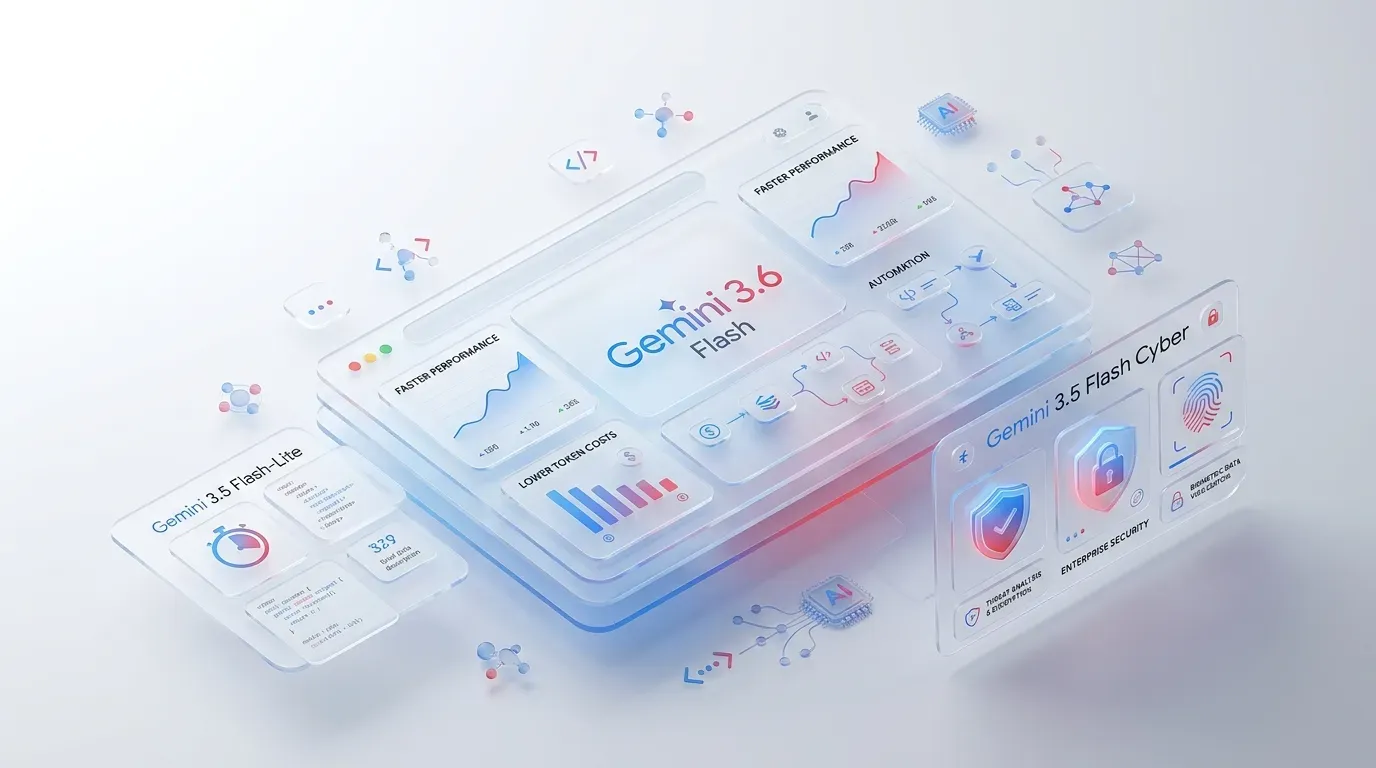
Instead, Google shipped Gemini 3.6 Flash, Gemini 3.5 Flash-Lite, and a locked-down security model called Gemini 3.5 Flash Cyber. No "smartest model ever" headline. No Pro. Just a quiet upgrade to the tier of AI that most people actually touch on a daily basis.
That sounds like a letdown at first glance. It isn't, and here's why:
- Gemini 3.6 Flash is an efficiency upgrade, not a raw intelligence leap. It's not trying to outthink anything. It's trying to do the same job for less money, faster.
- Token economics matter more than benchmark scores for everyday AI use. Most people aren't running cutting-edge research tasks on these models. They're drafting emails, summarizing documents, and automating small workflows. For that kind of work, cost and speed beat a couple extra points on a leaderboard.
Let's get into what actually changed here, and why it might matter more than the flagship you've been holding out for.
- What makes Gemini 3.6 Flash different from its predecessor
- How Gemini 3.6 Flash fits into Google's bigger AI strategy
What Makes Gemini 3.6 Flash Different From its Predecessor?
Gemini 3.6 Flash follows directly from the 3.5 Flash model Google put out earlier this year. On paper, it doesn't look much smarter. Run it in practice, though, and it's noticeably cheaper and faster, which turns out to be exactly the point.
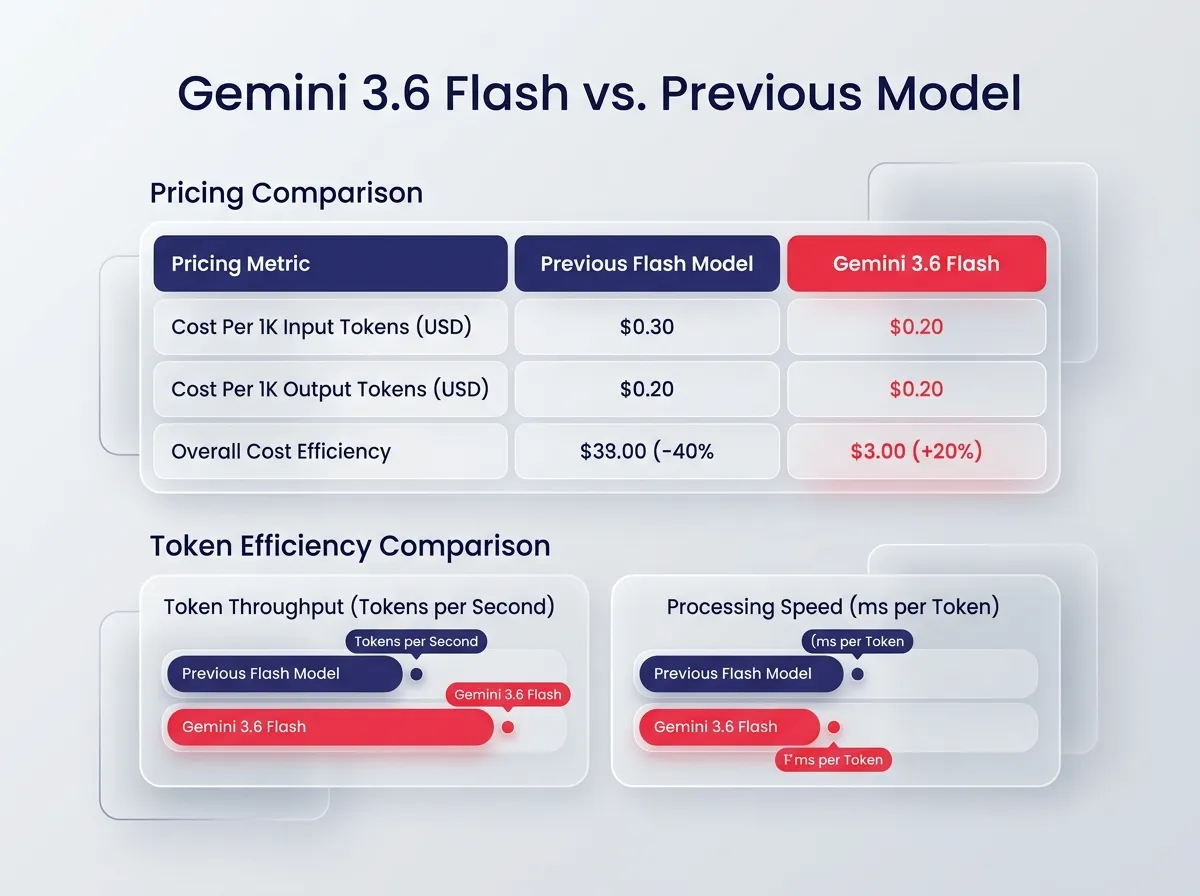 - Gemini 3.6 Flash uses about 17% fewer output tokens to finish the same tasks as its predecessor.
- Pricing dropped to $1.50 per million input tokens and $7.50 per million output tokens, down from $9 per million output tokens before.
- Its knowledge cutoff jumped over a year, from January 2025 to March 2026, so it actually knows about more recent events.
Tokens are basically the currency of AI, so this matters. Every question you ask and every answer the model gives costs tokens. Fewer tokens per task means a cheaper model to run, full stop, and that's true even before the price cut gets factored in.
For regular users, this shows up in small ways: quicker responses, lower costs if you're on a paid tier or using a business tool built on Gemini, and better handling of multi-step tasks like comparing flight options or automating a repetitive chore.
How this compares to Gemini 3.5 Pro
Here's the part that has to sting a little over at Google. Gemini 3.5 Pro, the higher-end model people were expecting, still isn't ready. Google confirmed the delay itself, and this isn't the first time Pro has slipped past its own deadline.
So Gemini 3.6 Flash ends up being the practical option for most tasks right now. Not because it's the most powerful thing Google could ship, but because it's the thing that's actually shipped and priced reasonably.
Here's roughly how the two were supposed to split up the work:
Gemini 3.5 Pro was meant to be the flagship, handling harder reasoning and heavier tasks. Gemini 3.6 Flash was meant to be the workhorse, built for speed and volume. Until Pro actually shows up, Flash is stuck covering both jobs as best it can.
That's honestly not a terrible outcome for most users. Writing help, quick research, basic coding, simple automation. None of that needs flagship-level reasoning. It needs a model that answers fast and doesn't rack up costs in the background. That's what Flash is built for.
How Gemini 3.6 Flash Fits into Google's bigger AI Strategy
Google didn't just drop one model and move on. It released three at once, and that alone says something about where the company's attention is right now.
The 3 models cover different jobs:
- Gemini 3.6 Flash handles balanced, everyday performance, the model most consumers and businesses will actually interact with.
- Gemini 3.5 Flash-Lite is built for raw speed on simple tasks that need to run cheap and fast at scale.
- Gemini 3.5 Flash Cyber is a security-focused variant, and it's not public. Only governments and vetted partners get access.
That last one is worth sitting with for a second. Flash Cyber is tuned to find software vulnerabilities, which is great news if you're a defender and terrible news if the wrong person gets their hands on it. Keeping it gated instead of releasing it broadly is a deliberate, cautious call, and it puts Google alongside other major AI labs that have chosen to lock similar tools behind an approval process rather than open access.
Put the three releases together, and a pattern emerges: Google is focusing on the tier where most people actually spend their time with AI, instead of chasing a flagship win it can't currently deliver.