TL;DR
- Universal Commerce Protocol is an open standard co-developed by Google with Shopify, Etsy, Wayfair and Target, with more than 20 additional retail and payment companies signed on, and it works alongside Agent2Agent, Agent Payments Protocol and Model Context Protocol.
- The UCP-powered Buy button first appeared in Google's AI Mode in February 2025 and has now expanded into standard Google Search results for retailers that adopted the protocol, Wayfair being the most visible example.
- A UCP purchase produces an impression and a completed sale on Google but sends zero clicks to the retailer's website; the sale still belongs to the retailer, as do fulfillment, returns and customer service.
- The evaluation checklist covers catalog fit, since simple well-specified products suit zero-click buying better than customizable ones, whether the e-commerce platform has endorsed UCP, and whether analytics and attribution can track sales originating outside the retailer's own domain.
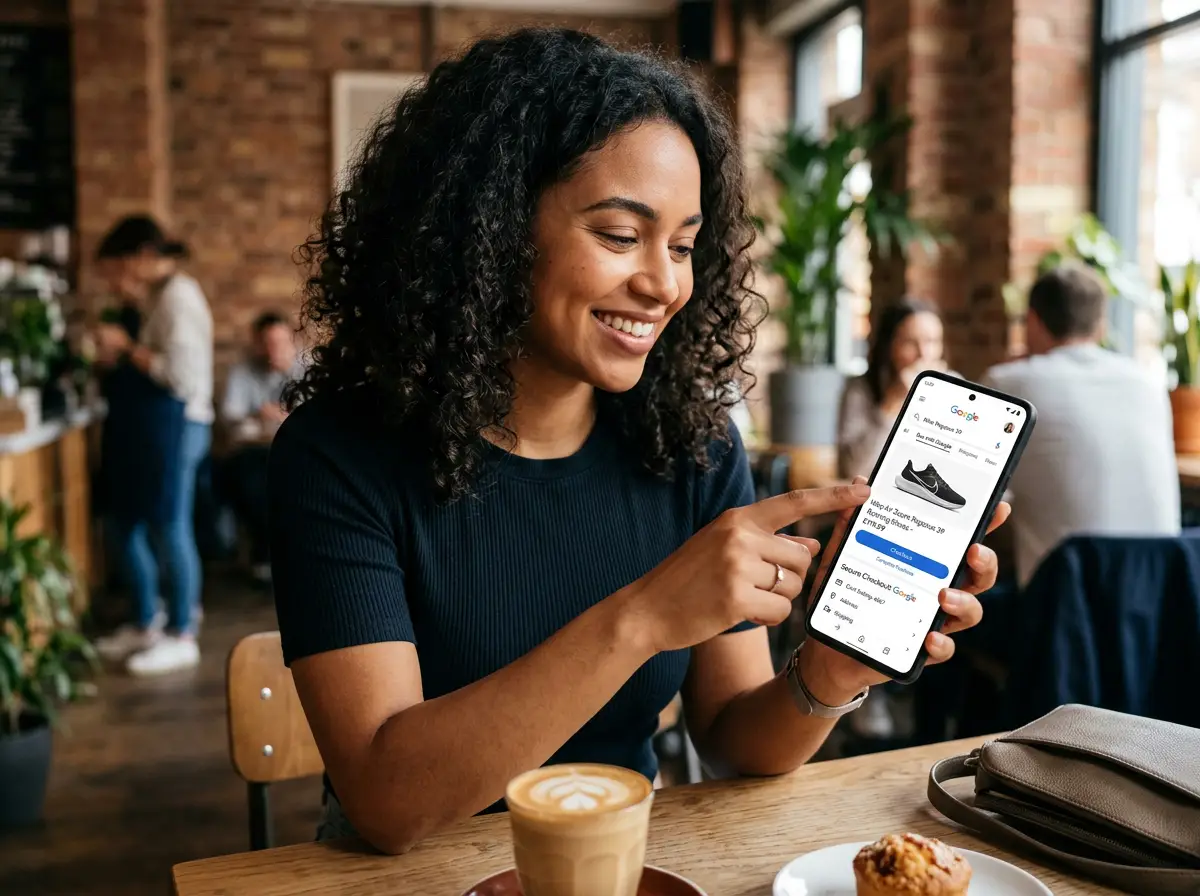
A shopper searches for a product on Google, clicks “Buy,” and completes the purchase without ever landing on your website. No traffic. No click. Just a sale. That’s what UCP makes possible, and it’s already happening.
Google has expanded its Universal Commerce Protocol powered checkout from AI Mode into the main Search results page. Real purchases are now going through directly on Google for supported retailers like Wayfair. If you run an e-commerce business, or you manage marketing for one, this is worth paying close attention to.
The rollout is picking up speed. Understanding how UCP works and what it means for your business stopped being a “future concern” a while ago. It’s something you need to think about now.
- What is UCP and how does Google’s Universal Commerce Protocol work?
- What UCP’s expansion into Google Search means for your business
What is UCP and how does Google’s Universal Commerce Protocol work?
Before getting into what this means for your business, let’s break down what UCP actually is. A lot of the coverage has been heavy on jargon, so here’s the plain version.
The origins of Universal Commerce Protocol
Universal Commerce Protocol is an open standard built to create a shared language between AI agents and commerce systems. Think of it as a universal translator that lets AI tools talk directly to online stores, payment processors, and retail platforms, without anyone needing to build custom connections for every pairing.
Google co-developed UCP alongside Shopify, Etsy, Wayfair, and Target, among others. More than 20 additional companies across retail and payments have already signed on. That kind of broad early buy-in suggests this isn’t going away.
UCP works alongside other emerging standards you may have come across, including Agent2Agent, Agent Payments Protocol, and Model Context Protocol. Together, these create a framework where AI agents can find products, handle transactions, and complete purchases across different platforms without each retailer needing a one-off integration.
The goal is to remove friction from the backend of AI-powered shopping. When systems share a common language, purchases happen faster with fewer barriers getting in the way.
How UCP connects AI agents, retailers, and shoppers
Here’s how it works in practice. A shopper asks Google’s AI something like “What’s the best outdoor sectional sofa under $1,500?” The AI surfaces a recommendation. Instead of sending the shopper to a retailer’s website, a “Buy” button appears right there in the search results. The shopper clicks it, completes checkout, and the sale goes through the UCP framework.
The UCP-powered “Buy” button first showed up in Google’s AI Mode back in February 2025. The bigger news is that it’s now rolling out in standard Google Search results for retailers that have adopted the protocol. Wayfair is one of the most visible examples right now.
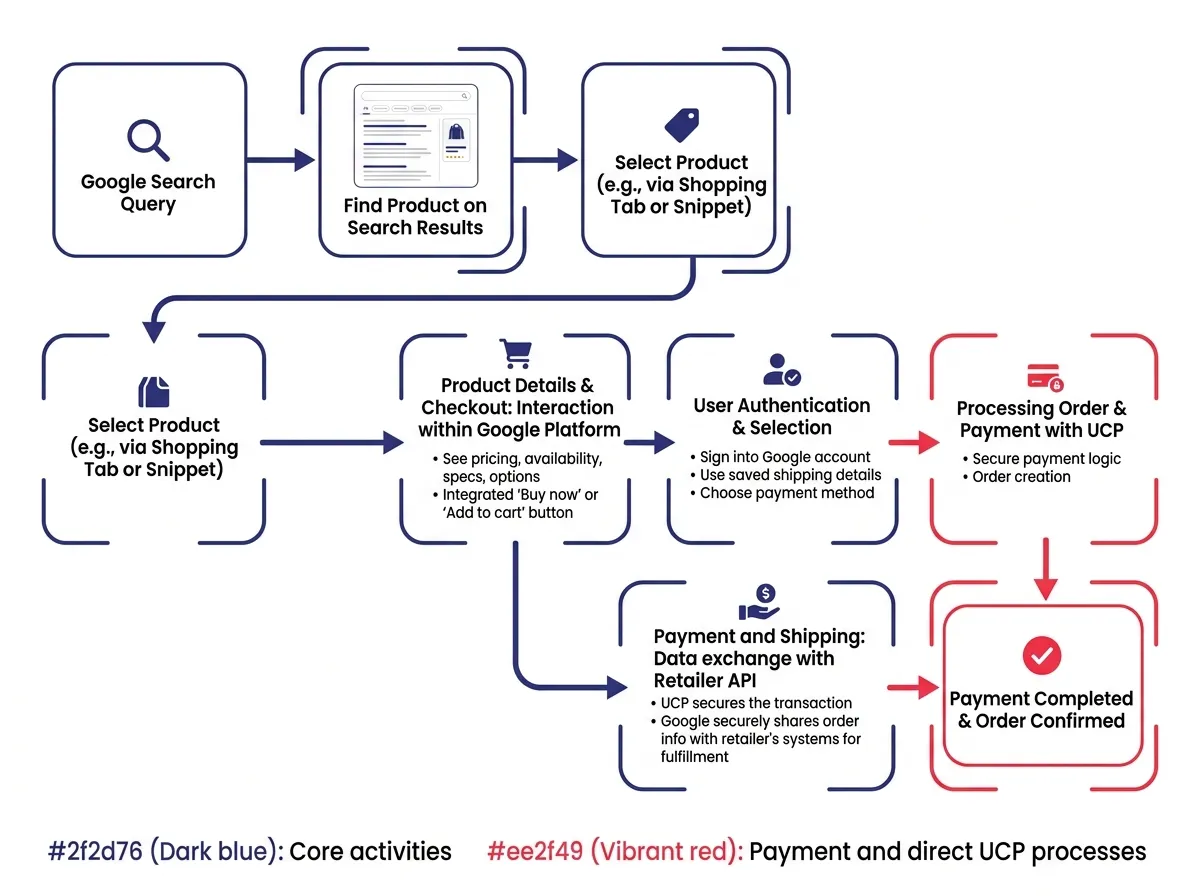
For retailers connected to UCP, Google acts as the checkout interface. The sale still belongs to the retailer, but the customer interaction happens entirely on Google’s side. That’s a real departure from how online shopping has worked for the past two decades.
What UCP’s expansion into Google Search means for your business
Now for the part that directly affects you. Whether you sell furniture, fashion, electronics, or anything else online, Google broadening UCP into main Search results changes things in ways worth preparing for.
Zero clicks, real sales: a new reality for retailers
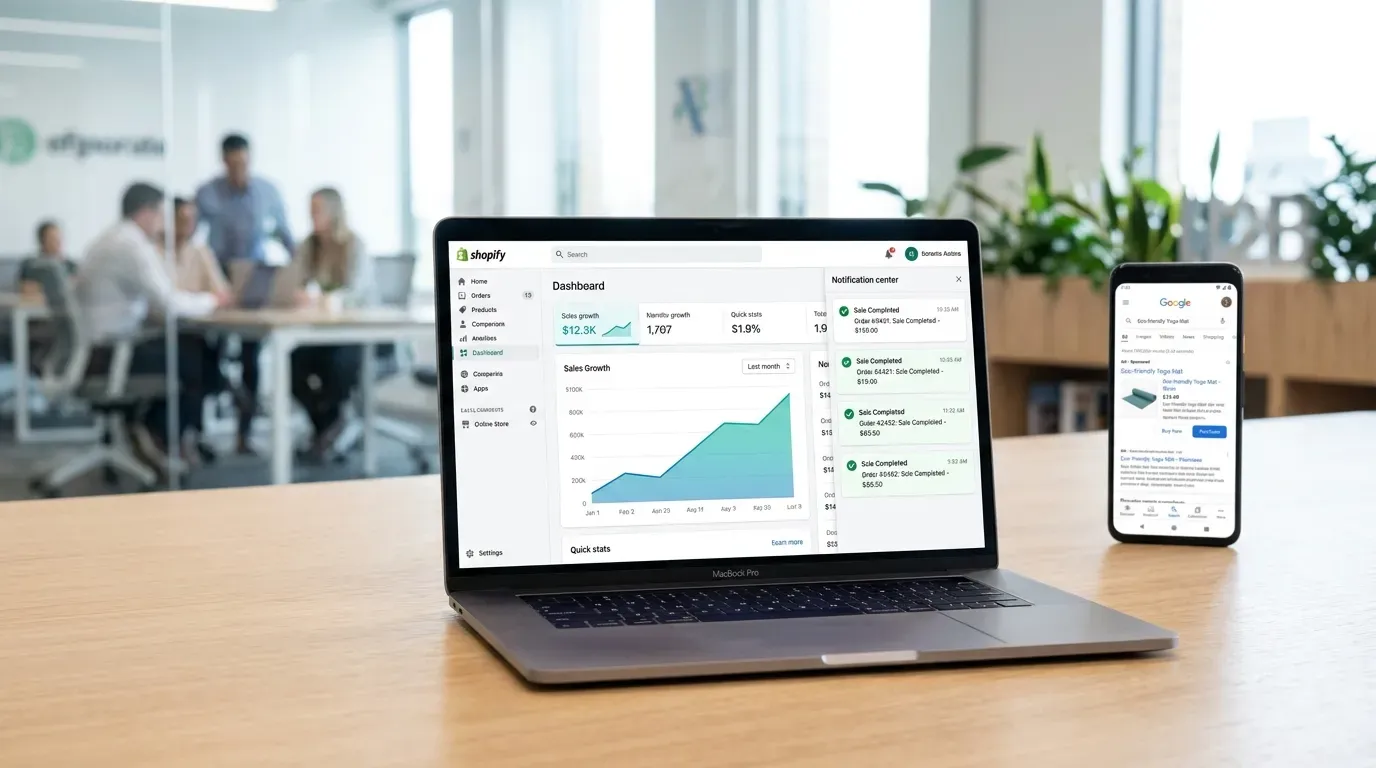
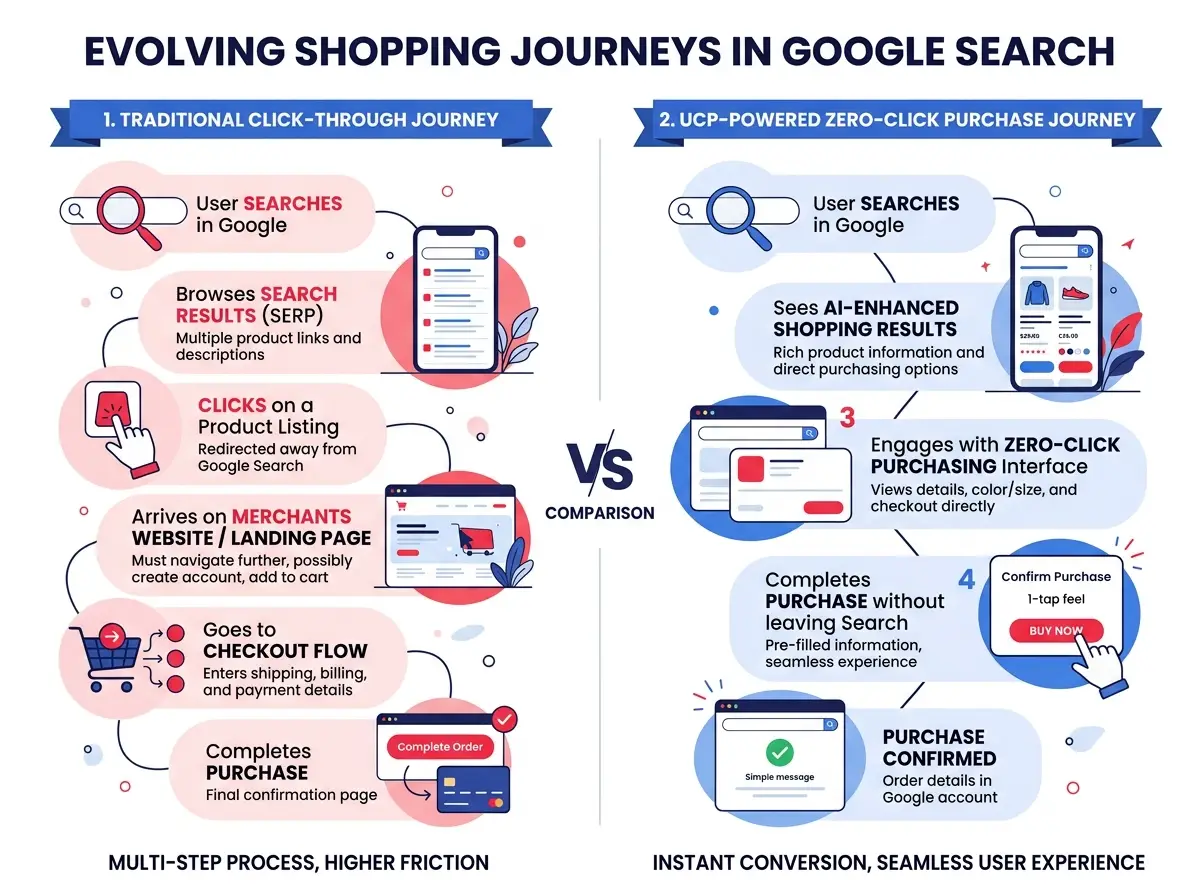
Let’s be direct about what this means for website traffic. A UCP-powered purchase generates an impression and a completed sale in Google Search but sends zero clicks to your website. That’s a significant shift from the metrics most businesses have relied on for years.
Traffic has always been a key signal for marketing performance. More visits meant more chances to convert. But if purchases are happening before the visit ever occurs, traffic numbers start telling an incomplete story. You could be making more sales while showing declining site traffic at the same time. That’s a weird position to explain to a team or a client.
Your website doesn’t become irrelevant. But how you measure success needs to adjust. Businesses will need to weight conversion data and order volume more heavily than raw visitor counts. Attribution also gets messier when a sale originates inside a Google search rather than on your own domain.
The retail analogy fits here. Not every shopper skips a physical store entirely, but a growing number choose delivery and curbside without ever stepping inside. Retailers adapted to serve both types of customers. Same logic applies.
Should your business support UCP?
This is the question most business owners are sitting with, and the honest answer is: it depends on your situation, but ignoring it entirely seems risky.
If you’re already on Shopify, some groundwork may already be in place since Shopify is one of UCP’s founding collaborators. Retailers on platforms that have endorsed UCP will likely have an easier path to adoption than those running custom storefronts.
Not every shopper will buy without visiting your site first. Browsing behavior, brand loyalty, and product complexity all play into whether someone needs more context before committing. A customer buying a $15 phone case behaves differently from someone spending $1,200 on furniture. That said, even in higher-consideration categories, a growing share of buyers will take the frictionless path when it’s available to them.
A few things worth evaluating as UCP expands:
- Your product catalog: Simple, well-defined products with clear specs are better candidates for zero-click purchases than highly customizable or complex items.
- Your platform: Check whether your e-commerce platform has already endorsed or integrated UCP. Shopify was involved from the start.
- Your measurement setup: Make sure your analytics and attribution tools can track sales that originate outside your own website. If your reporting relies entirely on sessions and pageviews, you’ll start losing visibility into actual revenue.
- Your customer experience: Even if a purchase happens on Google, the post-sale experience still runs through you. Fulfillment, returns, and customer service remain your responsibility.
Businesses that wait too long to think through UCP adoption risk missing out on a growing share of Google-initiated purchases. Retailers already in the ecosystem get visibility advantages that others currently don’t have.
It’s also worth watching how Google continues to push this. The move from AI Mode into standard Search results happened faster than a lot of people expected. If that pace holds, UCP participation could shift from optional add-on to baseline requirement for competitive visibility in Google Shopping.
The shift happening with Google broadening UCP isn’t a small technical update. It changes how shopping starts and ends online. Retailers that treat it as a core part of their strategy early will be in a better position than those scrambling to catch up later.