TL;DR
- Only 8% of users who see a Google AI summary click through to a traditional search result.
- Pew Research Center found AI summaries appeared in roughly one in five searches, and a June 2025 study reported they showed up in over 50% of all results.
- Informational queries are hit hardest, so teams measuring SEO purely through keyword rankings and impressions can see strong rankings alongside declining traffic.
- Answer Engine Optimisation shifts the focus to clarity and structure: answer one specific question clearly within the first 100 words, and implement FAQ, how-to and article schema.
- Google now treats social media content as a ranking signal, while AI browsers such as ChatGPT's Atlas and the Shopify integration with ChatGPT pull discovery away from blue links.
Only 8% of users who see a Google AI summary click through to a traditional search result. If your marketing team built a content strategy around organic traffic, that number deserves serious attention.
Google’s AI Overview feature has quietly changed the rules of search, and not in your favor. Users are getting answers directly on the results page, which means fewer reasons to visit your site, read your blog, or land on your product pages. The traffic you were counting on is staying inside Google’s ecosystem instead of flowing to yours.
There is a practical response taking shape, though. Answer Engine Optimisation, or AEO, is emerging as a working replacement for conventional SEO thinking, and most marketing teams are already closer to being ready for it than they realize. Here’s what you need to understand before your next quarterly review.
- How Google’s AI Overview is changing the rules of SEO
- What comes next: Answer Engine Optimisation and the new content playbook
How Google’s AI Overview is changing the rules of SEO
What Google’s AI Overview Actually Does to Your Search Results
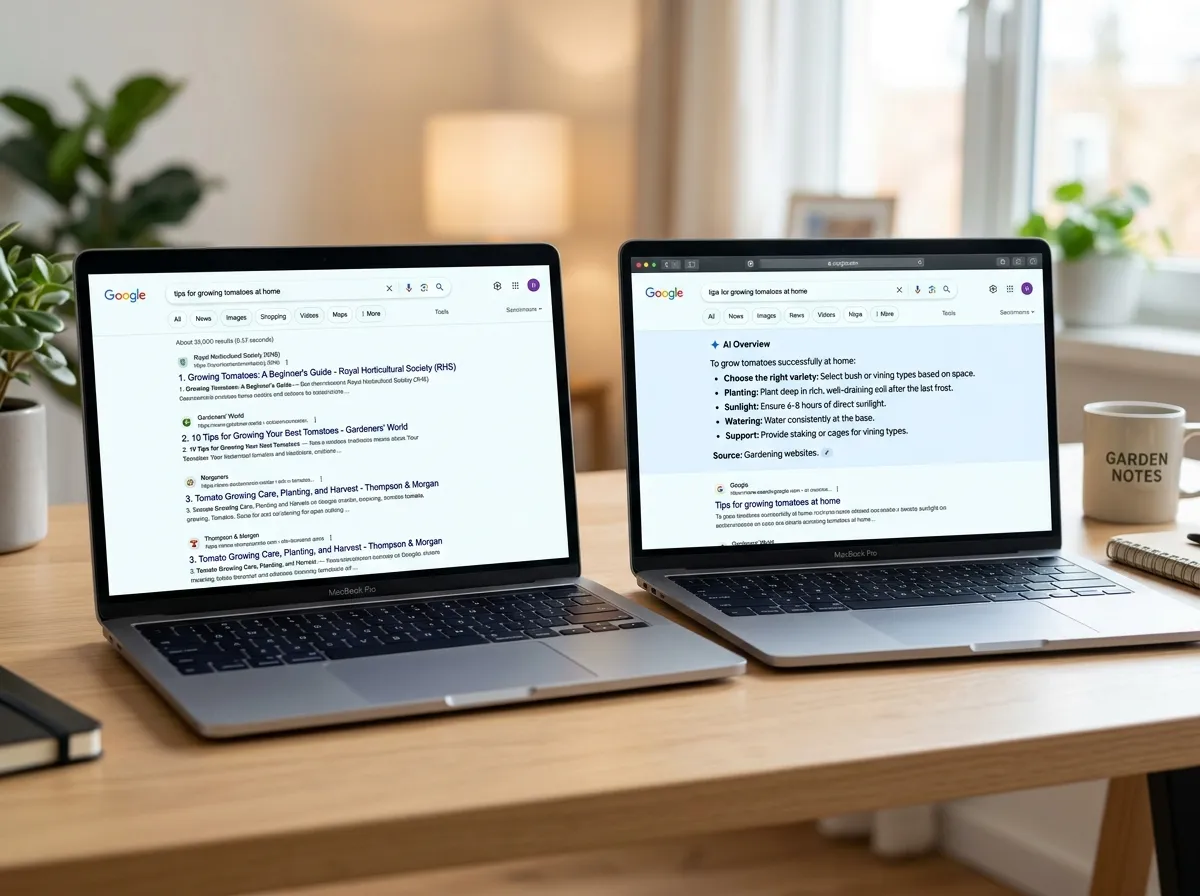
Google’s AI Overview pulls information from across the web and packages it into a direct, summarised answer sitting at the very top of the search results page. A user types in a question, gets a clean and readable answer immediately, and has very little reason to scroll down to the blue links your SEO strategy was designed to capture.
This is not a minor tweak. It is a fundamental change in how Google delivers information. Pew Research Center found AI summaries appeared in roughly one in five searches, and a June 2025 study reported they showed up in over 50% of all results. The rollout has been fast and the coverage is wide.
Google’s logic here is not hard to follow. Keeping users on its own results page means more time inside Google’s environment and more ad inventory to sell. For businesses, that creates a real tension: your teams are optimising content for a platform that has a direct financial incentive to keep your audience away from your website. That is worth sitting with for a moment.
 ### The Traffic Numbers Marketing Teams Need to See
The 8% click-through figure gets the headlines, but the picture gets worse when you look at category-level data. Informational queries, the kind that power awareness campaigns, top-of-funnel blog posts, and educational resources, are hit hardest. If someone asks “how does email segmentation work,” Google’s AI Overview answers it cleanly, and your 2,000-word explainer is effectively bypassed.
This matters a lot for content planning and reporting. If your team is measuring SEO success purely through keyword rankings and impressions, you might be seeing strong ranking numbers alongside declining traffic. That is the AI Overview gap, and it is growing. Anyone running SEO reporting right now should be adding click-through rate and session data from organic search to their dashboards and watching the trend line closely.
Paid search teams are in a slightly different position. Google’s AI Overviews can appear above paid ads in some cases, but clicks on paid results tend to carry more transactional intent. Brands with a heavy informational content focus are feeling this more than those with stronger commercial or transactional search presence.
What comes next: Answer Engine Optimisation and the new content playbook
Answer Engine Optimisation: The Strategy Replacing Traditional SEO
AEO is the practice of writing content that directly and clearly answers the specific questions your audience is searching for. Where traditional SEO leaned on keyword density, backlink profiles, and domain authority, AEO focuses on clarity, structure, and specificity in a way that AI systems can read, interpret, and surface.
For most marketing teams, this is not a complete rebuild. If you are already producing FAQ content, how-to guides, step-by-step tutorials, or question-led social copy, you already have the raw material. The shift is in how you structure and prioritise it. AI systems prefer answers that are direct, well-formatted, and unambiguous. That means shorter paragraphs, clear headers that mirror real search queries, and content that addresses one question at a time rather than trying to cover a broad topic in a single sprawling piece.
In practical terms, your content team should be auditing existing assets and asking one question: does this piece answer something specific and clearly within the first 100 words? If the answer is buried three paragraphs deep, the AI is likely skipping it or summarising around it.
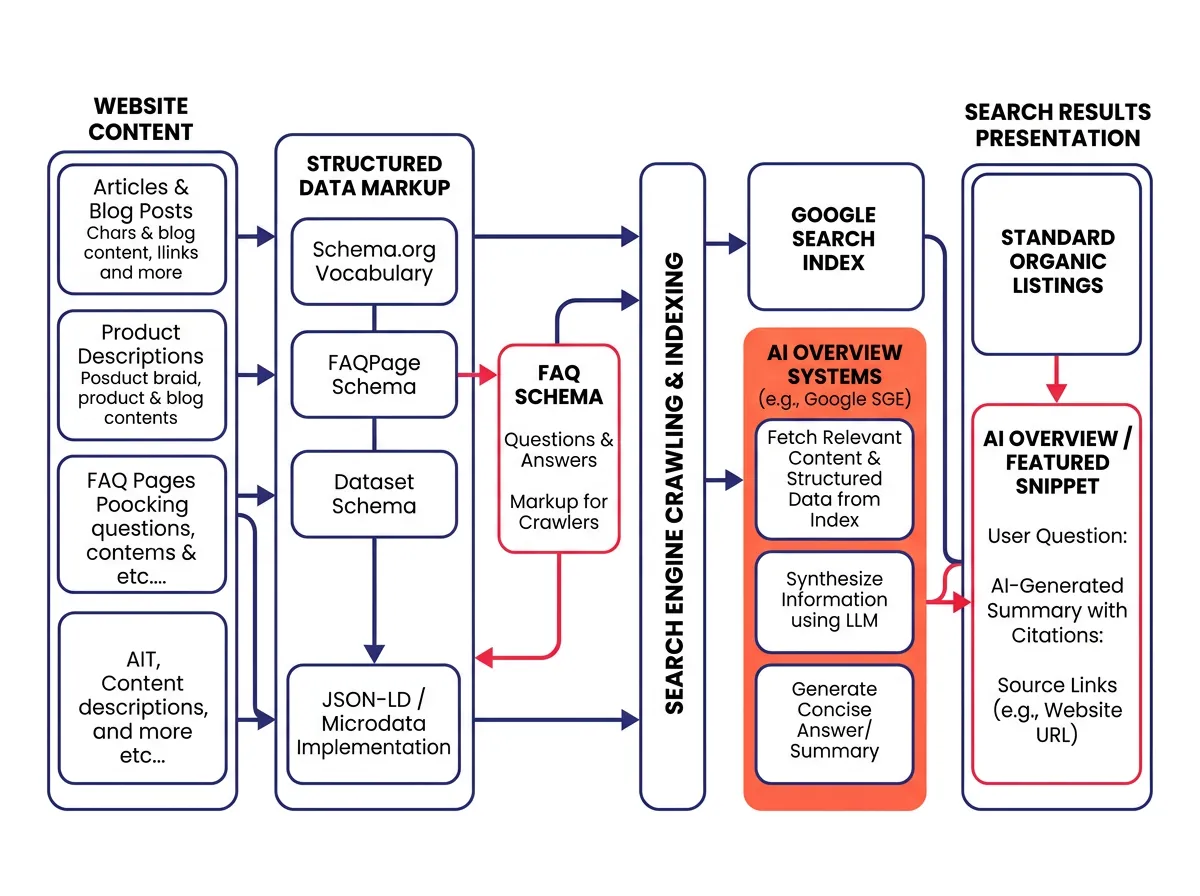
Schema markup also matters more under AEO. Structured data helps search engines and AI systems categorise your content accurately. FAQ schema, how-to schema, and article schema are all worth implementing if your team has not done so already.
 ### Social Content, AI Browsers, and Where Your Audience is Actually Searching
Here is something that still surprises a lot of businesses: Google now treats social media content as a meaningful ranking signal. Your social channels and your website are no longer separate outputs. They feed into a connected ecosystem that influences how AI systems assess your brand’s authority and relevance.
A strong LinkedIn post, a well-performing Instagram Reel, or a thread that generates genuine engagement can contribute to how your brand appears in AI-generated search summaries. Content teams and social teams need to be working from the same playbook, because the signals they generate are feeding into the same systems.
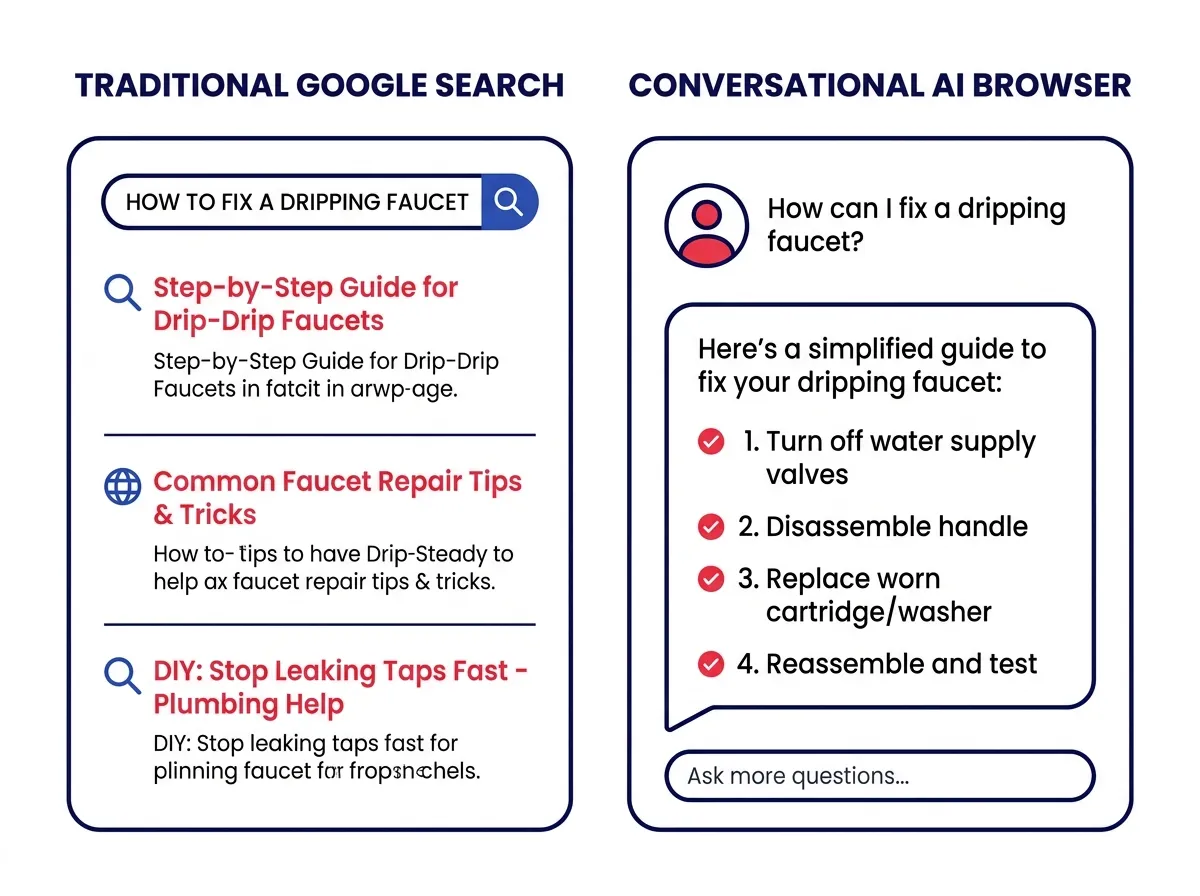
Beyond Google, the search space itself is fragmenting. AI-powered browsers and tools like ChatGPT’s Atlas are entering the market with a conversational, concierge-style search format that resonates strongly with younger audiences. Rather than returning a list of links, these tools hold a dialogue with the user and pull in the most relevant content to guide their decision.
Shopify’s integration with ChatGPT is a clear early signal of where this is heading. Commerce and content discovery are converging fast. A user might ask an AI browser for a product recommendation and receive a curated answer that bypasses traditional search entirely. If your content is not structured in a way that AI tools can parse and trust, you simply do not exist in those results.
Marketing teams should be running honest audits of where their specific audiences actually start a search. For many younger demographics, that starting point is no longer Google. It is TikTok, Reddit, YouTube, or a conversational AI tool. Strategy and budget allocation need to reflect that, not the habits of five years ago.
 The brands that hold their ground here are the ones that stop treating Digital Marketing and SEO as a standalone channel and start thinking about content visibility as a whole. That means optimising for AI systems, connecting social and web content, and meeting audiences wherever they are actually searching.
Your existing content skills are not obsolete. The structure, intent, and distribution of that content just need to catch up with where search has already gone.