TL;DR
- The framework is track, test, refine and repeat, with native Instagram, Facebook and LinkedIn analytics checked at least once a week rather than only when results slide.
- Buffer schedules content across platforms with basic analytics in one place, and HubSpot's free CRM adds social media tracking that connects social content to leads and website visits.
- Instagram Trial Reels share a Reel with a smaller group of non-followers before the full audience, so views, likes and shares can be judged before a wider push.
- Talkwalker, now part of Hootsuite, monitors brand mentions and competitor activity, while the basic listening features in Hootsuite's free tier or Mention cover smaller businesses.
Social media platforms change their algorithms constantly, and business owners who treat their digital marketing strategy as a living, breathing system are the ones who grow. Everyone else is left wondering why their engagement suddenly dropped and their reach dried up overnight.
Here’s the honest truth: algorithms are not built to serve your business. They’re built to serve the platforms, which means they will keep shifting to optimize for user behavior, watch time, and ad revenue. Your job is not to fight that. Your job is to move with it.
The good news is that a simple track, test, and refine approach gives you a repeatable framework for consistent growth, no matter how many times the platforms update their rules. Let’s break down exactly how to build that habit into your marketing.

- Why ‘Set and forget’ is killing your social media marketing
- Track, test, refine: a practical digital marketing framework for business owners
Why ‘Set and forget’ is killing your social media marketing
Most business owners set up their social media strategy once, maybe after reading a solid article or taking a short course, and then run with it for months. The problem is that what worked six months ago may already be working against you today.
Instagram, Facebook, TikTok, and LinkedIn are constantly testing and rolling out algorithm changes behind the scenes. These updates affect what content gets shown, to whom, and how often. A post that would have reached thousands of people organically a year ago might now reach a fraction of that audience using the exact same format.
If you’re not watching your performance data, you won’t even notice the shift happening. You’ll just keep posting the same way and watch your results slowly slide.
How algorithm changes actually work against you
When a platform updates its algorithm, it usually starts rewarding a new type of content or behavior. When short-form video exploded, Instagram and Facebook began pushing Reels and short clips far harder than static images. Business owners who were still posting mostly graphics and carousels saw their organic reach drop, not because their content got worse, but because the platform changed what it rewarded.
This is exactly why having a content strategy that actually adapts over time matters. Social media marketing is not a one-time setup. It requires staying tuned to what the platform is currently favoring and adjusting your approach accordingly.
The simplest way to spot these shifts early is to watch your own data. If your reach or engagement starts dipping for no obvious reason, that’s worth investigating before you assume the problem is your content.
The tools that make tracking manageable for busy business owners
You don’t need a full marketing team to stay on top of this. There are free and affordable tools that make it completely realistic for small business owners to keep an eye on performance without spending hours on it every week.
Buffer is a good starting point. It lets you schedule content across multiple platforms and view basic analytics in one place. You can quickly see which posts are performing well and which ones are falling flat, so you know where to shift your focus.
HubSpot offers a free CRM with social media tracking features, which is useful if you want to connect your social content to actual leads or website visits.
Even the native analytics inside Instagram, Facebook, and LinkedIn give you more than enough to spot trends. The key is checking them consistently, at least once a week, rather than waiting until something goes wrong to look.
Track, test, refine: a practical digital marketing framework for business owners
Once you have a handle on your data, the next step is building a testing mindset into everything you do. This is what separates business owners who grow steadily from those who feel like they’re constantly chasing the algorithm.
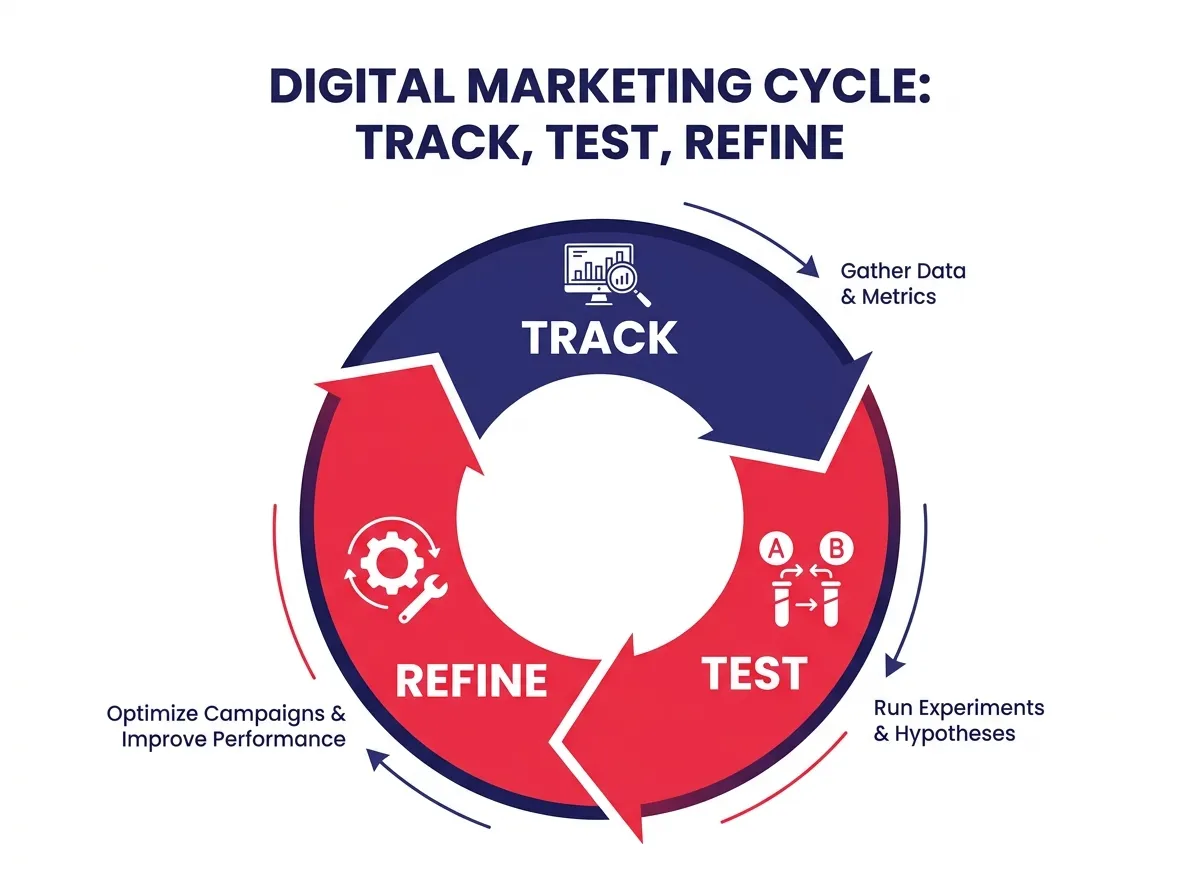
The digital marketing framework that works for most business owners is straightforward: track what’s happening, test something new, and refine based on what the data tells you. Then repeat.
Smart ways to test content before going all in
One of the biggest mistakes business owners make is committing fully to a new content format before knowing whether it will actually land with their specific audience. You can avoid this by testing at a smaller scale first.
Instagram Trial Reels are a good example of a low-stakes testing feature. This tool lets you share a Reel with a smaller group of non-followers before pushing it to your full audience. You can see how it performs in terms of views, likes, and shares, then decide whether it’s worth a wider push. Most business owners aren’t using this yet, which is a missed opportunity.
Another approach worth building into your routine is content repurposing. Instead of creating something new for every platform from scratch, take what you already have and adapt it. An Instagram Live session can become a Facebook video. A LinkedIn article can become a carousel. A blog post can be broken into a series of short-form social posts. Repurposing stretches your effort further without doubling your workload, and it naturally shows you which platform responds best to a given topic or format.
Using social listening tools to refine your approach in real time
Testing your own content is only half the picture. The other half is keeping up with what’s happening in your industry and what your audience is actually talking about right now.
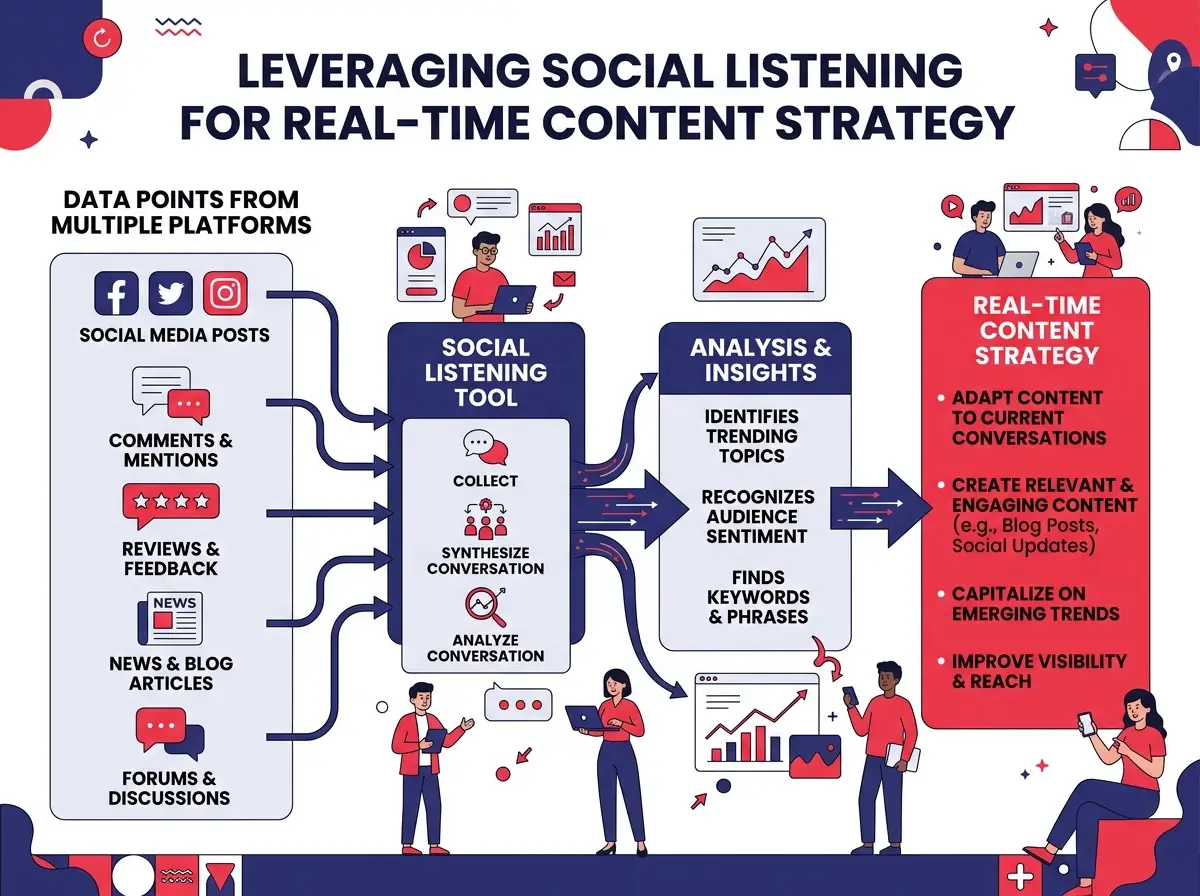
Social listening tools track mentions, hashtags, keywords, and conversations across social platforms, giving you a real-time view of what’s trending and what tone is connecting with your target audience.
Talkwalker, now part of the Hootsuite family, is one of the more capable options available. It lets you monitor brand mentions, track competitor activity, and spot emerging conversations before they peak. That means you can shift your content strategy in response to things happening now, rather than waiting until a campaign wraps up to figure out what resonated.
For business owners who don’t need enterprise-level tools, the basic social listening features built into Hootsuite’s free tier or Mention can still give you a solid picture of what’s worth paying attention to.
The goal with social listening isn’t to react to every trend. It’s to understand the mood of your audience and your market well enough that your content feels relevant and timely, without you constantly sprinting after every new thing that surfaces.
Staying ahead of algorithm updates doesn’t require you to be a full-time marketer. It requires a system. When you consistently track your performance, test new formats in a low-risk way, refine based on real data, and use social listening to stay informed, you stop feeling reactive and start feeling in control.
Digital marketing rewards the business owners who pay attention and keep moving. Build that habit now, and the next algorithm update won’t slow you down.