
TL;DR
- OpenAI's ChatGPT ad platform reached $100 million in annualized ad revenue in six weeks, with fewer than 20% of eligible users seeing ads.
- The managed pilot launched on 9 February 2026 with a $250,000 minimum spend commitment and CPM-only pricing at around $60.
- By April 2026 CPMs had dropped to as low as $25 and the minimum spend to $50,000, with over 600 advertisers in the managed pilot, self-serve access rolling out and expansion into Canada, Australia and New Zealand being explored.
- CPC bids sit in the $3 to $5 range, putting ChatGPT in direct price comparison with Google Search and Meta, and OpenAI hired former Meta ad executive Dave Dugan to lead ad sales.
- OpenAI reported fewer than 7% of ads are rated low relevance by users, but the ads manager and reporting infrastructure are still being built, so advertisers need their own proxy measurement through UTMs and post-click tracking.
Six weeks. $100 million in annualized ad revenue. Less than 20% of eligible users seeing ads. If those numbers don’t make paid media teams pay attention, what happens when the other 80% comes online?
OpenAI’s ChatGPT ad platform has moved faster than almost anyone predicted. What started as a quiet enterprise pilot in early 2026 has grown into a structured advertising channel with CPC pricing, self-serve access rolling out, and a former Meta ad executive now running sales. That’s a lot of movement in a short window.
For advertisers who have been watching from the sidelines, the situation is shifting. Not “let’s wait and see” anymore, but “we need to understand this now.” The platform is still early, and early channels tend to reward the buyers who show up before the crowd does. Understanding how ChatGPT advertising works, what it costs, and how it compares to existing channels is the starting point for any serious budget conversation.

- ChatGPT Ads in 2026: How the platform launched and where it stands now
- CPC bidding, intent quality, and how to evaluate ChatGPT Ads against Google and Meta
ChatGPT Ads in 2026: How the platform launched and where it stands now
OpenAI didn’t roll out its ad platform with a splashy launch event or a press tour. It started quietly, which is exactly why so many paid media teams are only now catching up.
From pilot to platform: the first six weeks of ChatGPT advertising
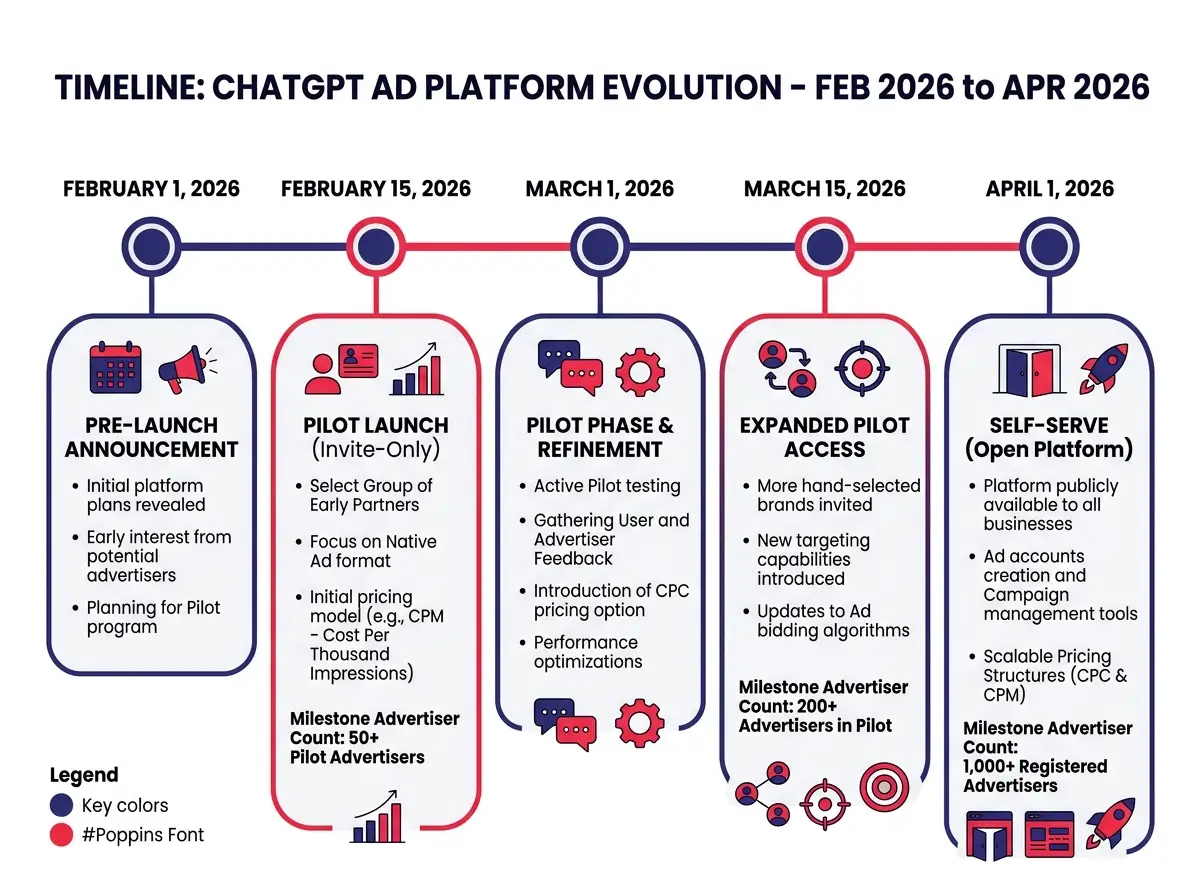
The ChatGPT ad platform launched its managed pilot on February 9, 2026. The barrier to entry was steep at first. Advertisers needed a minimum spend commitment of $250,000, and pricing was CPM-only at around $60. That structure was clearly built for large brand advertisers willing to pay a premium to be among the first buyers on a new channel.
OpenAI didn’t keep those terms in place for long, though. By April 2026, CPMs had dropped to as low as $25, and the minimum spend requirement fell to $50,000. That’s a significant shift in just a few weeks. It tells you something important about the direction they’re headed: this isn’t a premium niche product for a handful of enterprise brands. OpenAI is building toward a scaled advertising business with a broad buyer base.
There are currently over 600 advertisers inside the managed pilot. Self-serve access is rolling out in April, which opens the door to media buyers who don’t have the budget or relationships required for a managed deal. Geographic expansion into Canada, Australia, and New Zealand is also being explored, meaning inventory is about to grow while competition is still relatively low.
One personnel move worth noting: OpenAI brought on Dave Dugan, a former Meta ad executive, to lead ad sales. That hire doesn’t happen if the goal is to keep ChatGPT ads small and controlled. It signals the company is building toward a performance-oriented advertising business at real scale.
Pricing, minimums, and access: what advertisers are actually working with
Here’s a straightforward breakdown of where the ChatGPT ad platform stands right now:
| Metric | Launch (Feb 2026) | Current (Apr 2026) |
|---|---|---|
| Minimum Spend | $250,000 | $50,000 |
| CPM Pricing | ~$60 | As low as $25 |
| Access Type | Managed only | Managed + Self-serve rolling out |
| Active Advertisers | Limited pilot | 600+ |
| Geographic Availability | US focus | Expanding to CA, AU, NZ |
The drop in both CPMs and minimums matters a lot for mid-market advertisers who were previously priced out. If you’ve been running paid search or paid social at meaningful scale, $50,000 is a realistic test budget. And with self-serve ChatGPT ads becoming available, the friction to get started is dropping fast.
The real question for most paid media teams right now isn’t whether the channel is worth watching. It clearly is. The question is whether they should allocate budget before measurement infrastructure matures, which is where the performance conversation gets more complicated.
CPC bidding, intent quality, and how to evaluate ChatGPT Ads against Google and Meta
When OpenAI introduced CPC bidding alongside the CPM model, it changed the conversation for performance marketers. CPM buys make sense for brand awareness. CPC bidding means OpenAI is now competing directly with Google Search and Meta for performance budgets.
What CPC pricing on ChatGPT actually means for performance marketers
CPC bids on ChatGPT are currently sitting in the $3 to $5 range. That puts the channel in direct price comparison with Google Search and Meta, and that’s not a coincidence. OpenAI is positioning the platform to compete for the same performance budgets that have historically gone to those two channels.
Here’s what experienced media buyers already know, though: the price of a click is only one part of the equation. What matters more is what that click is worth. A $4 click from someone who just asked ChatGPT a specific product question could be worth significantly more than a $4 click from a broad interest-based Meta audience. Or it could be worth less, depending on where that user is in their decision-making process.
The honest reality right now is that advertisers don’t have consistent, reliable measurement tools from OpenAI to answer that with confidence. The ChatGPT ads manager is still being built out, and reporting infrastructure isn’t yet mature. That doesn’t mean the channel should be avoided. It means performance marketers need to plan their own proxy measurement strategies before allocating real budget. UTM parameters, post-click behavior tracking, conversion path analysis set up on your own side, not just what OpenAI’s platform provides.
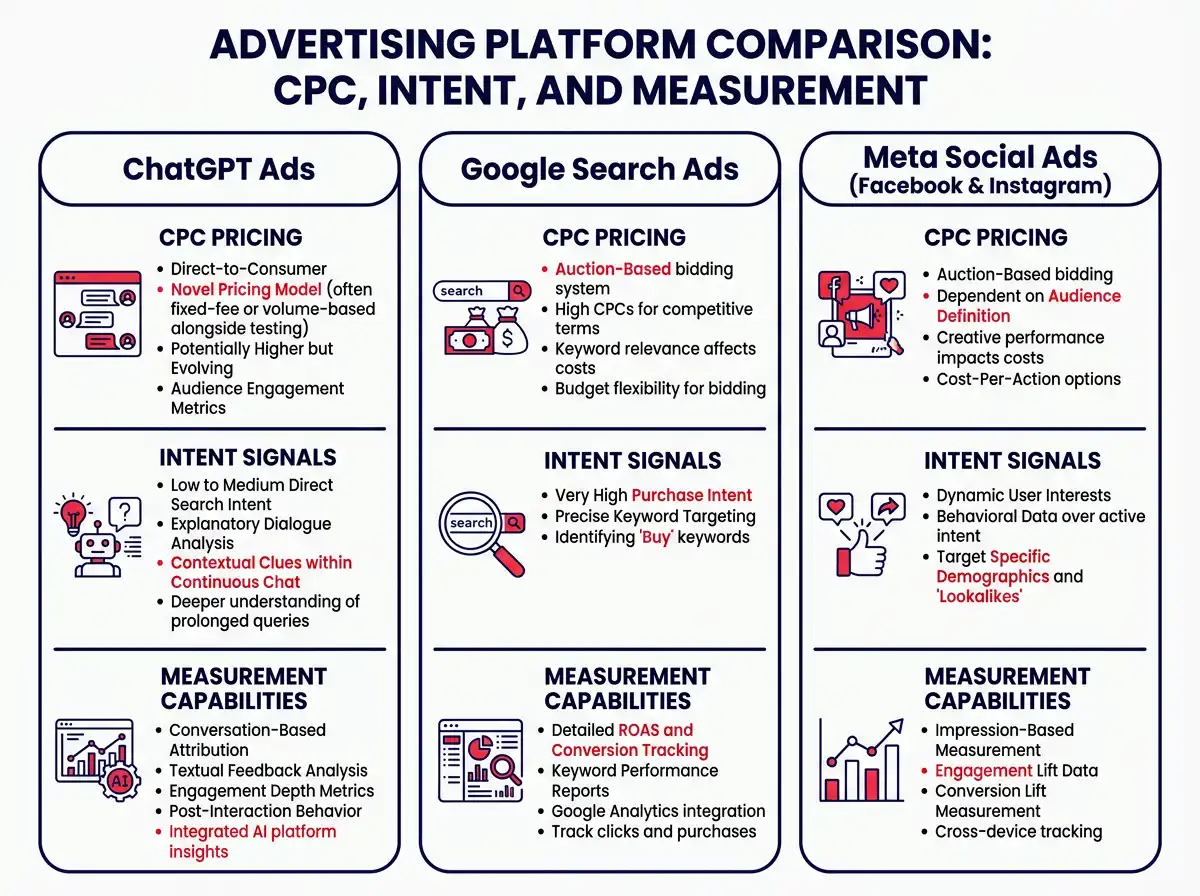
Comparing ChatGPT click intent to Google Search and Meta social
The intent question is where the most interesting debates are happening among paid media professionals right now.
Google Search intent is captured at the moment someone types a query. The keyword tells you a lot about what they want and where they are in the funnel. Meta works differently, using interest signals and behavioral data to reach people who may be receptive but aren’t necessarily actively searching. ChatGPT sits in a different category altogether.
When someone is using ChatGPT, they’re usually in active problem-solving or research mode. They have a question and they want an answer. In that context, a relevant ad shown at the right moment could perform very well, because it’s appearing during a focused, engaged interaction rather than interrupting a social scroll.
OpenAI has reported that fewer than 7% of ads on the platform are rated by users as low relevance. For a platform this new, that number suggests targeting is working reasonably well. They’re also actively working to improve ad relevance over time, which should help performance metrics as the platform matures.
For advertisers comparing ChatGPT ads cost against existing channel benchmarks, the honest answer is that the comparison is still incomplete. The platform is generating real OpenAI advertising revenue at a scale that demands attention, but the measurement tools needed to make fully confident budget decisions are still catching up to the speed of the product’s growth.
What smart media teams are doing right now is treating ChatGPT as a test channel with controlled budget, building their own measurement frameworks, and documenting early results so they have real data when the platform opens up more broadly. The window to gather first-mover data before competition drives up costs is still open, but it’s getting smaller every week.
The advertisers who will be best positioned later in 2026 are the ones who started learning the channel before everyone else showed up. With self-serve access opening, over 600 managed advertisers already active, and a former Meta executive running sales, the “wait and see” window is closing faster than most people expected.