TL;DR
- Freepik rebranded to Magnific, consolidating image generation, video, 3D, audio and real-time collaboration under a single platform name for the first time.
- The bootstrapped company from Malaga, Spain reached $230 million in annual recurring revenue and over one million paying subscribers with no outside investment, and Andreessen Horowitz ranked it the top generative AI web company in Europe by users.
- The name comes from the May 2024 acquisition of Magnific AI, a tool specialising in AI image upscaling and enhancement.
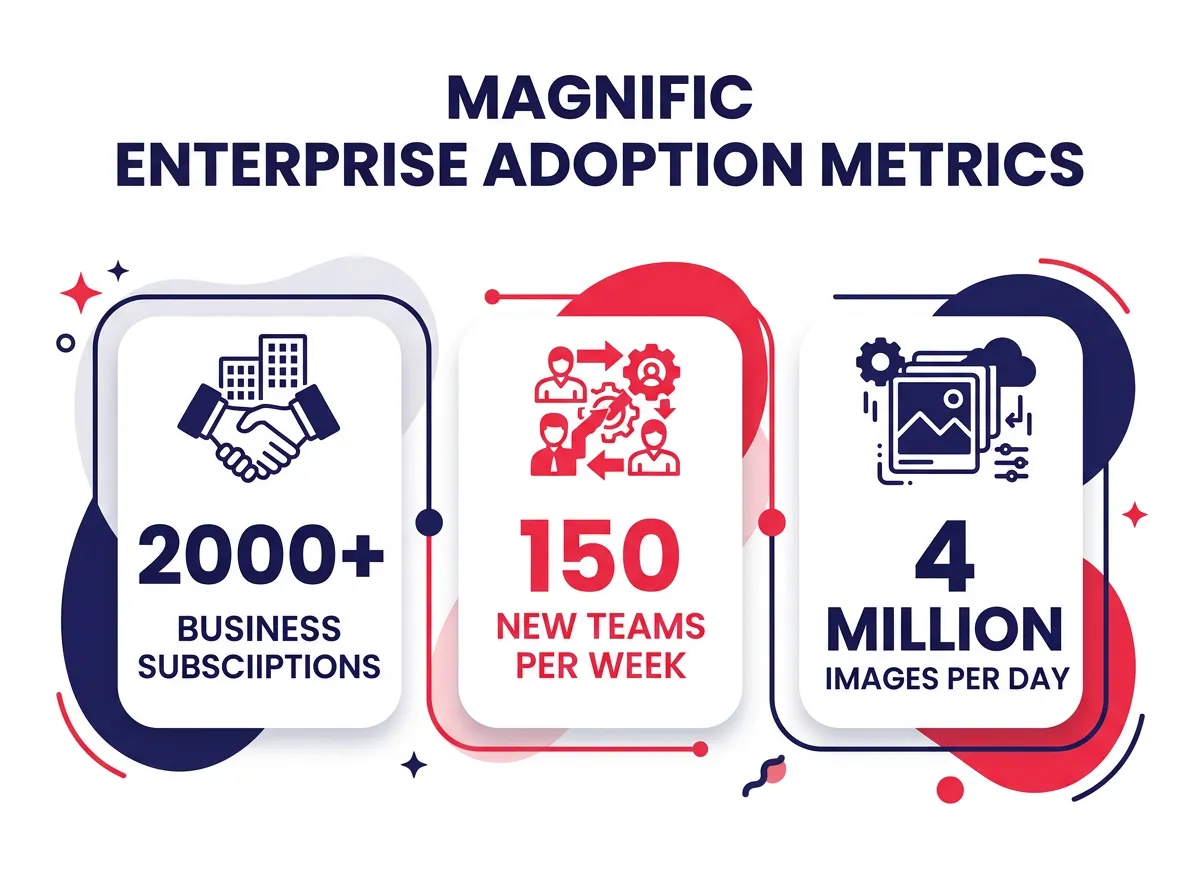
- The platform is model-agnostic, letting teams select third-party video models including Google Veo 3.1 and ByteDance Seeddance 2.0, and it generates over four million images per day.
- The Business plan launched in January 2026, passed 2,000 subscriptions in six weeks and adds around 150 enterprise teams a week; clients include the BBC, Puma, R/GA and Amazon Prime Video.
A bootstrapped company from Málaga, Spain, with zero venture capital just rebranded to challenge every well-funded AI creative platform in the world. That’s not a headline you read every day. And if you’re a business professional who depends on creative output at scale, the story behind that move is worth understanding.
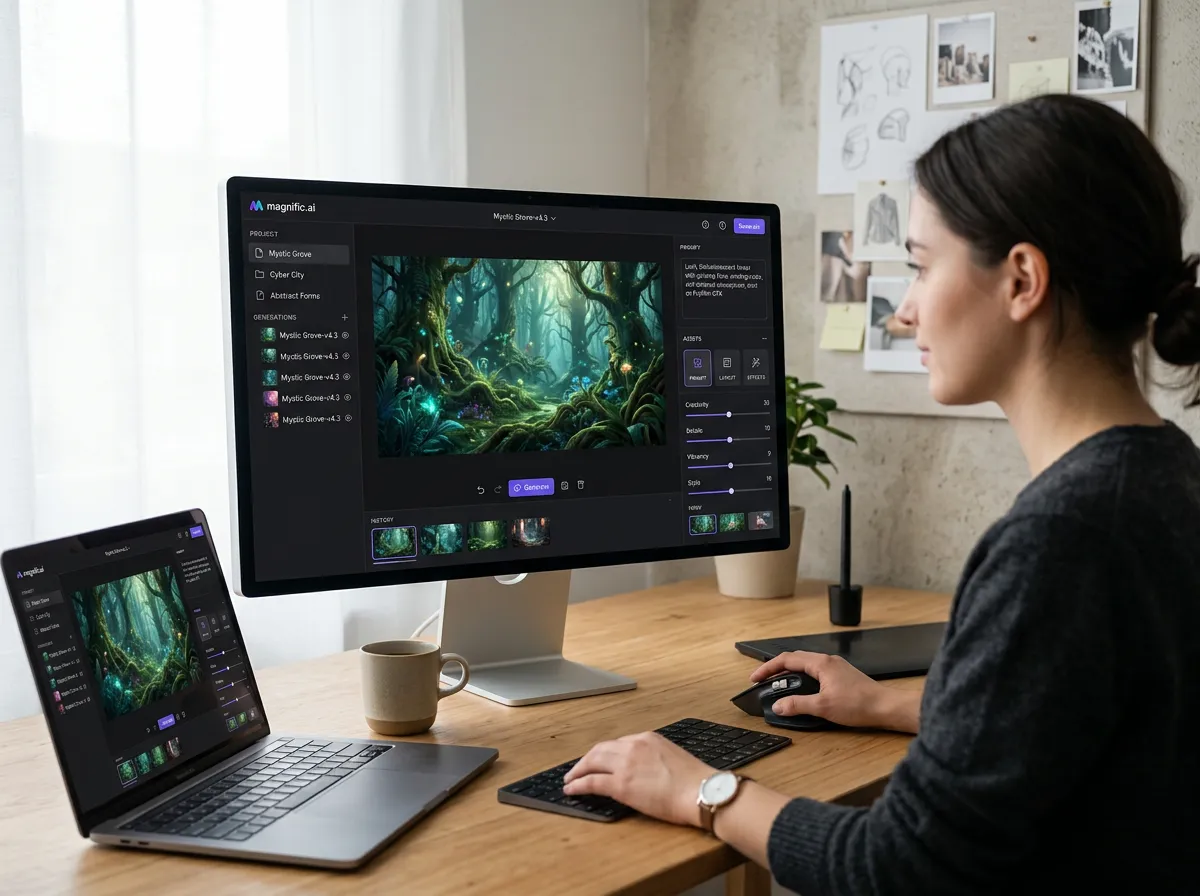
Freepik, the stock asset platform that quietly grew into a full AI creative suite, has officially become Magnific. This isn’t a logo refresh or a marketing exercise. The rebrand consolidates the company’s entire product stack under one name for the first time, pulling together image generation, video, 3D, audio, and real-time collaboration inside a single platform.
The numbers behind this decision are hard to ignore. The company sits at $230 million in annual recurring revenue, over one million paying subscribers, and an enterprise client list that includes the BBC and Amazon Prime Video. Andreessen Horowitz ranked it as the top generative AI web company in Europe by users. All of this without a single round of outside investment.
What the rebrand to Magnific actually reveals is not just a company changing its name. It points to a broader shift in how creative platforms are being built, who they’re being built for, and what creative work is going to look like for enterprise teams going forward.
- From Stock Assets to AI Creative Infrastructure: The Story Behind the Rebrand
- What Magnific Actually Offers Enterprise Teams Right Now
- The No-Collar Economy: What This Shift Means for How Your Business Creates
From Stock Assets to AI Creative Infrastructure: The Story Behind the Rebrand
How Freepik Grew From a Search Engine to a Global AI Platform
Freepik launched in 2010 as a graphic resource search engine. The idea was simple: help designers find free and premium stock assets without the hassle of scattered searches across multiple sites. It worked. The platform grew steadily and organically, reaching 100 million monthly visits and $230 million in ARR without raising outside investment. That’s a genuinely rare achievement in any sector, let alone the current AI space, where capital raises often run into the hundreds of millions before a product reaches meaningful scale.
What made Freepik different from the start was business model discipline. Rather than chasing valuation multiples through fundraising rounds, the company focused on building a product that users were willing to pay for directly. That foundation gave it the flexibility to invest in AI capabilities on its own terms, at its own pace, without investor timelines breathing down its neck.
The shift from stock asset platform to AI creative infrastructure didn’t happen overnight. It happened through a series of strategic moves that most observers outside the design industry missed entirely. Freepik began integrating AI image generation tools, acquired emerging AI companies that filled specific capability gaps, and built out what eventually became a multi-tool creative ecosystem. Each piece was functional on its own, but the overall experience was fragmented. Users had to navigate between different interfaces and product names just to complete a single creative workflow.
That fragmentation is exactly the problem the rebrand is solving.
Why the Name “Magnific” and What the Consolidation Actually Changes
The name Magnific comes from the May 2024 acquisition of Magnific AI, a tool that specialized in AI-powered image upscaling and enhancement. At the time of acquisition, Magnific AI had already built a solid reputation among professional designers for the quality of its output. Adopting that name for the entire consolidated platform signals something intentional: the company wants to lead with quality and capability rather than legacy brand recognition.
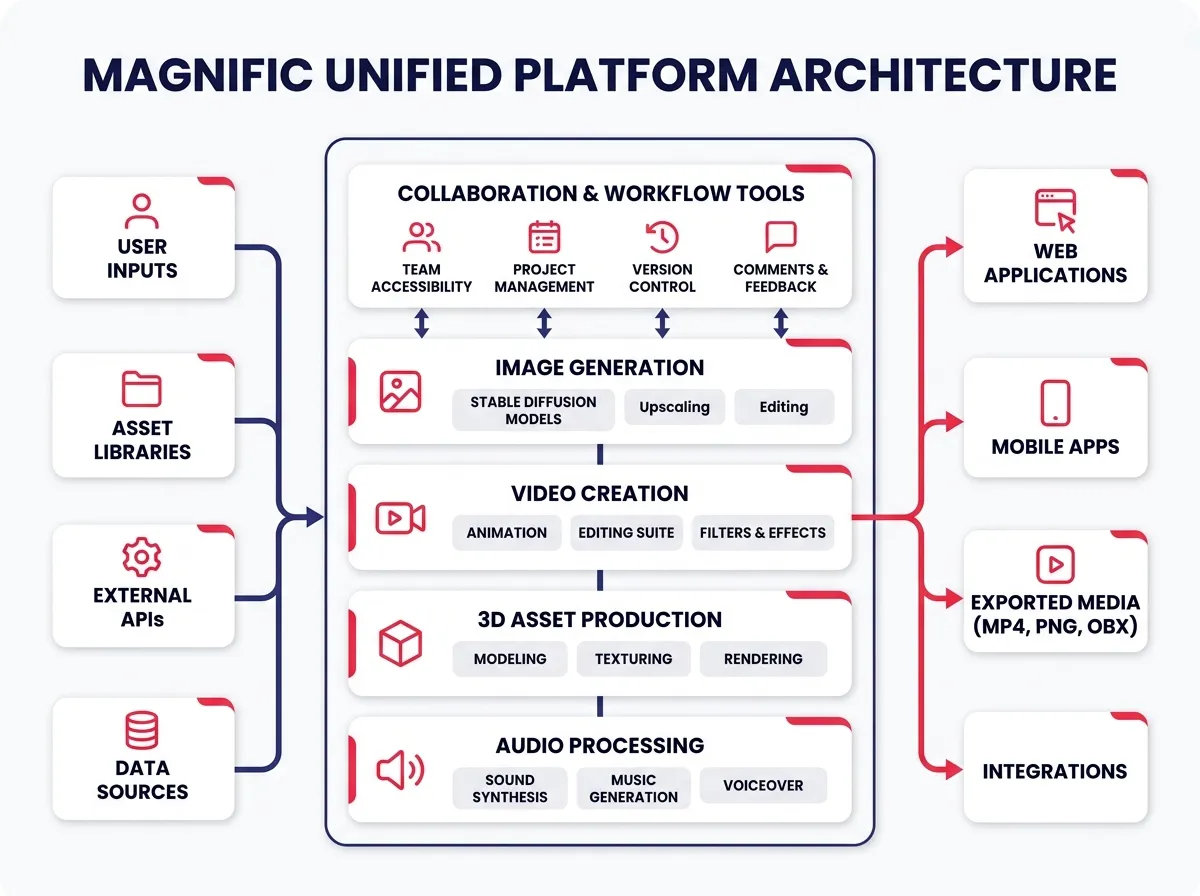
The consolidation itself is more significant than the name change. What previously existed as a fragmented portfolio (Freepik stock assets, the Magnific upscaler, and several other separately branded tools) is now unified into a single platform covering image generation, video creation, 3D content, audio production, and collaborative workspaces.
For enterprise procurement teams, this matters because it reduces the number of vendor relationships, contracts, and integration points required to support a full creative workflow. Instead of managing three or four separate tools from different providers, a team can work inside one environment with consistent access controls, billing, and support.
The Andreessen Horowitz ranking placing the company ahead of better-capitalized American competitors is also worth pausing on. It reflects actual user behavior rather than press coverage or funding announcements. When users choose a platform in meaningful numbers despite the presence of heavily backed alternatives, it usually means the product is doing something right at the workflow level, not just at the feature level.
What Magnific Actually Offers Enterprise Teams Right Now
The Full Creative Stack: What Is Now Available in One Platform
The core promise of Magnific as a unified platform is that enterprise teams can move from brief to finished asset without switching tools. In practice, that means access to AI image generation, video creation, 3D content, audio, and a real-time collaborative workspace, all within the same environment.
One of the most strategically important features for enterprise buyers is that Magnific is model-agnostic. Rather than locking users into a proprietary AI model, the platform lets enterprise teams select from third-party video AI models including Google Veo 3.1 and ByteDance Seeddance 2.0 alongside Magnific’s own tools. That’s a meaningful differentiator.
Model lock-in is one of the most common concerns that comes up in enterprise AI procurement conversations. When a platform ties you to a single underlying model, you take on the risk that the model falls behind competitors, gets deprecated, or becomes less cost-efficient over time. A model-agnostic approach transfers that risk back to the vendor and gives enterprise teams the flexibility to use whichever model produces the best output for a given use case.
The platform also generates over four million images per day across its user base. That’s not just a marketing stat. It reflects the kind of operational scale that typically requires robust infrastructure, reliable uptime, and consistent output quality. That scale matters to enterprise teams because it suggests the platform can handle high-volume production workflows without falling apart under pressure.
For teams that have been evaluating single-model competitors like Midjourney for image generation or Runway for video, Magnific’s integrated stack removes the need to stitch together multiple subscriptions and export workflows. The practical time savings for a high-output creative team can be significant.
Why 290-Plus Enterprise Teams Are Running Production Workflows on Magnific
The Business plan launched in January 2026 and surpassed 2,000 subscriptions in just six weeks. The platform is currently adding approximately 150 new enterprise teams per week. The client list includes the BBC, Puma, R/GA, and Amazon Prime Video.
What makes that list notable is the word “production.” These are not pilot programs or exploratory trials. These are organizations running real creative workflows through the platform at scale. That distinction matters because enterprise AI adoption has a well-documented pattern: initial enthusiasm followed by pilot projects that never fully convert to production use because the tools can’t handle real-world complexity, volume, or quality requirements.
When major media organizations and global brands move beyond pilots and start using a platform for actual deliverables, it tells you something about the reliability and quality consistency of the output. Broadcast and brand contexts have high standards for visual quality, brand accuracy, and turnaround speed. Meeting those standards consistently enough to become a production tool is a higher bar than winning a tech demo.
The real-time collaborative workspace is also a practical feature that’s easy to underestimate. Tens of thousands of creators use it daily, which means the platform functions as a shared creative environment rather than a solo tool. For enterprise teams where creative work involves multiple stakeholders, the ability to work simultaneously inside one environment cuts the coordination overhead that typically slows down creative production.
The combination of model-agnostic flexibility, integrated creative tools, and demonstrated production adoption makes Magnific a credible option for enterprise teams that have been managing fragmented AI creative stacks and looking for a way to consolidate without losing capability.
The No-Collar Economy: What This Shift Means for How Your Business Creates
When Studio-Grade Work No Longer Requires a Studio Budget
Magnific CEO Joaquín Cuenca has used the phrase “no-collar economy” to describe what’s happening in creative work right now. The framing is worth sitting with for a moment because it cuts through the usual AI hype and gets at something structurally real.
The industrial revolution created blue-collar work, physical labor organized at scale by machinery and factory systems. The digital revolution created white-collar work, knowledge work organized at scale by computers and enterprise software. Cuenca’s argument is that AI is now enabling a third category: creative output that requires neither physical labor nor institutional credentials. No collar at all.
That framing has real implications for how business professionals should think about creative capacity. Historically, producing studio-grade creative assets required either significant in-house resources (creative directors, art directors, production budgets) or expensive agency relationships. The economics were such that only organizations with substantial budgets could access consistent high-quality creative output.
AI-powered creative platforms change that equation. A Magnific Business subscription gives a team access to tools that would have required a production studio budget a few years ago. The quality ceiling has risen while the cost floor has dropped, and that gap is where the strategic opportunity sits for business professionals managing creative output.
For marketing teams, product teams, and content operations, creative capacity is becoming less of a budget constraint and more of a workflow and tool selection problem. The teams that settle on the right integrated platform early will have a real output advantage over those still managing fragmented AI tools or waiting on traditional agency cycles.
What 72 Percent of New Users Being Beginners Tells You About Creative Access
Here’s a data point that deserves more attention than it usually gets: 72 percent of new creators joining Magnific identify themselves as beginners. Not designers, not creative professionals, not people with formal training in visual production. Beginners.
That number tells you something important about where the barrier to professional-quality creative work now sits. When the majority of people adopting a platform that produces four million images a day are not trained creatives, it means the tools have genuinely crossed the complexity threshold that previously kept non-specialists out of professional creative workflows.
For business professionals, the implication is direct. Creative capacity is no longer primarily constrained by headcount or the cost of agency relationships. It’s constrained by whether your teams have access to the right integrated platform and the basic training to use it effectively. That’s a much more solvable problem than hiring constraints or agency budget cycles.
This also changes how organizations should think about creative roles. The question isn’t whether AI will replace creative professionals. The more useful question is how the role of creative professionals changes when the tools do more of the technical production work. Based on how platforms like Magnific are actually being used, creative professionals shift toward direction, judgment, and brand consistency rather than execution hours.
For teams managing creative output without large dedicated creative departments, the 72 percent beginner adoption rate is a signal that the learning curve is genuinely manageable. This isn’t a tool that requires deep technical expertise to produce usable output. It’s a platform designed for people who need results.
The broader shift that Magnific represents is not just about one company’s rebrand. It’s about what happens when an integrated, model-agnostic, enterprise-ready creative platform becomes accessible at a subscription price point rather than a capital investment. The companies that recognize this shift early and build their creative workflows around it will be producing more, faster, and at lower per-unit cost than those still treating AI creative tools as experimental add-ons.
The story of a bootstrapped company from Málaga rebranding to take on well-funded global competitors is interesting on its own. But what it reveals about the future of creative work is more interesting still. Production economics have changed, the creator class has expanded, and the integrated platform that wins enterprise trust early is likely to become the default creative infrastructure for the next decade of business output.