TL;DR
- The post cites a Hubspot statistic that 88% of smartphone users who run a local business search are likely to contact or travel to the physical store within 24 hours.
- Google decides local results on three factors: relevance of the profile and website to the keyword and search intent, prominence built from backlinks, mentions and reviews, and distance between the searcher and the business location on Google Maps.
- General SEO chases national keywords, shows as blue links 1 to 10 and rests on content, backlinks and Core Web Vitals; local SEO targets a street, district or province, shows as the Local Pack with map, images and review scores, and rests on Google Business Profile, real reviews and local citations.
- A Google Business Profile name should combine the real brand name with only one or two main keywords plus a longtail term; a name that does not match the storefront sign, deliberate keyword spamming or paid fake reviews can get the profile suspended.
- Off-page work covers local citations on directories such as Wongnai and YellowPages, PR with local news sites and influencers, and offline-to-online campaigns; for AI Overviews and zero-click search the post points to Entity SEO with complete profile data, statistics, images and FAQs.
Have you ever wondered why, when you search for a restaurant, clinic, or service on a search engine, especially Google, your competitors’ shops tend to pop up prominently on the map, while your own shop is nowhere to be found, even though you have already decided to do SEO? This problem may not stem from how famous or trendy your shop is alone, but rather from “winning over the algorithm at the local level.” That is because Google currently places great importance on the “Local Pack” format, which pulls up maps, coordinates, and nearby shops to display at the very top, surpassing standard website search results.
This article will introduce everyone to “Local SEO” a strategy for boosting local search rankings that is not just about placing a pin on the map, but about building an ecosystem that reinforces credibility, establishes a strong identity in the digital world, and turns search volume into real, sustainable in-store sales.
What Is Local SEO?
Local SEO (Local Search Engine Optimization) is the process of optimizing information and websites to make them more effective, so that a business appears at the top of Google search results for a “specific area or location” in particular, such as doing SEO by focusing on keywords that are tagged with a place name, in order to attract a Niche Marketing customer group with specific needs in that area, and to enable your business to compete with and beat nearby competitors.
And with the behavior of modern consumers who increasingly prefer to search in a more specific way in order to find shops that are convenient to travel to and help reduce travel costs, along with an interesting statistic from Hubspot stating that “88% of smartphone users who perform a local business search (Local Search) are likely to contact or travel to the physical store within 24 hours,” this makes doing Local SEO a key that helps close sales while also raising the profile of the business so it becomes more widely known.
How Does Google Work for Local Search?
When a user types a search query related to a location, such as “coffee shop near me” or “orthodontic clinic Lat Phrao,” Google’s algorithm considers 3 main factors in deciding which information to pull up and display.
- Relevance: Google analyzes how well your business profile and website align with the Keyword and Search Intent that your target audience is searching for.
- Prominence: The system evaluates the brand’s reputation in the online world by pulling information from various sources, such as Backlinks, references in articles or on social media, reviews, and the consistency of information updates.
- Distance: Google primarily calculates the distance between the user’s coordinates and your business location on the map (Google Maps). The closer your business is to the target audience, such as a restaurant near an office building or a stationery shop near a school, the higher the chance the business has of being displayed.
Why Is Local SEO Important for Business?
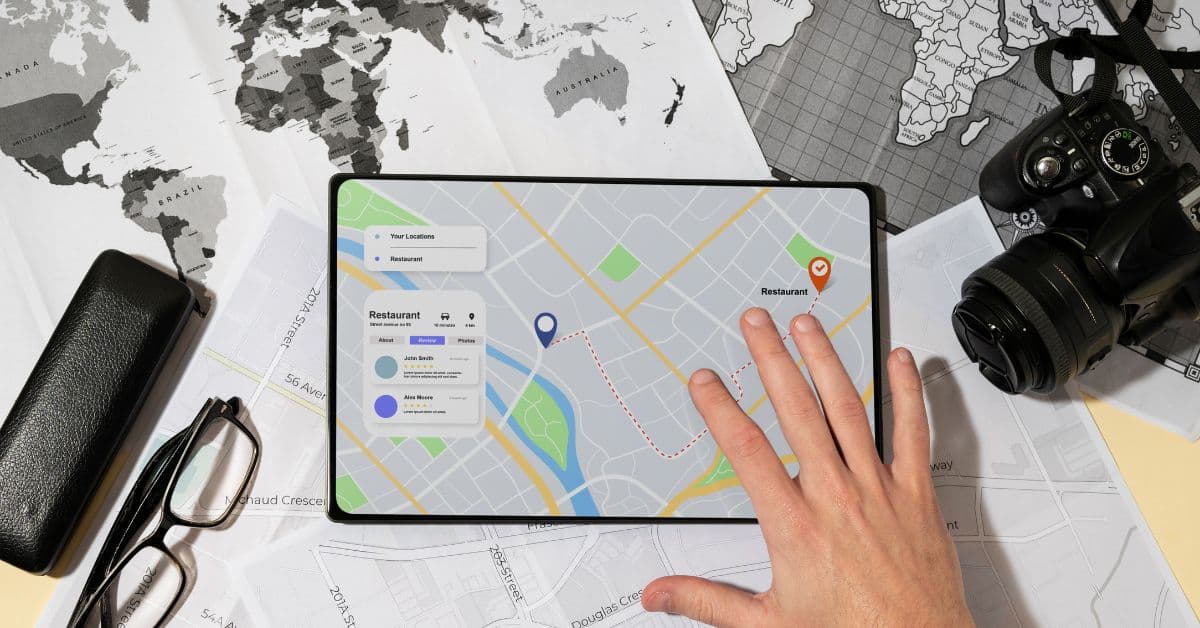
- Beat the big brands with Niche Marketing: A business does not need to compete with large companies using broad keywords such as “furniture shop,” but can target a local audience with the phrase “furniture shop Bang Na” to increase the chances of reaching customers in the area.
- Reach an audience ready to pay: Those who search for information and locations usually have a high level of purchase intent. Appearing on the search results page at the moment customers are making a decision clearly helps increase the chances of generating sales.
- Improve Traffic quality and build on your strategy: Visitors who come from Local Search are usually an audience that is genuinely likely to be interested in your business, and this data can be used to build more accurate Retargeting Ads.
- Manage your marketing budget cost-effectively: It helps reduce the expense burden of advertising (Google Ads) that has a high cost per click (CPC) on broad keywords, by shifting the focus to creating organic results that reach people in the local area instead.
How Is Local SEO Different from Regular SEO?
To get a clear overall picture when planning a strategy, the differences between traditional SEO and Local SEO are as follows.
| General SEO | Local SEO | |
|---|---|---|
| Scope and target audience | Focuses on national or global targets, competing with broad keywords that general users search for | Targets a specific area, such as a street, district, or province, narrowing down the circle of competitors |
| Display format (SERP) | Displayed as website links (Organic Blue Links) ranked from 1 to 10 | Emphasizes the “Local Pack” format (navigation map, images, review scores) |
| Main ranking factors | In-depth content, high-quality Backlinks, and good Core Web Vitals | Google Business Profile (GBP), real customer reviews, and Local Citations |
| Suitable businesses | E-Commerce businesses, news websites, brands that can ship products/services nationwide | Businesses with a physical storefront, clinics, restaurants, or services that require on-site visits |
Keyword Analysis for Local Businesses
Before starting to optimize your website or create a profile on Google Business Profile, the first thing a business owner must prioritize is “Keyword Research,” in order to understand which words local customers use to search for products or services, which will help guide the right target audience to your business.
The structure of an effective Keyword for doing Local SEO is usually in the form of a Longtail Keyword that targets a specific area, such as “business type + location” (coffee shop Chiang Mai Mae Rim, dental clinic Ekkamai, air conditioner repair technician Nonthaburi). In addition, analyzing Search Intent is also something that cannot be overlooked. For example, if a customer searches for the phrase “restaurant reviews near me,” they usually want to read articles or watch videos to support their decision, rather than just looking at coordinates on a map. Creating content that meets these intents is therefore a key that should not be overlooked.
3 Principles for Doing Local SEO to Rank
Once you have accurate keywords, capturing top rankings on the Local SEO search results page (SERP) requires 3 coordinated principles, namely:
1. Manage Your Business’s Google Business Profile
Google Business Profile (GBP) (formerly known as Google My Business or GMB) is a free tool from Google designed to help local businesses and shops manage their online identity, so that business information appears prominently on the search results page (Google Search) and on the map (Google Maps).
Having a complete GBP profile is like opening a “digital storefront” that helps customers discover important information immediately, whether it is the location coordinates, phone number, opening and closing hours, product images, or review scores, which is considered the heart of successfully doing Local SEO for a shop. Here are some tips for managing a Google Business Profile to suit Local SEO:
- Set a name that is accurate and search-friendly: You should use the real brand name combined with only 1-2 main keywords and a Longtail Keyword (for example, “ABC Dental Clinic, braces, root canal treatment, Phra Khanong branch”), and you should keep the name concise, avoiding Keyword Stuffing or cramming too many search terms into the shop name.
- Use accurate information: Avoid altering the business name or information so that it differs from reality. If Google detects that the name on the profile does not match the storefront sign, or that there is deliberate keyword spamming, your business profile may be Suspended from display immediately.
- Have a review management strategy: Good reviews are not just about a large quantity, but about the “consistency” of the reviews. A business should have a plan to continuously encourage customers to leave reviews, and avoid hiring people to create fake reviews, in order to prevent the problem of being suspended later on.
2. Content Optimization (Local On-Page SEO)
Managing various pieces of information and content on your website pages or on your Google Business Profile is also considered an important factor that can help push your business to the top ranks. You can do On-Page SEO as follows:
- Target content to reach the area: Create articles or content on your web pages that connect with the context of that particular area by inserting Longtail Keywords that specify the location (such as the name of a district, street, or province) into key elements, including the Title Tag, Meta Description, and distributing them naturally throughout the content, so that Google understands your clear service area.
- Create a Local Location Page: If your business has multiple branches or a variety of service areas, you should create a separate Landing Page specifically for each area (such as the Siam branch, the Lat Phrao branch) in order to capture keywords in that particular area more deeply.
- Embed Maps to pinpoint coordinates: Add clarity regarding location by embedding Google Maps or navigation coordinate links into your contact page, article pages, or various branch pages.
- Be Mobile-Friendly: The target audience for Local SEO usually searches for information via smartphone, so your website must display perfectly, load quickly, and be easy to use on a mobile screen, in order to deliver the best experience to users and increase the chances of ranking.
3. Build Local Links Back to Your Business (Local Link & Off-Page SEO)
Building supporting links from external websites (Off-Page SEO) is considered an important mechanism that helps build credibility while confirming to Google that your business has a real presence and is recognized in the actual area, which is a key factor in boosting rankings on Google Maps and increasing the chances of reaching local customers effectively. Here are some popular techniques:
- Local Citations: Register your business information (name, address, phone number) on various Directory websites, such as Wongnai, YellowPages, in order to create reference Backlinks and reach the target audience on those platforms.
- Do PR with local media: Contact local news websites or influencers to spread news and information, such as special events or the opening of a new branch, in order to send Backlinks and build credibility for the business.
- Offline-to-Online: Organize offline events and draw customers into our online platforms (for example, inviting them to leave a review or receive a discount on the website) in order to create digital Traffic from the physical storefront.
Doing Local SEO in the AI Search Era
With the arrival of artificial intelligence technology, especially Google’s AI Overviews feature that focuses on providing answers directly on the SERP without users needing to click into a website (Zero-Click Search), modern businesses must therefore place importance on doing Entity SEO, or an SEO strategy that does not focus solely on Keywords alone, but is about doing AI SEO to improve content so that the search engine thoroughly understands the context of our business, through providing complete and thorough information on GMB, with reference statistics, clear images, and frequently asked questions and answers, so that the AI can pull your information to synthesize and display it as accurately as possible.
Local SEO is an important strategy that helps unlock the potential for local businesses to grow and compete with rivals sustainably. However, the key to successfully doing SEO does not end with accurately reaching the target audience alone, but also requires “consistency” in taking action, whether it is regularly updating the Google Business Profile or continuously encouraging real customers to leave reviews, in order to turn those searching on Google into actual in-store customers for you.
Elevate Your Digital Strategy with Relevant Audience
Relevant Audience, we are a full-service digital agency covering every dimension of online marketing with a team of experts and modern technology, to ensure that your business always stays ahead of the competition.
Our Services
- Paid Performance: Precise ad targeting, covering leading platforms (Google, Meta, TikTok, LINE)
- SEO & GEO: Boost your search rankings to the first page, making it easier for customers to discover you
- Creative & Branding: Design standout brands and content that communicate exactly the right message
- Web Development: Build and develop high-performance websites that meet business needs
- Growth Services: Additional services and solutions for businesses that want to grow
Contact us and request a quote today
Tel: 02 038 5055
E-mail: info@relevantaudience.com