Google just published something that’s been quietly overdue. New documentation on Google Search Central lays out, in plain terms, where Google sees itself in the SEO advice ecosystem and, more pointedly, where it thinks third-party tools and services belong. If you use SEO tools, work with an agency, or are trying to figure out AEO and GEO, this is worth reading carefully.
The short version: Google wants its own documentation to be your reference point for everything. Traditional SEO, AI-driven optimization, tool scores, agency recommendations. All of it.
What Google’s new guidance says about SEO and AI optimization
The documentation covers five things: Google asserting authority over SEO advice, claiming that same authority over AI search optimization, separating itself from third-party SEO tools, recommending its own tools in their place, and asking businesses to think critically about third-party services.
That fifth point is where most of the industry chatter has landed. The guidance says to “think critically about using third-party SEO tools and services,” and the phrasing covers both tools and services, which means agencies and freelancers are in scope too.
Google positions itself as the ground truth for SEO advice
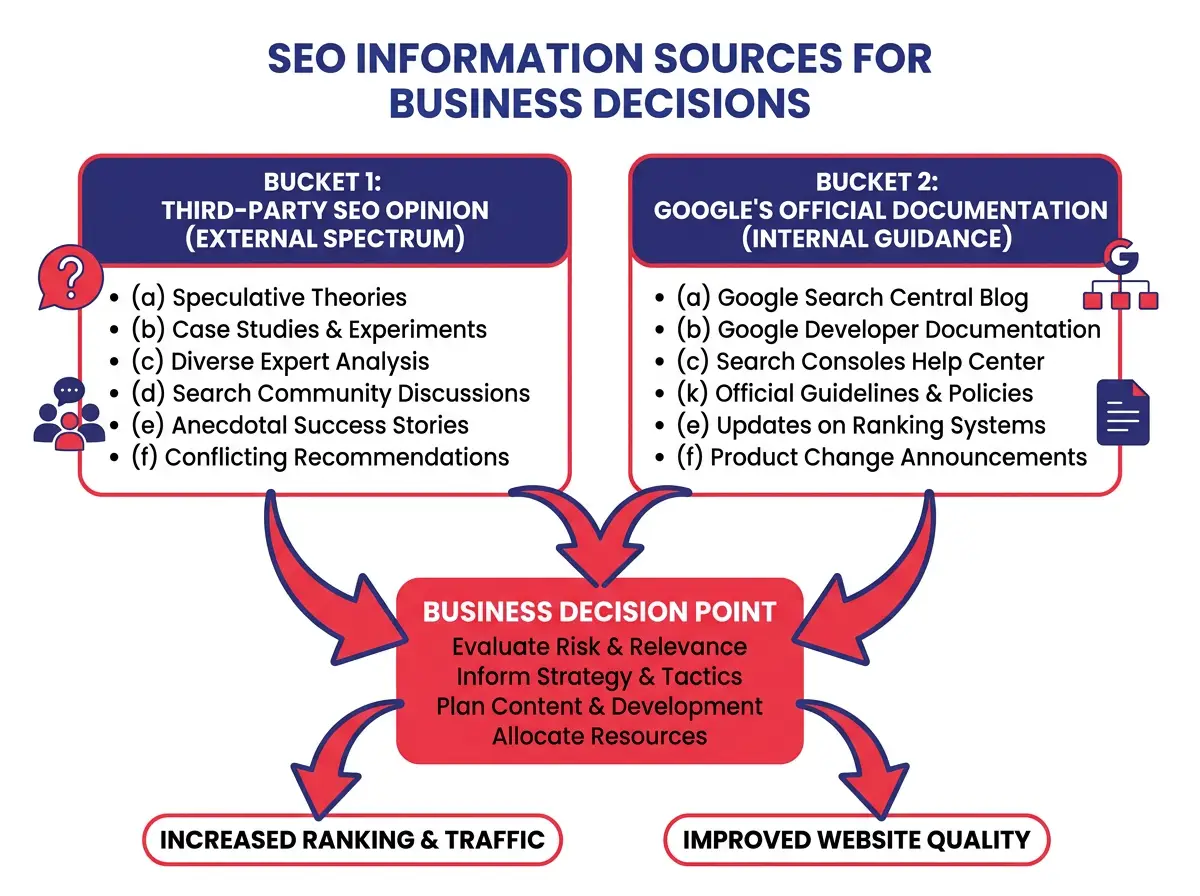
The documentation splits SEO information into two buckets. On one side: third-party opinion, based on data or experience. On the other: Google’s own official documentation. Then it tells you to use the second bucket to evaluate the first.
Here’s the exact language:
“While some advice is helpful, others may misinterpret or make claims about what ‘Google says’ or how Google ranking systems work. In general, good advice either qualifies their claims as opinion based on data or experience, or backs up their claims by citing official Google Search guidance.”
Reading that charitably, it’s reasonable. You should know whether the SEO advice you’re following comes from someone’s interpretation of ranking signals or from something Google actually said. Reading it less charitably, Google is positioning itself as the only clean source of truth in a space where plenty of smart, credible practitioners have built real expertise. Both readings are probably a little bit right.
How AEO and GEO are pulled into Google’s authority claims
The guidance doesn’t stop at traditional SEO. It names AEO (Answer Engine Optimization) and GEO (Generative Engine Optimization) directly, which is notable on its own given how much third-party advice has rushed into that space over the last couple of years.
Google’s move here is essentially the same one it made with SEO: acknowledge that third-party advice exists, then set Google’s own documentation as the standard for evaluating it. The documentation says businesses should measure any AI SEO guidance against Google’s official resources, including its guidance on generative AI optimization.
This matters because AEO and GEO are still new enough that nobody has fully figured them out yet. Google is planting a flag before the space gets noisier. Whether that’s helpful or self-serving depends on how much you trust Google’s public documentation to reflect how its systems actually work, which is a fair thing to be skeptical about.
Google vs. 3rd-party SEO tools
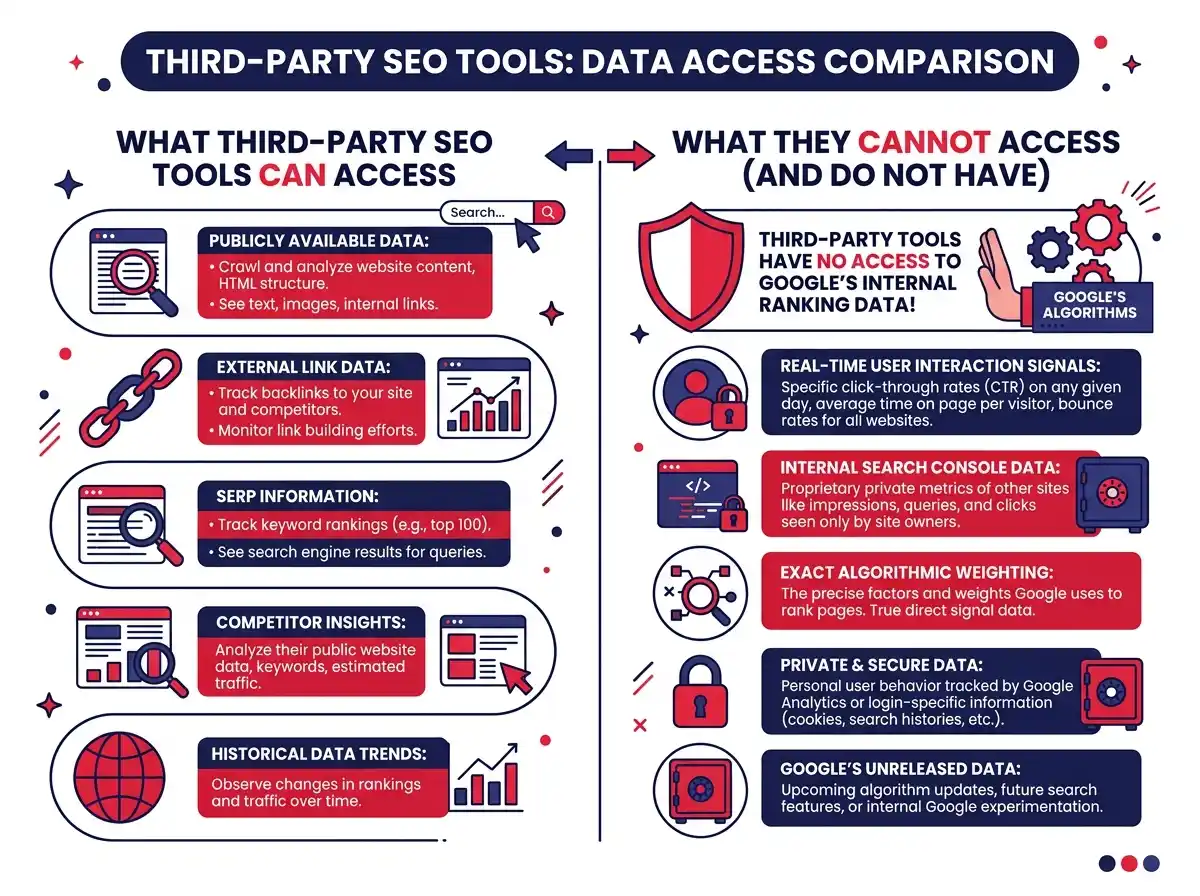
This is where the guidance gets specific. Google isn’t saying third-party SEO tools are worthless, but it’s drawing a clear line around what those tools can and can’t tell you.
Why Google is distancing itself from third-party tool claims
The documentation calls out several categories of third-party services by name: sitemap tools, indexing tools, content generation services, ranking advice tools, and tools that make promises around AEO and GEO performance.
Then it says this:
“Some of these services may be helpful in your work, while others may make claims or imply that what they do is somehow ‘acceptable’ or ‘approved’ by Google Search.”
Followed by:
“Google doesn’t evaluate third-party services, so be wary of such claims and those making them.”
That’s a fairly direct shot at a pattern that’s genuinely common in the SEO tools market, where products imply Google alignment without ever having it. Fair enough.
But there’s a second piece of this that hits closer to everyday practice. A lot of teams look at scores, forecasts, and performance predictions from popular SEO tools and treat that data as if it’s reflecting something real inside Google’s systems. Google addresses this head-on:
“Third-party tools don’t have access to our internal ranking data. They can’t guarantee performance. Any predictions are their own and like predictions generally, may not happen.”
That’s worth sitting with for a moment. Every SEO score you’ve seen from a third-party platform is that platform’s model. It might be a good model. Some of them are built by people who know this stuff deeply. But it’s not Google’s assessment, and Google is now saying clearly that those two things are not the same.
This also runs alongside an update Google made to its older “Do you need an SEO?” documentation, which now includes language telling businesses to check their SEO provider’s recommendations against official Google guidance and to watch out for anyone claiming Google approval.
Google Search Console as the recommended alternative
After laying out all of those caveats, the documentation closes with a concrete recommendation: use Google Search Console.
The exact line is: “Whether you use a third-party tool or not, we strongly encourage using our first-party tool, Google Search Console, which provides you with key information and data directly from Google Search itself.”
Search Console isn’t a new suggestion. Most people doing serious SEO work already use it. But the framing here is different. Google is positioning it as the direct answer to the data reliability problem it just described. If you want numbers that come from Google’s actual systems, Search Console is the only place you’re getting them.
The practical read on all of this isn’t “throw out your SEO tools.” Tools are genuinely useful for audits, research, content planning, and competitive analysis. The point is narrower: when a tool gives you a score or a forecast, you need to understand what that number actually is. It’s an estimate built on that tool’s methodology, not a signal from inside Google.
What Google has done here is unusual in its directness. The company has said, more plainly than before, that SEO advice should trace back to official Google documentation, that AI SEO practices like AEO and GEO fall under the same standard, and that third-party tool data is not Google data. Take Search Console seriously, cross-check recommendations against official sources, and be skeptical of anyone claiming Google’s blessing for their product or method.