TL;DR
- Performance Max became generally available in November 2021 and runs one campaign across Search, Shopping, YouTube, Display, Discover, Gmail and Maps.
- Audience signals are hints, not targeting; asset groups hold the creative, and listing groups decide which feed products an asset group can advertise.
- Search campaigns take priority when a query is identical to one of their exact match keywords; brand exclusions keep PMax off your own brand searches.
- PMax needs reliable conversion tracking and steady conversion volume; for leads, feed back qualified or offline conversions so it does not chase cheap form fills.
Google Ads Performance Max is a single campaign type that buys ads across all of Google's inventory, including Search, Shopping, YouTube, Display, Discover, Gmail and Maps, and uses Smart Bidding to decide where each ad shows based on your conversion goal. You supply the goal, budget, creative assets, product feed and audience signals; Google's system chooses channels, placements and bids. It works best for advertisers with reliable conversion tracking and enough conversion volume, and needs guardrails to stop it spending on brand searches or low-quality placements.
What is a Performance Max campaign?
Performance Max, usually shortened to PMax, became generally available in Google Ads in November 2021. In 2022 Google upgraded Smart Shopping and Local campaigns to Performance Max, which is why it is now the default for many retail and local advertisers.
The central idea is goal-based buying. Instead of building a separate Search campaign, Shopping campaign, YouTube campaign and Display campaign, you create one campaign with a conversion objective, such as purchases, leads or store visits, and a bid strategy of Maximize conversions or Maximize conversion value, optionally with a target CPA or target ROAS. The system then decides which of Google's channels and which auctions are most likely to produce that outcome.
Which inventory does Performance Max cover?
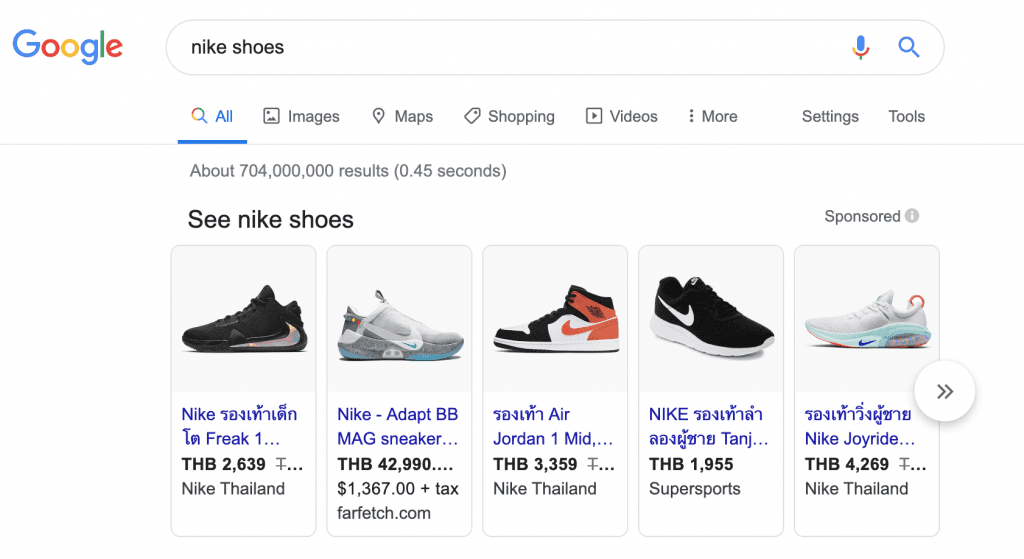
- Google Search, including text ads built from your assets and Shopping ads where a product feed is linked.
- YouTube, in-stream and in-feed, using your videos or, if you provide none, videos Google can generate from your images and text.
- The Google Display Network.
- Discover and Gmail.
- Google Maps, for advertisers with locations.
You do not choose the split between these channels directly. You influence it through the assets you provide, the feed, the audience signals, the settings described below, and the budget and targets.
Performance Max versus Search versus Shopping
The three campaign types overlap, and knowing where each fits prevents them competing with each other.
| Campaign type | Control you get | Best used for |
|---|---|---|
| Search | Keywords, match types, ad copy, negatives, bids by keyword | High-intent queries you want to control precisely, including brand terms |
| Standard Shopping | Product groups, bids by product, negative keywords, campaign priority | Retailers who want tight control over product-level spend |
| Performance Max | Goals, assets, listing groups, audience signals, URL and brand exclusions | Scaling conversions across all channels when tracking and volume are solid |
A common structure is Search for brand and core high-intent keywords, Performance Max for broad prospecting and product sales, and Standard Shopping kept only where product-level control matters more than reach.
What asset groups, listing groups and audience signals actually do
Asset groups
An asset group is a set of creative assets built around one theme or audience: headlines, long headlines, descriptions, images, logos, videos, a final URL and call to action. Google mixes these assets into ads for each channel. Separate asset groups for separate product lines or services let you match creative and landing pages to intent, instead of one generic set of messages for everything.
Listing groups
For retail campaigns linked to Merchant Center, listing groups decide which products from the feed an asset group can advertise. You can include or exclude by category, brand, product type, item ID or custom labels. Custom labels are the practical tool for splitting products by margin, price band or best-seller status.
Audience signals
Audience signals are hints, not targeting. You can add your customer lists, website visitors, custom segments based on search terms or websites, and interests. Google uses them as a starting point to find people likely to convert, but it can and does show ads to people outside those signals. Adding a signal does not restrict reach.
How much control do you really get?
Less than in Search, more than when PMax launched. The controls that matter most in practice:
- Final URL expansion. On by default, it lets Google send traffic to other pages on your site if it thinks they match the query better. Turn it off, or add URL exclusions, if some pages should never receive paid traffic.
- Brand exclusions. Brand lists can stop PMax serving on searches for your own brand, or for other brands you do not want to appear against.
- Negative keywords. Account-level negative keyword lists apply to Performance Max, and Google has since added campaign-level negative keywords.
- Location, language and ad schedule settings, as in other campaign types.
- Reporting. Google has expanded PMax reporting over time with search term insights, asset performance and channel-level performance views, though it still shows less than a Search campaign.
How PMax cannibalises brand Search, and how to stop it
Brand searches are cheap and convert well, so an automated system aiming for conversions will happily take them. When PMax captures brand queries, its reported cost per conversion looks excellent while it adds little that the brand Search campaign or organic listing would not have delivered anyway.
Google's serving rules give Search campaigns priority when a query is identical to an exact match keyword in a Search campaign. Beyond that, PMax and Search compete on Ad Rank. To keep brand traffic in Search:
- Run a dedicated brand Search campaign with the brand terms as exact match keywords.
- Apply a brand exclusion list for your own brand in Performance Max.
- Check search term insights in PMax for brand queries after the change.
- Compare total brand conversions across both campaigns before and after, not just PMax results in isolation.
Budget and conversion volume before PMax works
Google does not publish a hard minimum budget. The constraint is data: Smart Bidding learns from conversions, and a campaign that records only a handful a month has little to learn from. Practical conditions before launching:
- Conversion tracking that records real business outcomes, with junk actions such as page views set as secondary.
- A budget large enough to buy a meaningful number of conversions at your expected cost per conversion every week.
- For retail, a clean Merchant Center feed with accurate titles, prices and availability.
- Enough time. New campaigns go through a learning period, and results in the first weeks are not a reliable read.
For lead generation, feed back offline conversion data or qualified-lead signals where possible. Without it, PMax can optimise towards cheap form fills that sales never closes.
How to read PMax reporting when channel data is limited
- Judge PMax by business outcomes: revenue, qualified leads and new customers, measured in your CRM or analytics as well as in Google Ads.
- Use the channel performance view to see where spend goes, and look for spend shifting heavily to Display or YouTube without matching conversions.
- Review asset performance and replace low-rated assets, but do not remove assets so aggressively that asset groups lose variety.
- Check the placements report for low-quality apps or sites, and exclude them at account level.
- For a cleaner answer to "is PMax adding sales?", run a Google Ads experiment rather than comparing periods.
What this means for Thai advertisers
Thai retailers often sell through Shopee, Lazada and TikTok Shop alongside their own site, which complicates PMax measurement: a PMax ad can drive a sale that happens on a marketplace, where Google Ads cannot see it. Keep that in mind before cutting a campaign that looks weak on website conversions. Asset groups should include Thai-language headlines and descriptions written for Thai searchers, not translations of English copy, and images that work at small sizes on mobile. Lead generation advertisers who rely on LINE or phone enquiries need those contacts recorded as conversions, or PMax will optimise only for the form fills it can see. A Google Ads management review can set these guardrails, retail campaigns depend on a strong Google Shopping feed, and the video and display share of PMax is only as good as the creative from YouTube ads and display advertising work.
FAQ
What is Google Ads Performance Max in simple terms?
It is one campaign that shows ads across Search, Shopping, YouTube, Display, Discover, Gmail and Maps and lets Google's AI decide where to spend based on your conversion goal. You provide assets and goals rather than choosing each placement.
Does Performance Max replace Search campaigns?
No. Search campaigns still give keyword-level control and take priority when a query is identical to one of their exact match keywords. Most accounts use both, with Search covering brand and core terms.
Are audience signals targeting in Performance Max?
No. Audience signals are suggestions that help Google start learning. PMax can show ads to people outside those audiences if it predicts they will convert.
How do I stop Performance Max bidding on my brand name?
Add your brand to a brand exclusion list in the PMax campaign settings and run a separate brand Search campaign. Then check search term insights to confirm brand queries have moved.
Is Performance Max good for small budgets?
It can work, but it struggles when a campaign records very few conversions, because Smart Bidding has little data to learn from. With a small budget, a focused Search campaign is often the safer place to start.
If your Performance Max campaigns report strong numbers but you are not sure how much is brand traffic or marketplace sales Google cannot see, Relevant Audience can audit the setup and add the guardrails that make the results trustworthy.