Picture this: someone in a Thonglor cafe asks their phone about the best legal consultancy firms in Bangkok. Within seconds, they get a single, confident paragraph back. No links. No scrolling. No clicking through to a website. The AI just… answers.
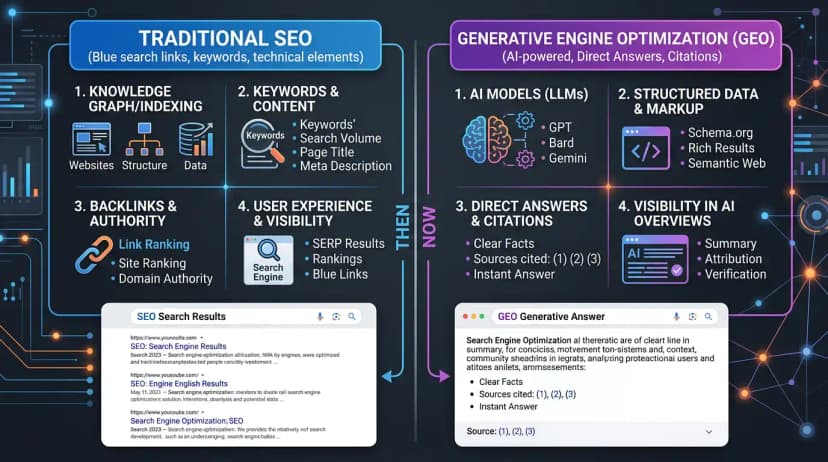
That moment is exactly where traditional SEO ends and something new begins. Generative Engine Optimization, or GEO, is the practice of shaping how AI-powered tools describe, reference, and recommend your brand when generating those kinds of responses.
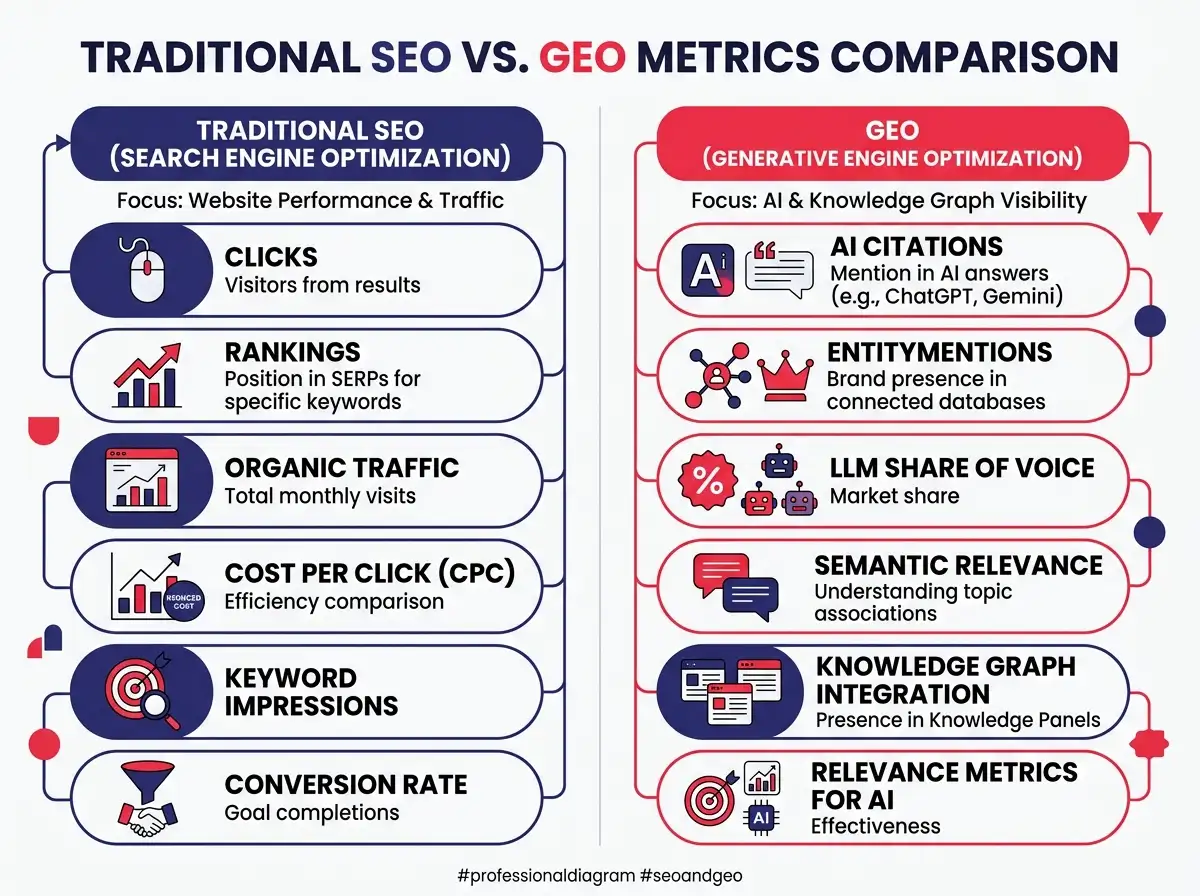
For marketing teams, the success metric has shifted in a way that’s hard to overstate. It’s no longer just about ranking on page one. It’s about whether your brand gets cited inside AI-generated answers at all. The teams that get this early will have a real advantage in shaping how AI models define authority in their industries.
What GEO actually means and why it differs from traditional SEO
From keywords to entity recognition: how AI models rank sources
Traditional SEO was built around a fairly simple idea: get humans to your website by matching what they search. You optimized title tags, built backlinks, chased keyword density. It worked because search engines returned a list of links for people to click through.
AI works differently. Tools like Google AI Overviews, ChatGPT, and Perplexity don’t return a list. They synthesize information and deliver a direct answer. To do that, they pull from sources they consider factually grounded and clearly structured — sources that establish clean relationships between people, organizations, products, and facts. This is what’s called entity recognition, and it’s closer to how a librarian thinks than how a search crawler does.
GEO is the discipline of making your brand easy for machines to understand, trust, and accurately describe. That means prioritizing factual grounding, narrative clarity, and semantic structure over raw keyword placement.
The citation economy: why being referenced matters more than being clicked
In the GEO world, a citation inside an AI-generated response is the new first-page ranking. Except it’s arguably more powerful, because the user often never looks further. The AI has already answered their question.
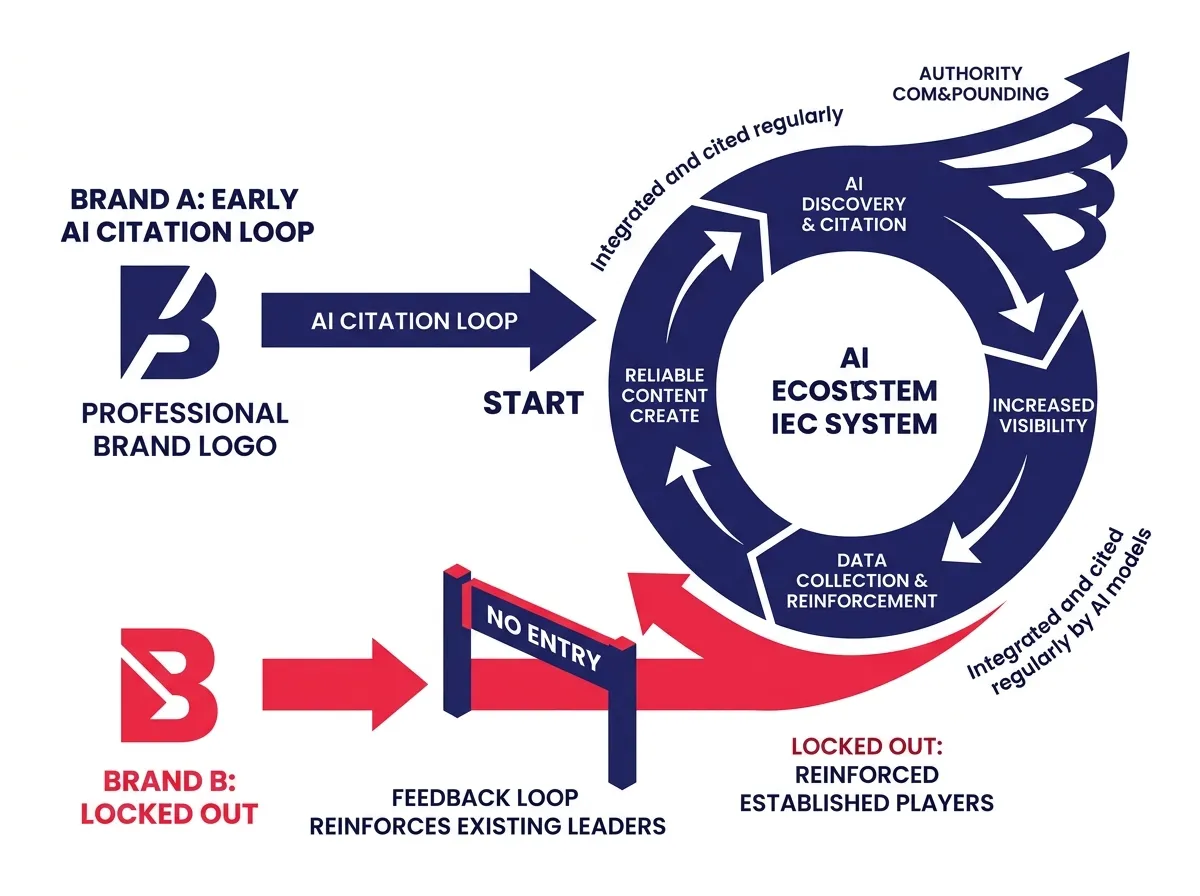
This creates what you might call a citation economy. Brands referenced frequently inside AI responses build compounding authority over time. Brands ignored by AI tools become structurally less visible — even if they have excellent websites and strong organic traffic. Click-through rate still matters for some channels, but it’s no longer the only measure of whether your content is doing anything useful.
How marketing teams can build a GEO-ready content strategy
Structuring content for machine readability without losing the human voice
Here’s something that surprised me when I first dug into this: content built for GEO tends to be better for human readers too. AI models favor sources that answer specific, intent-driven questions directly. They respond well to verifiable data, clear attribution, and semantic structure they can parse without having to guess.
In practice, that means a few things:
- Lead with the answer. Don’t bury the key insight three paragraphs in.
- Use structured formats. Headers, bullet points, and concise definitions help AI models extract meaning.
- Attribute claims clearly. Reference studies, name experts, cite data sources within the content itself.
- Write in plain, confident language. Clarity signals credibility to both AI tools and human readers.
You don’t need to strip out personality. A distinctive brand voice paired with strong structure is actually a competitive advantage here. The goal is to make your content easy for a machine to parse without making it feel like a machine wrote it.
High-authority placements and why not all media mentions are equal
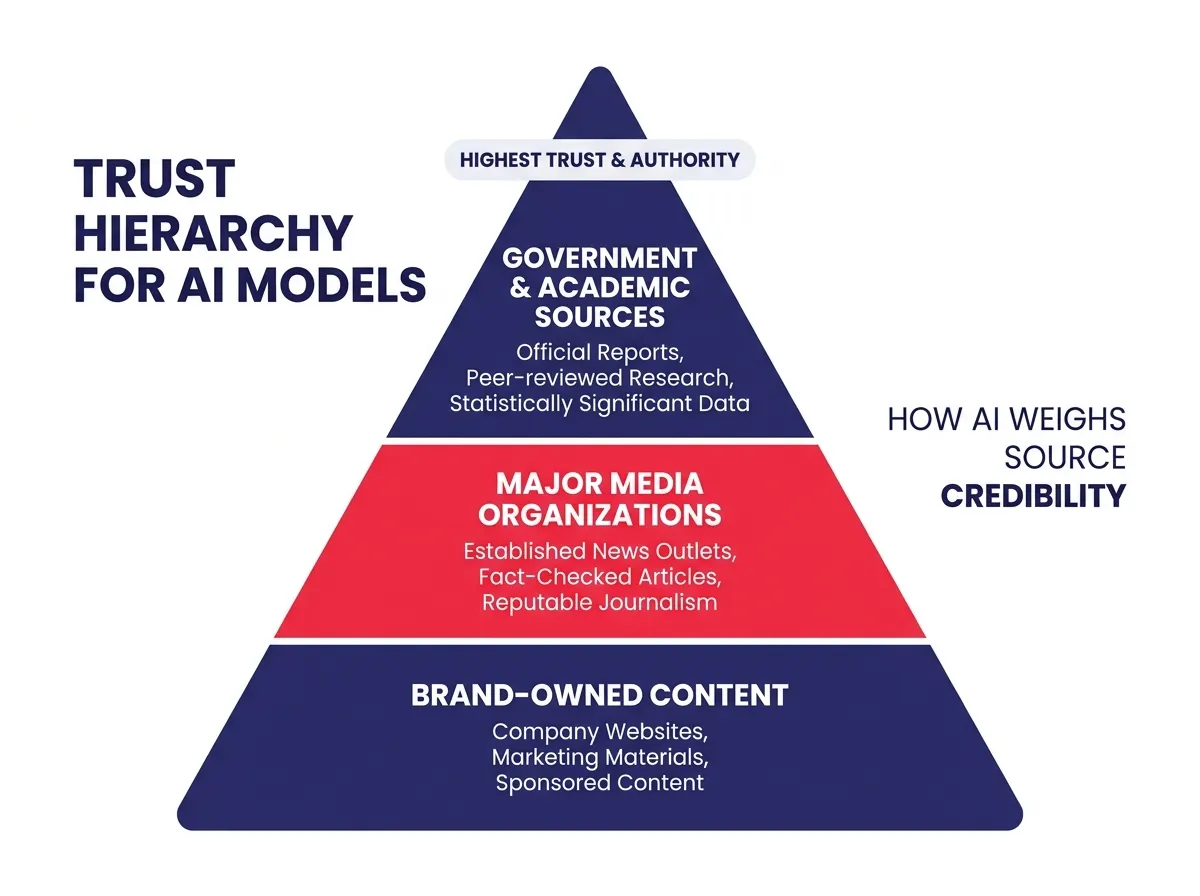
One of the fastest ways to improve your GEO standing is to get coverage in the publications that AI scrapers treat as high-authority sources. Major industry outlets, government-adjacent sources, academic publications, well-established trade media — these carry significantly more weight than a brand blog or a low-traffic news site.
Think of it as a trust hierarchy. When a high-authority source references your brand alongside accurate, specific information, AI models are more likely to absorb and repeat that framing in future responses. A single feature in a widely indexed industry publication can do more for your GEO profile than dozens of smaller mentions.
This changes how marketing teams should think about PR. Media placements aren’t just for human audiences anymore. They’re signals that teach AI systems what your brand stands for and how trustworthy it is.
The real risks of GEO and how to monitor your brand inside AI responses
AI hallucination and brand risk: when the machine gets it wrong
Here’s something most marketing teams haven’t built into their workflows yet: regularly querying AI tools to check how your brand is being described.
AI hallucination is real. Models sometimes generate confident-sounding descriptions of companies that are partially or entirely wrong. They might misstate your founding year, confuse you with a competitor, or describe a service you stopped offering two years ago. Left unchecked, these errors can quietly shape how potential customers and partners think about you — before they’ve ever visited your website.
The fix is active monitoring. Treat AI tools the way you treat social listening. Ask ChatGPT, Perplexity, and Google AI Overviews about your brand on a regular basis. Document what they say. When the output is wrong, correct it through authoritative content updates, updated Wikipedia entries, press releases, and structured data markup on your website. It’s not a one-time exercise.
Avoiding the authority feedback loop that locks out emerging brands
AI models consolidate around a small group of recognized authorities in any given industry. The brands already cited frequently get cited more. The ones not yet in the mix get harder to break into, even if they offer genuinely better products or services.
This is the part that keeps me up a little. It’s not that GEO is unfair — it’s that the window to establish early authority is closing, and most brands aren’t paying attention yet. Brands that delay don’t just miss short-term visibility. They risk becoming structurally invisible over time, pushed out of AI-generated conversations that increasingly shape buyer decisions before a website is ever visited.
Starting early, even with modest steps like restructuring existing content and pursuing two or three high-authority placements, builds a compounding advantage that’s much harder to replicate later.
The brands winning in this space aren’t waiting for GEO to become standard practice. They’re already treating AI-generated responses as a channel worth owning.