Most brands are sitting on years of material that could be working a lot harder. Blog posts, whitepapers, product guides, research reports — they’re already on your website, largely untouched, and quietly underperforming in a world where AI systems now synthesize answers instead of just listing links. But almost every conversation about AEO pushes teams toward creating something new rather than fixing what already exists.
That’s the wrong instinct.
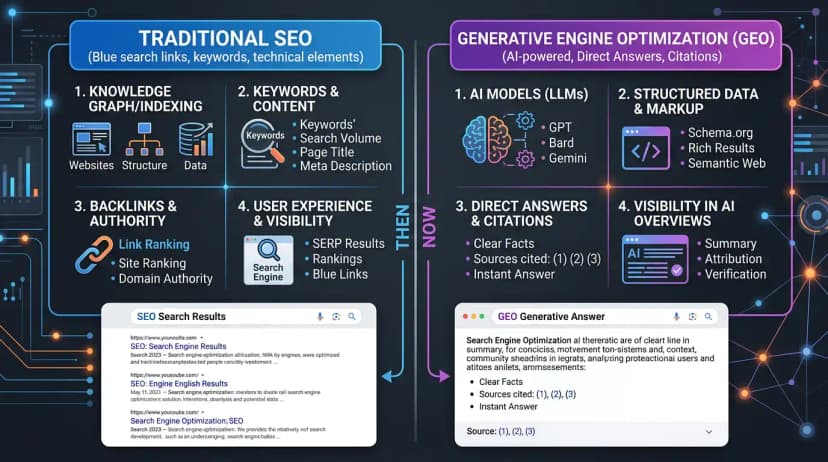
AEO, or Answer Engine Optimization, has become a real discipline for business marketers — sitting alongside traditional SEO and Generative Engine Optimization (GEO) as a core part of how smart teams think about search. Where SEO is about ranking pages in traditional results, AEO is about getting your content selected, quoted, and cited by AI tools like ChatGPT, Perplexity, and Google’s AI Overviews. These tools don’t hand users a list of links. They build answers. And they pull from sources they find credible and clear.
That distinction matters for how you approach your content. And the best starting point isn’t a blank document — it’s what you already have.
Evergreen guides, detailed frameworks, original research: these are often the strongest candidates for AEO reformatting. They already contain the structured thinking and subject matter depth that AI systems respond to. The job isn’t to start over. It’s to reshape what exists so AI can find it, parse it, and actually use it.
How to reformat existing content for stronger AEO performance
When you look at how AI search systems actually retrieve and use content, a few things become clear fast: they need to grasp the full scope of your expertise, they need to pull clean passages without leaning on surrounding context, and they need content that gets to the point. That’s not a suggestion — that’s how AI models actually work when they evaluate and synthesize information.
Reformatting around those needs doesn’t mean rewriting everything from scratch. It means making targeted structural changes that give AI systems a clear path to your best answers.
Build topical breadth with a hub-and-spoke content architecture
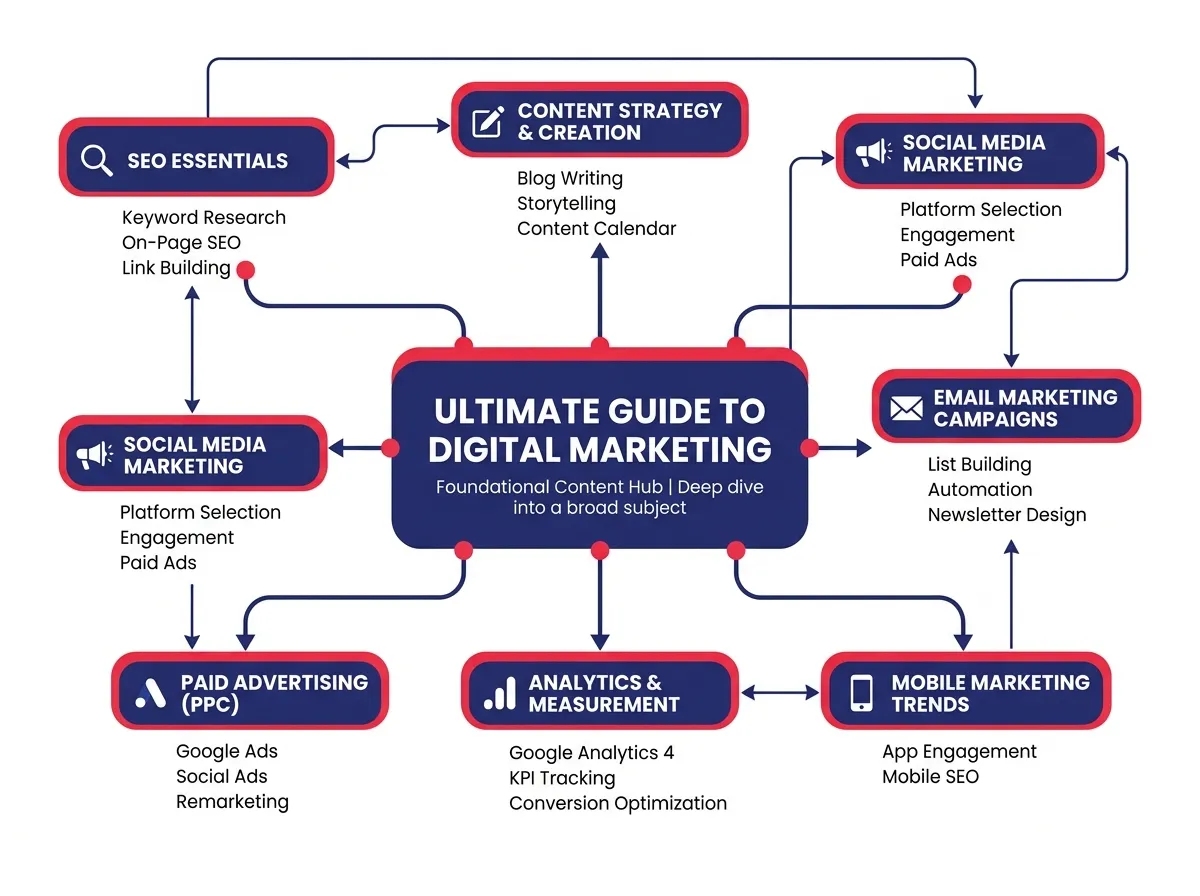
AI search systems don’t just look at a single page when they evaluate a source. They pick up patterns across your content library to figure out whether you genuinely own a topic. A hub-and-spoke architecture is one of the more direct ways to support that.
The model is simple enough. A hub page covers a broad topic in depth, while spoke pages go deeper on specific subtopics and link back to the hub. A hub on enterprise data security, for example, might connect to spokes on access management, zero-trust frameworks, incident response, and vendor risk. The hub shows range; the spokes show depth.
For AEO, this structure does two things well. It signals topical authority by showing that your content covers a subject from multiple angles rather than skimming it. And it creates internal semantic relationships between pages — connections that help AI models understand how your ideas relate and build on each other.
When you audit your existing content, start by mapping what you have. Group related articles, guides, and reports into clusters. Spot the gaps where no spoke content exists for a subtopic. Then check your hub pages: do they clearly link to the spokes that support them? Small structural edits here can have an outsized effect on how AI search treats your library as a whole.
It’s also worth noting that this kind of architecture improves traditional SEO performance too. It’s a high-value investment that pays off across more than one channel.
Write for chunk-level retrieval and direct answer synthesis
This is where the actual rewriting happens, and it’s more specific than most teams expect.
AI models don’t read content the way people do. They break it into chunks, evaluate each chunk for relevance to a query, and retrieve the most useful passages to build a synthesized answer. A well-written page can still fail AEO if its best insights are buried in long paragraphs that depend on context to make sense.
Every key passage should be able to stand alone. Pull a single paragraph out of its surrounding content — does it still deliver a complete, useful answer? If not, it needs work.
In practice, this means:
- Opening each section with a direct answer sentence before layering in nuance or supporting detail
- Keeping core answer paragraphs to three to five sentences — dense with meaning, easy to extract
- Labeling key takeaways with explicit signals like “The key finding here is…” or “What this means practically is…” so AI models have a clear cue that a synthesis-ready answer follows
- Not burying the payoff at the end of a long paragraph, where retrieval is less likely to pull the full context
This is how you write for AI Search without making your content feel robotic. The goal is precision, not stiffness — and readers will notice the difference too.
Balancing AI readability with human appeal
A concern I hear a lot from business marketing teams when AEO comes up: will structuring content for AI systems make it feel mechanical to actual readers? It’s a fair question.
The honest answer is no — if you do it right. Content structured for AEO tends to serve human readers better, not worse, especially in B2B contexts where people are pressed for time and scanning for specific answers.
Why clarity-first formatting works for both AI systems and human readers
Clarity-first formatting isn’t a concession to machines. It’s just good communication.
When answers are clearly named, sections have obvious intent, and key points are easy to find, a VP of Finance or Director of Operations can skim the piece, grab what they need, and get back to work. Business professionals aren’t reading white papers for fun. They’re looking for information that helps them make faster, better decisions. Content structured for AEO — direct answers up top, named takeaways, tight paragraphs — is exactly what that audience wants anyway.
The overlap between AEO best practices and strong professional writing isn’t an accident. Both come down to the same thing: respecting the reader’s time and getting to value as quickly as possible.
When you reformat existing content for AI Search visibility, think of it as raising the overall communication quality of the piece. Better structure and more explicit answer framing make it stronger for every reader — human or AI.
GEO follows the same logic here. Content that earns citations in generative AI outputs tends to be the content human readers already trust. Clarity is what both audiences respond to.
Spotting and removing AI content tells that undermine credibility
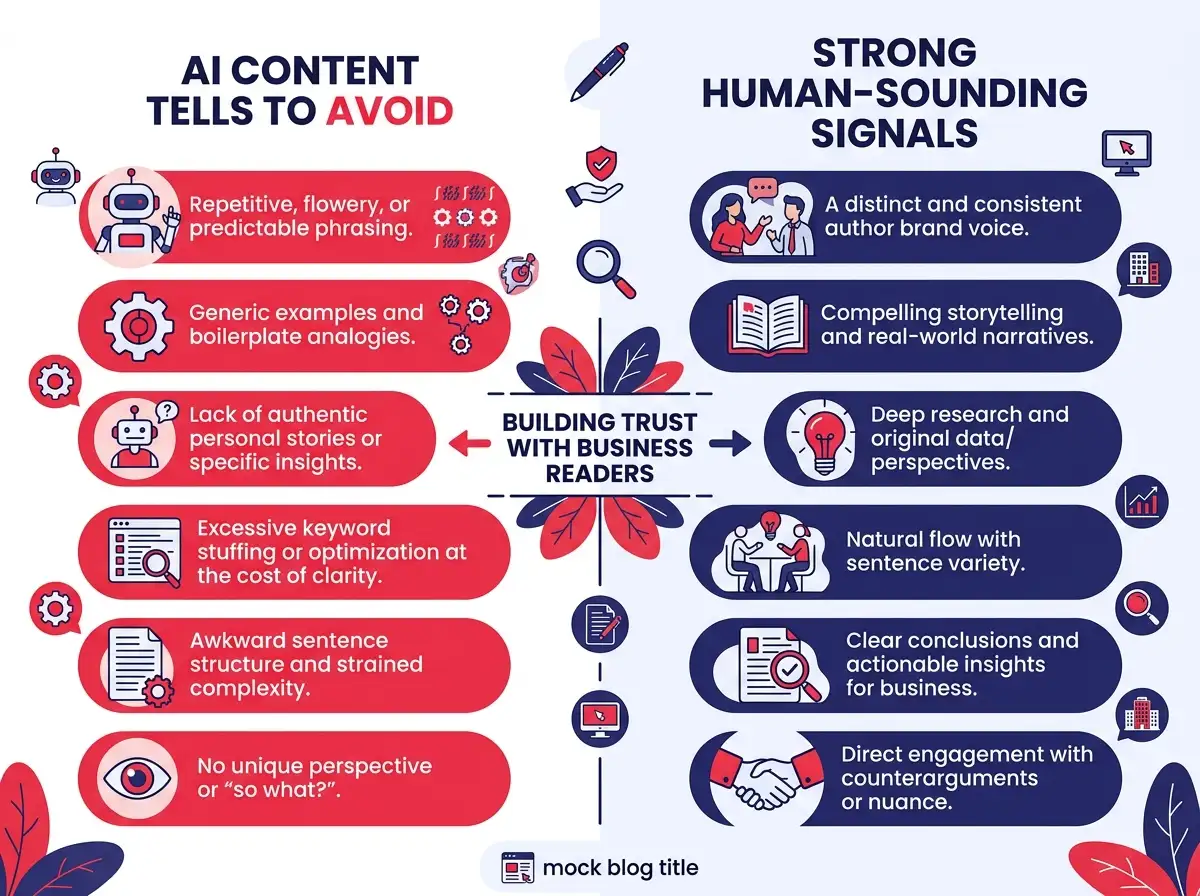
If your team has been using AI writing tools to help produce or update content, you need to audit for patterns that experienced readers recognize immediately as machine-generated. These patterns erode trust with business audiences who read a lot and have good instincts for what feels genuine.
A few to watch for:
- Bullets and colons breaking up every idea, even when flowing prose would do a better job
- Paragraphs that all open the same way or follow the same rhythm — like content assembled from a template
- Hedge-heavy filler phrases like “it is important to note” or “it is worth considering” that take up space without saying anything
- Lists where every item is exactly the same length and constructed identically
- Generic transitions that gesture at a connection between ideas without actually making one
None of these patterns help with AEO. They just make the content feel less human. Real credibility comes from specific examples, actual opinions, and precise language that demonstrates expertise rather than performing it. Edit these out before anything goes live.
Prioritizing content for AEO revision and updating metadata strategically
No content team has the bandwidth to reformat everything at once. The question isn’t whether to prioritize — it’s how. And that requires thinking about content value a bit differently than you might be used to.
How to identify the highest-value pages for AEO reformatting
Traditional SEO prioritization leans on traffic. High-traffic pages get the attention first. For AEO, that’s a weak signal. A page with modest organic traffic might carry far more answer value if it contains proprietary research, internally developed frameworks, or insights that directly address questions your buyers ask over and over.
The criteria that actually matter for AEO revision priority:
| Criteria | Why it matters for AEO |
|---|---|
| Proprietary insight or original data | AI systems favor sources that offer something others don’t |
| Repeated-question themes | Content addressing common industry questions gets retrieved more often |
| Pipeline or revenue connection | High-intent content near buying decisions delivers compounding ROI |
| Existing trust signals | Pages with backlinks or citations already carry authority |
| Topical centrality | Pages at the core of your subject matter expertise anchor your whole library |
Start your AEO audit by pulling content that scores high on at least three of those five. Those are your first-wave revision targets. Work through them one by one rather than trying to move everything at once.
Also pay close attention to content that’s already showing up in AI-generated answers, even partially. If AI systems are already pulling from a page, that’s a strong signal it has latent AEO value — and a targeted reformat could significantly improve how it gets cited.
Rewriting title tags, headers, and meta descriptions as context anchors
Metadata works differently in AEO than in traditional SEO. In traditional SEO, title tags and meta descriptions are written to earn clicks from humans scanning a results page. In AEO, they do something different: they tell AI systems what a page is about and what question it answers.
Think of metadata as context anchors. They help AI models categorize and retrieve your content accurately.
For title tags, move away from keyword-forward phrasing toward answer-forward phrasing. “Enterprise Data Security Solutions” becomes “How Enterprises Can Build a Resilient Data Security Framework.” The question orientation tells AI systems exactly what the page is answering.
For H2s and H3s, audit whether your current headers describe topics or questions. AEO-optimized headers lean toward questions or explicit answer framing. “Benefits of Zero-Trust Architecture” becomes “Why Zero-Trust Architecture Reduces Breach Risk for Enterprise Teams.” Small shift, meaningful difference.
For meta descriptions, think of them as compressed intent signals rather than marketing copy. A good AEO meta description summarizes the primary answer the page delivers in two clear sentences — something that makes sense to both an AI model indexing the page and a human deciding whether to read it.
These updates are low-effort, high-impact. You can often apply them across multiple pages quickly without touching the body content at all. For teams that want to build AEO momentum before committing to deeper revisions, metadata is a strong place to start.
Getting this right also reinforces GEO and traditional SEO signals — creating a compounding effect across your entire search presence. The intersection of SEO, GEO, and AEO is where the biggest gains are for content teams willing to look at what they’ve already built with fresh eyes.
Brands that move first to align their existing content with how AI systems read, retrieve, and cite will hold a real advantage as AI search continues to reshape how buyers find answers. And that advantage starts not with something new — but with the library you’ve already spent years building.