TL;DR
- Google published a help page titled "About Local customer optimization within Performance Max campaign for store goals", which Search Engine Roundtable spotted on 12 August 2026.
- Google states the feature is not compatible with online campaign goals, and not compatible with Performance Max campaigns carrying products from Merchant Center, which forces a store-goals campaign to sit separately from the feed campaign.
- Google describes Local customer optimization as prioritising people close to or interested in a business area who are navigating, trip-planning or searching for locations on Google Maps, Waze or Google Search.
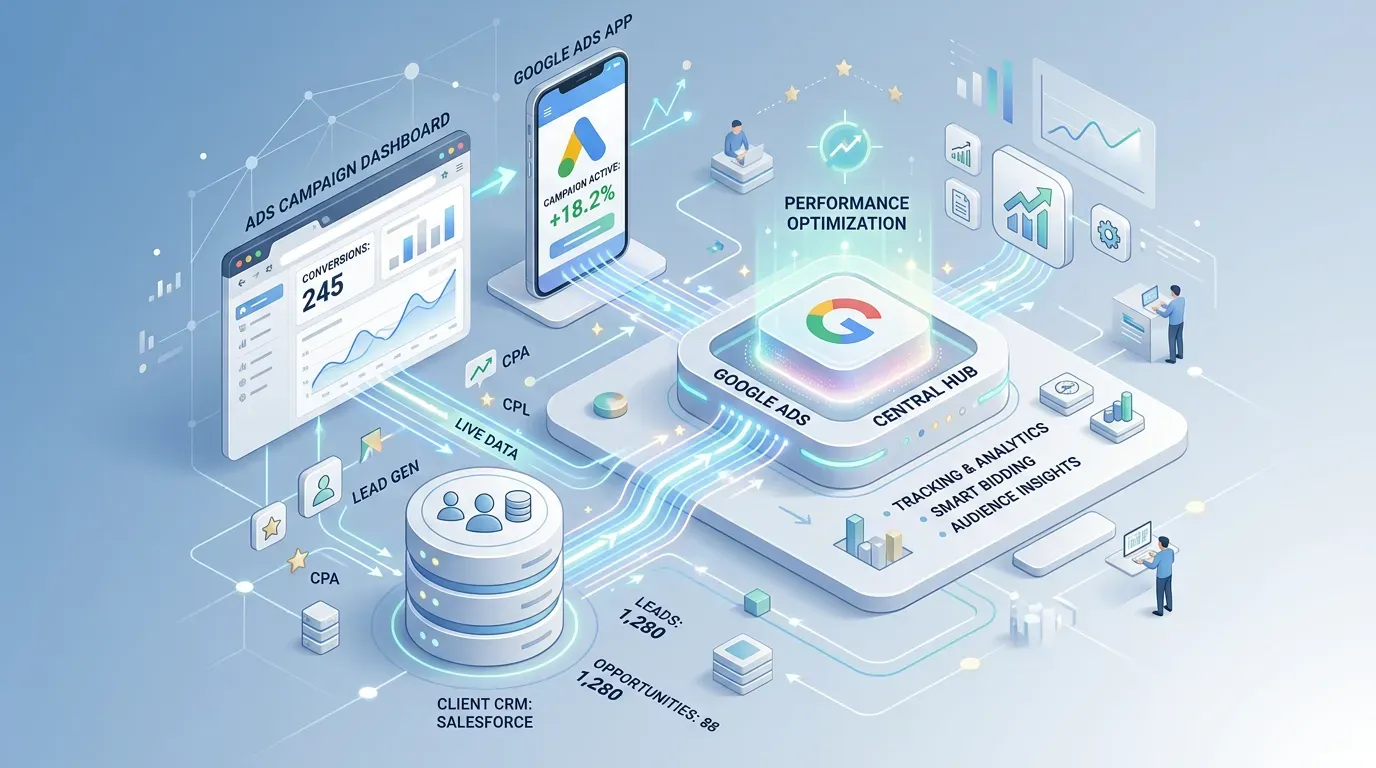
- A companion page says Performance Max for store goals promotes stores across the Search Network, Google Maps, Waze, YouTube, Gmail and the Display Network, and Barry Schwartz framed both pages as groundwork for the Local Services Ads migration.
- The documents gave no launch date, no country list, no eligibility criteria, no reporting detail and no timeline for that migration.
Google has published a help document called "About Local customer optimization within Performance Max campaign for store goals", and Search Engine Roundtable spotted it on 12 August 2026. The line that matters most is a restriction rather than a feature: Google states that Local customer optimization is not compatible with online campaign goals, and not compatible with Performance Max campaigns that carry products from Merchant Center.
That single sentence decides how multi-location advertisers will have to build their accounts. A store-goals Performance Max campaign running Local customer optimization cannot also be the campaign that carries your product feed, and it cannot be pointed at your online conversion goals. Anyone who has spent the last two years consolidating everything into one Performance Max campaign is looking at a structural split.
What Google published on 12 August 2026
Search Engine Roundtable reported on 12 August 2026 that Google posted a new help page titled "About Local customer optimization within Performance Max campaign for store goals", and that the page links to a companion document, "About Performance Max for store goals". Barry Schwartz framed both pages as Google preparing documentation ahead of the previously announced migration of Local Services Ads onto the main Google Ads platform. The new Performance Max option described in these documents is where those Local Services Ads campaigns are meant to end up.
Google describes the feature in its own words. Local customer optimization "allows you to prioritize reaching potential customers who are close to or interested in your business area and ready to take action immediately such as visit or contact". Google adds that the feature is meant to reach people "at the most critical moment when they are actively navigating, trip-planning, or searching for locations on Google Maps, Waze or Google Search for a service in a specific area of interest".
Read that carefully and the targeting intent is narrower than a normal location setting. Google is not only describing people who live inside a radius. It is describing people who are moving, planning a route, or actively looking up a place, which is a behavioural state rather than a geographic one. Google did not publish any detail on how that state is determined, how it interacts with the existing location targeting options, or whether advertisers get any control over it beyond switching the feature on.
How Google describes Performance Max for store goals
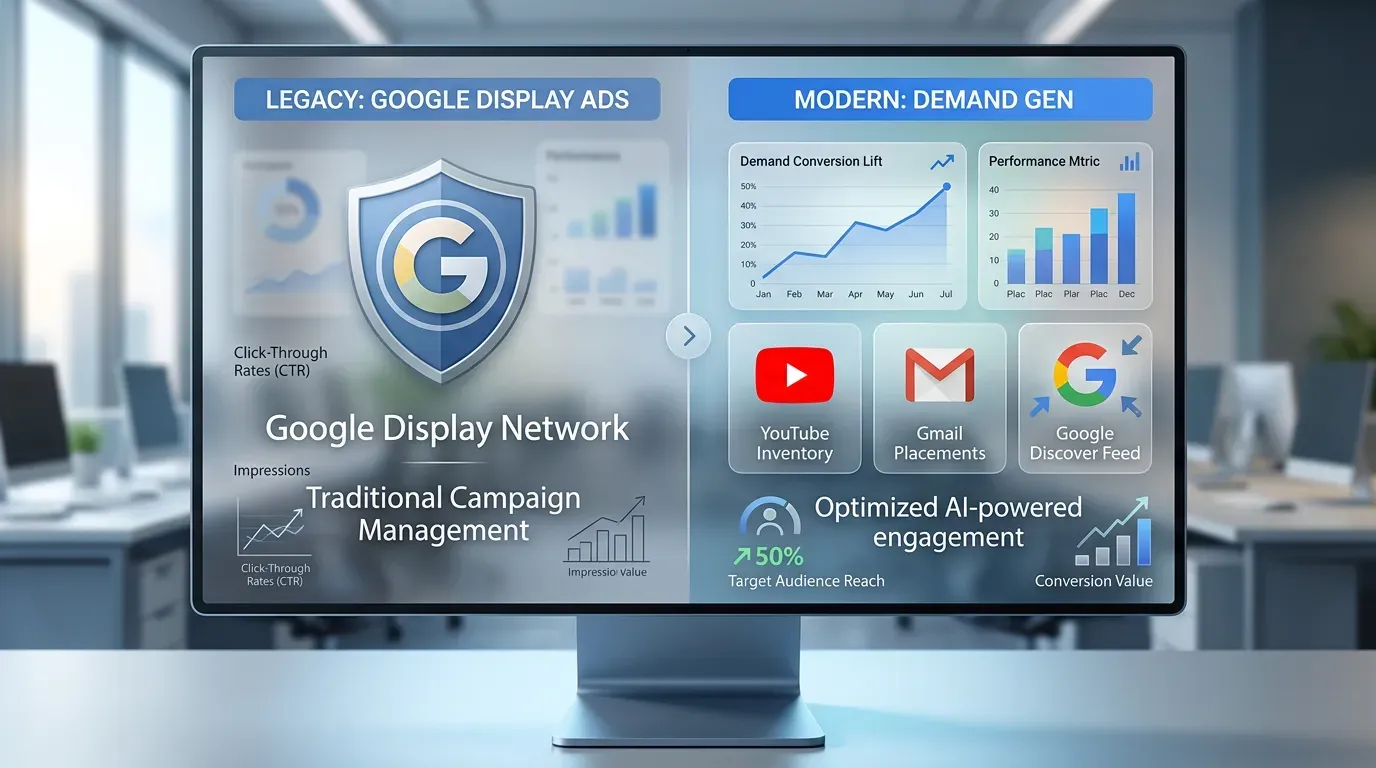
The companion document says Performance Max campaigns for store goals are designed to help businesses give potential customers the information they need to decide when and how to visit their stores. Google says the campaign type promotes stores across the Google Search Network, Google Maps, Waze, YouTube, Gmail and the Google Display Network. The operating model described is the familiar Performance Max one: you add a few lines of text, creative assets and a budget, and the rest is optimized to help customers find you.
Google lists two benefits for Local customer optimization. The first is capturing ready-to-act customers, described as reaching users who are ready to take action immediately as they plan routes, search for services, or travel near a business location with immediate intent to act. The second is targeted local reach, described as targeting users near a business area by directing campaign budgets to locally tailored ads on channels such as Google Maps, Waze and local formats on Google Search.
Both benefit statements are Google marketing copy from a help page. Neither comes with a performance figure, a benchmark, a test result or a named advertiser. Treat them as a description of intent, not as evidence of lift.
The incompatibility is the actual news
Google stated on the same page that Local customer optimization is not compatible with online campaign goals, and is not compatible with Performance Max campaigns with products from Merchant Center. Those two exclusions have consequences that the help document does not spell out.
The first consequence is budget. Two campaigns mean two budgets, set and paced separately. Inside a single Performance Max campaign, budget flows to whatever the system decides is working. Across two campaigns it does not, so the split between footfall spend and online sales spend becomes a decision a human makes every month.
The second consequence is conversion configuration. A store-goals campaign optimizing towards store visits, calls and direction requests is being told to value a different outcome from a campaign optimizing towards online purchases or lead form submissions. Once those live in separate campaigns, the campaign-level conversion goal settings have to be set deliberately rather than inherited from the account default. Accounts that never cleaned up their conversion goals will discover the problem at exactly the wrong moment.
The third consequence is the product feed. Retailers who run a Merchant Center feed inside Performance Max already have a campaign type they depend on for revenue. That campaign, per Google's statement, cannot carry Local customer optimization. So a retail chain that wants both feed-driven online sales and locally optimized store visits is looking at two campaigns by design, not by preference.
There is a further open question that the document does not answer. When two Performance Max campaigns in the same account can serve to the same user on the same surface, Google has historically resolved that internally by ad rank, and reporting does not make the overlap easy to see. Whether a store-goals campaign with Local customer optimization competes with, or is deliberately separated from, a Merchant Center Performance Max campaign in the same account is not addressed anywhere in the published text. That is a question to put to a Google representative rather than to assume an answer for.
What the source did not say
This is a help-document sighting, not a launch announcement. Google did not publish a blog post, a release note or an availability statement alongside it. Specifically, the following were absent:
- No launch date and no rollout schedule.
- No country list, so there is no basis for saying it is available in Thailand or anywhere else.
- No eligibility criteria, such as a minimum number of locations, a required Business Profile status, or a vertical restriction.
- No reporting detail, so it is unknown whether Local customer optimization gets its own segment, its own column, or no visibility at all.
- No timeline for the Local Services Ads migration that these documents are being prepared for.
- No statement about bidding, no target types, and no guidance on how store visit values should be set.
Help documents sometimes appear days before a rollout and sometimes appear months early. They also get rewritten before launch. Nothing here should be read as a feature you can switch on today.
The two documents at a glance
Everything below comes from the two Google help pages as reported by Search Engine Roundtable on 12 August 2026, with nothing added.
| Item | What Google's documents say | Status as published |
|---|---|---|
| Local customer optimization | Prioritizes reaching potential customers close to or interested in your business area who are ready to visit or contact | Documented, no launch date given |
| Performance Max for store goals | Promotes stores across Search, Maps, Waze, YouTube, Gmail and the Display Network from text, creative assets and a budget | Documented in a companion page |
| Compatibility | Not compatible with online campaign goals, and not compatible with Performance Max campaigns with Merchant Center products | Stated directly in the help document |
| Local Services Ads | Described as migrating to the main Google Ads platform, with this Performance Max option as the destination | No timeline stated in the document |
What this means for Thai marketers
What follows is Relevant Audience analysis of the likely impact, not something Google said. Google made no statement about Thailand.
Waze and Google Maps carry a large share of everyday navigation in Bangkok, and route planning in a city with this much traffic is a daily habit rather than an occasional one. A feature built around people who are actively moving, trip-planning or looking up a location has an obvious fit with how Thai users behave on their phones, which is precisely why the compatibility rule is worth reading now rather than after it lands.
The businesses most exposed are the ones with several branches and one campaign: clinic groups, car dealerships and service centres, restaurant chains, gyms, and retail with both a storefront and an online shop. In many Thai accounts, all of that traffic runs through a single Performance Max campaign because that was the simplest thing to maintain. If Local customer optimization arrives with the compatibility rule intact, that setup has to be pulled apart, and pulling it apart is where accounts break: budgets get halved without a plan, conversion goals get inherited wrongly, and store visit data quietly stops being counted.
There is also a groundwork problem. A store-goals campaign leans on location assets and the linked Business Profile for every branch. Thai accounts frequently carry outdated branch addresses, closed locations that were never removed, Thai and English name variants that do not match, and opening hours that were last accurate before a renovation. None of that matters much for a feed-driven online campaign. All of it matters for a campaign whose job is to send someone to a physical door. For teams already investing in local SEO, the Business Profile work overlaps almost completely with the ad-side groundwork.
What to get in order before this reaches your account
None of the following depends on the feature launching. Each item improves a store-visit account today and removes work later.
- Audit every Business Profile you own, branch by branch. Address, category, phone number, opening hours, and the Thai and English name forms. Delete or claim duplicates.
- Check that location assets are linked at account level in Google Ads and that location groups actually contain the branches you are advertising. An empty or stale location group is the most common reason a store campaign underdelivers.
- Separate store-visit and call conversion actions from online purchase or form conversions in your conversion actions list, and confirm which ones are set as primary for each campaign. If a split is coming, you want the goals already distinguishable.
- List which of your Performance Max campaigns depend on a Merchant Center feed. Those are the campaigns that, per Google's statement, can never carry Local customer optimization, so they define the boundary of the split.
- Decide in advance what a footfall budget is worth to you against an online sales budget. The moment the campaigns are separate, that number stops being automatic.
- Fix your naming convention now so that store-goals and online campaigns are distinguishable at a glance in reporting. This sounds trivial until an account has fourteen campaigns and no one can tell which ones are local.
Advertisers who want to keep the current consolidated structure should also plan the reporting side. If footfall and online sales stop sharing a campaign, the blended cost per acquisition you have been reporting to management stops being one number. Agreeing on how store visits are valued, before the split, avoids an awkward conversation later. Teams running Google Ads campaigns with both objectives in one place should start that conversation now.
Questions marketers are asking
Is Local customer optimization live in Thailand?
The source did not say. Google published a help document with no country list, no availability statement and no launch date, so there is no basis for claiming it is live in Thailand or in any other market. If it appears in your account, that is your evidence; a help page is not.
Do I have to change anything in my account today?
No. Nothing has been launched that requires an account change. The preparation work worth doing is the kind that pays off regardless: accurate Business Profiles, working location assets, and conversion actions that separate store visits from online sales.
Can I keep everything in one Performance Max campaign?
Not if you want Local customer optimization, according to Google's own document. Google states the feature is not compatible with online campaign goals or with Performance Max campaigns carrying Merchant Center products, which means a store-goals campaign using it has to be separate from your feed and online-conversion campaign.
Does this replace Local Services Ads?
Google has said Local Services Ads are migrating to the main Google Ads platform, and Search Engine Roundtable described this Performance Max option as the destination for that migration. No timeline, no migration mechanics and no advertiser instructions were published in the document, so how existing Local Services Ads budgets and lead flows carry over is unknown.
Will my Merchant Center feed stop working?
Nothing in the document says feeds stop working. It says Local customer optimization is not compatible with Performance Max campaigns that carry Merchant Center products, which is a statement about combining the two in one campaign, not about feeds being restricted.
Before the split arrives
The useful move right now is boring: get the location data, the conversion actions and the campaign naming into a state where splitting a Performance Max campaign is a half-day job rather than a rebuild. If your account has several branches and one campaign doing everything, that is the situation this document affects most. We are happy to look at how a store-goals split would work in your account and what it would cost you to run two budgets instead of one.