TL;DR
- Ginny Marvin, Google Ads Liaison, announced two in-store features on X on 8 September 2026, reported by Search Engine Roundtable on 9 September 2026.
- Store Sales in Data Manager will let advertisers link a CRM or a Google Sheet inside Google Data Manager to share in-store sales data. Google says coming weeks, with no date.
- Local customer optimization, a Performance Max for store goals toggle favouring Google Maps, Waze and local Search, was documented in August 2026 and is now rolling out.
- Google named no countries, gave no performance figures and did not mention Thailand for either feature.
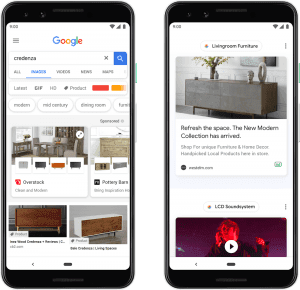
Google has started rolling out a campaign-level setting that pushes Performance Max for store goals budget toward shoppers who are physically close to a location, and it says a second feature for connecting in-store sales data to Google Ads is a few weeks away. Ginny Marvin, the Google Ads Liaison, posted both items on X on 8 September 2026, and Search Engine Roundtable wrote them up the following day.
The announcement in Google's own words
Ginny Marvin, Google Ads Liaison, wrote on 8 September 2026: "Ahead of the holiday rush, we're introducing two features for multi-location retailers, restaurants and local services to drive and measure in-store sales with ease." Barry Schwartz covered the post for Search Engine Roundtable on 9 September 2026.
The framing tells you who Google had in mind. Marvin named multi-location retailers, restaurants and local services. An advertiser with one branch, or with no physical premises at all, sits outside the group described in the post. Nothing there said the features are restricted to that group, and nothing said they are aimed anywhere else either, so the safest reading is the one Google published.
Two announcements arrived together, but they are not at the same stage, and treating them as one update leads to the wrong plan. One is shipping. The other has no date.
Store Sales in Data Manager is the genuinely new item
Store Sales in Data Manager lets an advertiser link a CRM or a Google Sheet directly inside Google Data Manager so that in-store sales data reaches a Google Ads account. Ginny Marvin described the goal on 8 September 2026 as "Reducing the technical load to share your in-store sales data to your Google Ads account", and said campaigns can then measure and optimise toward walk-in customers. The status Google gave for it is coming weeks. No launch date was attached.
The word carrying the weight in that description is link. Getting offline sales into Google Ads has generally meant producing a file, formatting it to a specification and moving it into the account on some schedule. That job usually sits with whoever owns the point-of-sale system or the customer database rather than with whoever runs the ad account, which is why store sales measurement stalls so often at the handover between two teams who do not report to each other. A connector that reads from a CRM or a spreadsheet moves the work rather than removing it, but it moves it to a place where an advertiser can see whether it is happening.
What the announcement did not settle is how much of the underlying data work disappears. A spreadsheet still has to be filled by something. A CRM still has to hold the fields Google needs. The transport step is only the last leg of a longer chain that starts at a till.
How store sales measurement works in general terms
This section is background rather than a description of the announcement, and none of it should be attributed to Google's 8 September 2026 post. Offline conversion import in Google Ads has historically worked by matching records an advertiser already holds against ad interactions Google already logged. The advertiser supplies customer identifiers in hashed form, Google attempts a match against users who clicked or saw an ad, and the transactions that match are credited back to the campaign that earned the interaction. Rows that fail to match are not counted, so reported store revenue from this kind of import is a floor rather than a full count of what the shops actually took.
That mechanism explains why a connector is worth more than the convenience it advertises. Bidding toward store revenue behaves sensibly only when the revenue feed arrives often enough and completely enough to be representative of the business. A manual upload once a month hands a bidding system a stale and lumpy signal, and a bidding system reacting to a lumpy signal produces lumpy spend. A live link gives it something steadier to read. Google published no match rates, no refresh frequency and no data requirements for the Data Manager path, so none of that can be assumed until the feature is in front of advertisers.
The same mechanism sets the real prerequisite. A sale that carries no customer identifier cannot be matched to an ad interaction by any import method, however easy the plumbing becomes. A chain whose tills record only a basket total and a payment type has nothing to connect, and no announcement about transport changes that.
Local customer optimization is a rollout, not a new setting
The second item needs a correction to how it is being read this week. Local customer optimization is a campaign-level toggle in Performance Max for store goals campaigns that prioritises budget toward reaching consumers across Google Maps, Waze and local Search while those people are nearby. The setting appeared in Google's own help documentation in August 2026, and Relevant Audience reported on that documentation at the time. What changed on 8 September 2026 is the status: Ginny Marvin said the toggle is rolling out.
The distinction is not pedantry. A documented setting can sit unavailable in accounts for months while help pages describe it, and planning around a help page is how teams end up promising a client a control nobody can find. A rolling-out setting is one an advertiser can reasonably expect to see in the interface, which is the point where the decision about switching it on stops being theoretical. Google did not say what share of accounts have it, in which markets it appears first, or how long the rollout runs.
What a budget priority toggle actually does
Read the description literally. The toggle prioritises budget. It does not create demand, and it does not unlock inventory that was previously closed to the campaign, because Performance Max for store goals could already serve across Maps and local surfaces before this setting existed. What the control changes is the weighting of where the same money goes.
That has a consequence an advertiser can test. If budget shifts toward people near a store, the cost per interaction and the mix of conversion types should move with it, since proximity-weighted traffic is not the same traffic the campaign was buying the week before. Someone who flips the toggle without noting the date will find that shift almost impossible to read later, because it will be tangled with seasonality, competitor spend and whatever else the fourth quarter brings. Someone who writes the date down can compare like periods and get an answer.
There is a second-order effect worth naming. Prioritising nearby consumers narrows the effective audience, and a narrower audience inside a fixed budget usually raises auction pressure on the remaining impressions. Whether that shows up as higher costs or better store visit rates depends on the business, and Google published no figures either way.
The two features side by side
Both items came from the same post, but they sit at different stages of release. The table below carries what Google stated as of 9 September 2026 and nothing beyond it.
| Feature | Status as of 9 September 2026 | What it affects |
|---|---|---|
| Local customer optimization | Rolling out, per Ginny Marvin on 8 September 2026, after appearing in Google help documentation in August 2026 | A campaign-level toggle in Performance Max for store goals that prioritises budget toward Google Maps, Waze and local Search |
| Store Sales in Data Manager | Coming weeks, with no date given | Linking a CRM or a Google Sheet inside Google Data Manager to share in-store sales data with a Google Ads account |
| Availability by country, including Thailand | Not stated by Google or by Search Engine Roundtable | Unknown for both features |
What Google did not say
The post was short, and the gaps in it are wide enough to change how a fourth-quarter plan should be written.
- Which countries or which accounts receive either feature. Thailand was not mentioned at all.
- A launch date for Store Sales in Data Manager beyond the phrase coming weeks.
- Any performance figure for local customer optimization. No lift, no cost movement, no test data was published.
- Which CRM systems, field mappings or file formats the Data Manager link accepts.
- What data-matching and privacy requirements apply to the customer records an advertiser connects.
- Whether the Data Manager path sits alongside the existing ways of importing store sales or eventually replaces any of them.
Where a source is silent, the honest reading is that the answer is unknown, not that the answer is no. A feature that is not mentioned for a market is not a feature that has been ruled out for that market.
What to check in an account this week
None of this demands action today. A few checks cost nothing and make the rollout easier to handle when it reaches an account.
- Open a Performance Max for store goals campaign and look through campaign settings for the local customer optimization control. Whether it is there answers the availability question for that account better than any secondhand report can.
- Confirm which physical locations are linked to the account and whether their details are current, since a store goals campaign leans on that location data for everything it does.
- Find out what in-store transaction data exists, where it lives and who owns it, before the Data Manager option arrives. Deciding the format and consent questions on your own timetable is easier than deciding them under a launch deadline.
- Check which conversion actions are marked primary. Adding a store sales feed changes what the bidding system optimises toward, and that is a larger change to a campaign than any toggle.
- Record the date of every setting change. Reading performance later depends entirely on knowing when the account changed, and a clean measurement setup makes that reading possible. Accounts with disciplined GA4 tracking and measurement setup tend to get usable answers out of changes like this one.
What this means for marketers in Thailand
Google did not say whether either feature is live in Thailand, so the first question a Thai advertiser will ask has no published answer. The practical response is to look in the account rather than wait for a press note, because rollouts of this kind usually reach accounts unevenly and quietly.
Beyond availability, the local picture is about readiness. Multi-location restaurant groups, pharmacy chains, clinics and retail brands across Bangkok and the provinces are exactly the businesses Ginny Marvin described, and many of them already run store visit measurement. The prerequisite for anything local remains ordinary listing hygiene: correct opening hours, correct pins, correct branch names, categories that match what the branch actually sells. A budget priority setting that pushes spend toward Google Maps rewards accounts whose listings are accurate and punishes the ones whose listings are stale, which makes local SEO work on Business Profile listings the unglamorous half of this story.
The sales-data half runs into a harder constraint. A large share of Thai retail and food service transactions are cash or QR payments recorded against a basket with no customer record attached. A loyalty programme, a membership number at the till or an app-based ordering flow is what turns a sale into a row that an import can match. Chains that have run loyalty programmes for years have something to connect. Chains that have not will find that the connector arrives before the data does.
There is also a legal step that no product announcement removes. Customer records shared with an advertising platform are personal data under Thailand's Personal Data Protection Act, and the lawful basis, the privacy notice and the retention position need to be settled before anyone links a CRM. That is a conversation with a legal owner, not a setting in an interface.
For agencies and in-house teams planning the quarter, the sensible sequence is to treat local customer optimization as something to test with a date written down, and to treat Store Sales in Data Manager as a data project that can start now regardless of when the feature ships. Both sit inside ordinary Google Ads management work rather than requiring anything new.
Frequently asked questions
Is local customer optimization available in Thailand?
The source did not say. Neither Ginny Marvin's post on 8 September 2026 nor the Search Engine Roundtable write-up on 9 September 2026 named any country, so the only reliable check is to open a Performance Max for store goals campaign and see whether the setting is present.
Do I have to do anything today?
No. Local customer optimization is a toggle that an advertiser chooses to switch on, and Store Sales in Data Manager has not shipped yet, so there is no deadline attached to either. The work worth doing now is preparing in-store transaction data and confirming that linked locations are accurate.
Is this the same story as the August 2026 one about local customer optimization?
Partly. The setting itself was documented in Google's help pages in August 2026 and was covered then, so the toggle is not new information. What is new in the 8 September 2026 announcement is that Google says it is now rolling out, plus Store Sales in Data Manager, which had not appeared before.
When exactly does Store Sales in Data Manager arrive?
Google gave no date beyond saying it is coming in the coming weeks. There is no published launch day, no staged schedule and no statement about which accounts receive it first.
Does linking a Google Sheet mean handing Google a list of customer names?
The announcement did not describe what fields the link requires, so that cannot be answered from the source. Offline sales matching in Google Ads has generally relied on hashed customer identifiers rather than plain records, but the specific requirements for the Data Manager path have not been published.
Where this leaves the fourth quarter
One feature is rolling out and can be tested. One feature is described but absent. The useful posture between now and the holiday period is to get the account ready for both without betting the plan on either, since a toggle with no published performance data is a test rather than a tactic, and a connector with no date is a data project rather than a launch.
If a store-visit or store-sales measurement setup is on your list this quarter and you would like a second pair of eyes on how the pieces fit together, that is a conversation worth having before the season starts rather than during it.