Most marketing teams set their Google Ads conversion window once during setup and never touch it again. For a DTC retailer where customers were converting in an average of 2.2 days, that 30-day default was quietly warping every optimization decision.
This isn’t a niche problem. Default attribution windows inflate platform-reported conversions and muddy channel contribution. Match your window to how customers actually buy, and two things happen: Smart Bidding gets sharper signals, and your cross-channel data starts making sense.
Why the default 30-day attribution window can mislead marketing teams
The 30-day Google Ads click window is the default for an obvious reason: some customers take weeks to decide. But for brands where most people convert within a couple of days, that wide window doesn’t just fail to help — it actively creates problems.
How over-extended attribution inflates reported conversions
When a platform can claim credit for a conversion up to 30 days after a click, it will. A customer who clicked a Google ad, bounced, came back through Email Marketing three weeks later, and bought? That’s still counted as a Google Ads conversion. Technically, the click happened. But Google’s incremental role in that sale is probably close to zero.
The downstream effect is real: your campaigns look healthier than they are. Smart Bidding optimizes toward these inflated signals and pushes budget toward traffic that appears productive but isn’t actually moving the needle. You’re flying with a miscalibrated instrument.

The cross-channel problem: when Google Ads and Meta both claim the same sale
Cross-channel attribution is already complicated. When both Google Ads and Facebook Ads are running wide attribution windows, the overlap turns into a measurement mess — the same purchase can appear as a conversion in both platforms at the same time.
If you’re making budget decisions based on reported ROAS, and both platforms are double-counting the same customers, you’re optimizing against numbers that don’t reflect reality. It’s a blind spot that’s easy to miss because each platform’s dashboard looks perfectly fine on its own.
How to test a shorter attribution window without disrupting campaign performance
Flipping your primary conversion action from 30 days to 7 days overnight is a bad idea. Smart Bidding recalibrates when conversion settings change, and sudden shifts can cause real volatility. Fortunately, there’s a cleaner way to do this.
Setting up a secondary conversion action to test the 7-day window
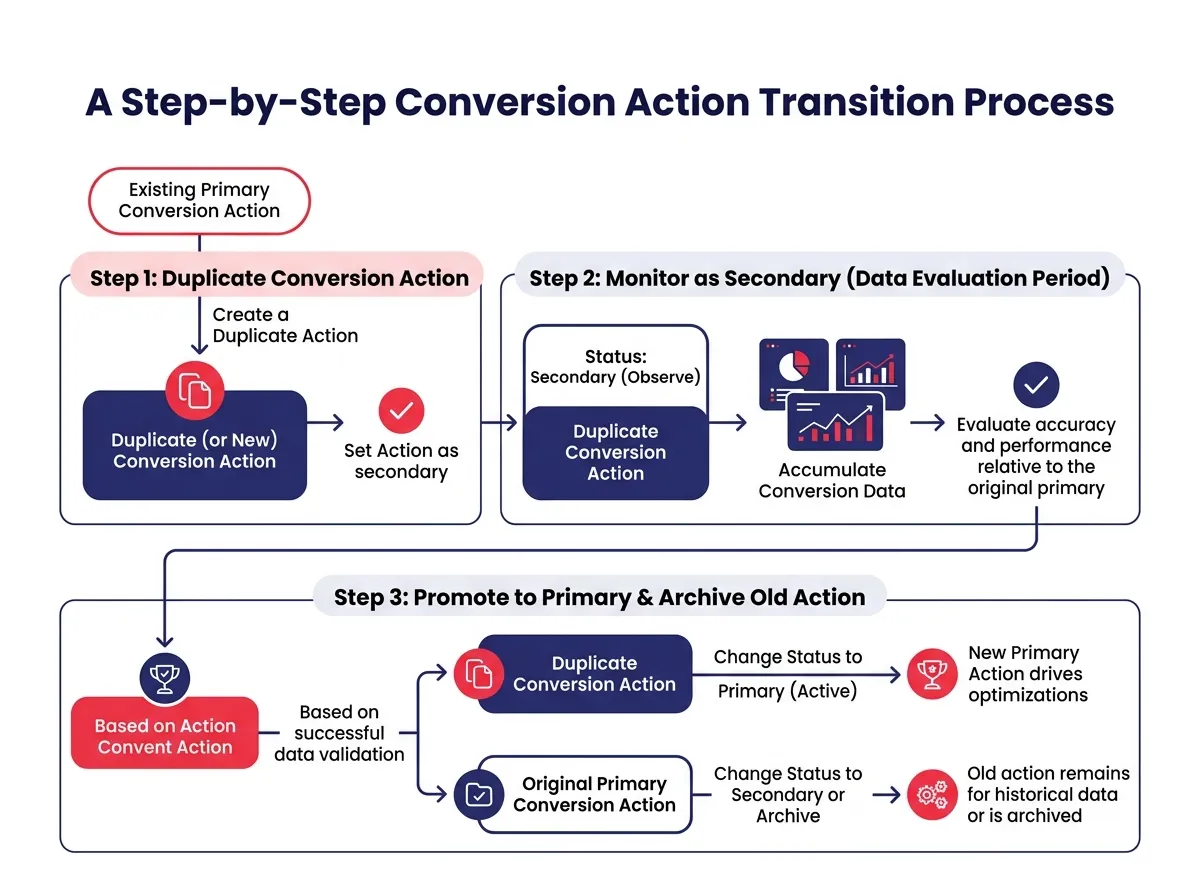
Duplicate your existing purchase conversion action and set the copy to a 7-day click window. Keep the original 30-day version as your primary, and tag the new one as secondary.
This gives you a side-by-side view of both windows without changing what Smart Bidding is actually optimizing toward. You’re running a parallel read on your data with no risk to live campaigns. Two conversion actions, one decision deferred until you have real evidence.
Monitoring performance before making the switch primary
Leave the secondary conversion action running for at least two weeks before drawing any conclusions. During that time, compare conversion volume and lag distribution between both windows. If the 7-day window is capturing the overwhelming majority of your purchases, that’s a clear signal your 30-day setting is pulling in a lot of noise.
When the data holds up, promote the 7-day version to primary and demote the original. One thing worth doing before you flip the switch: tell your stakeholders what’s coming. Platform-reported conversion numbers will drop after the change, and without context, that looks like performance declining. It’s not. It’s the same business, cleaner data.
What the results revealed about signal quality and channel contribution
For the DTC retailer in this case, switching to a 7-day click window changed things in ways that showed up both inside the platform and in broader measurement.
In-platform metrics vs. real business outcomes: what the data actually showed
With a tighter attribution window, Smart Bidding started working with fresher signals. Conversions were closer in time to the actual ad interaction, which shortened the feedback loop and improved bidding efficiency. Nothing dramatic week-over-week, but the drift in wasted spend slowed noticeably.
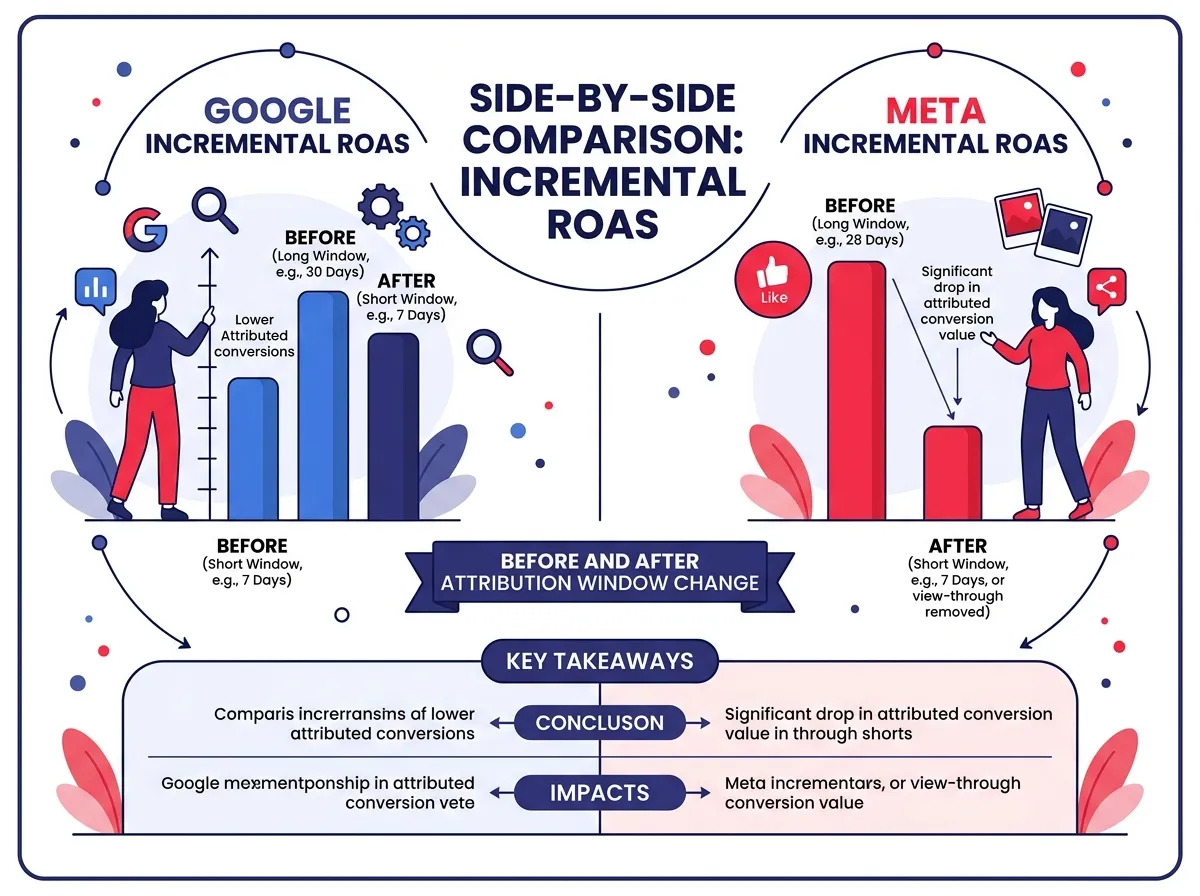
The more interesting finding came when the team compared these changes against their marketing mix model. Before the change, Google Ads was reporting a ROAS figure meaningfully higher than what the MMM attributed to paid search. After shortening the window, that gap narrowed. The two sources of truth got closer to agreeing.
Meta told a similar story. With both platforms using tighter windows, cross-platform duplication dropped, and for the first time, the team had channel contribution numbers they could actually use to make budget calls.
When a shorter attribution window is not the right move
None of this is universal. A 7-day window only works when 7 days actually reflects how your customers buy. If you sell software, furniture, or anything in the B2B space where the research phase runs for weeks, cutting the window short will chop off legitimate conversions and starve Smart Bidding of the data it needs to work properly.
Before changing anything, pull your conversion lag report in Google Ads. If a significant share of your conversions are happening after day 7, a shorter window will hurt your bidding performance, not help it.
The right attribution window is the one that matches your actual purchase cycle. For fast-moving DTC brands, shorter usually wins. For longer-consideration categories, the 30-day default might genuinely be correct.
Either way, it’s worth checking. Revisiting your Google Ads conversion window once a year takes maybe 20 minutes and can change how much you trust everything your campaigns are telling you.