McKinsey projects $750 billion in annual U.S. revenue will flow through AI-powered search by 2028. If that number doesn’t make marketing teams uncomfortable, I’m not sure what will. The way people find things, compare products, and decide what to buy is changing fast, and a lot of the old tactics just don’t hold up anymore.
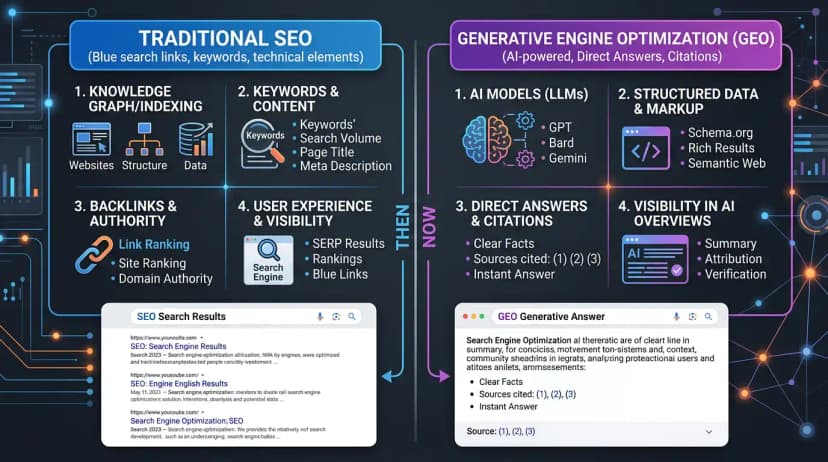
For years, SEO meant fighting for the first page of Google: get the right keywords into your headers, build enough backlinks, and hope you landed above the fold. That worked well when users scrolled through blue links looking for answers. But now, large language models are answering questions directly, skipping the link list entirely. Welcome to what some are calling the answer economy, and it runs on a completely different set of rules.
The practical stakes are real. Studies suggest AI-generated summaries and answer boxes are already cutting organic click-through traffic by 20% to 50% for many content categories. If your brand isn’t being cited inside AI responses, you’re basically invisible to a growing chunk of your audience.

From SEO to GEO: How AI models are replacing the SERP
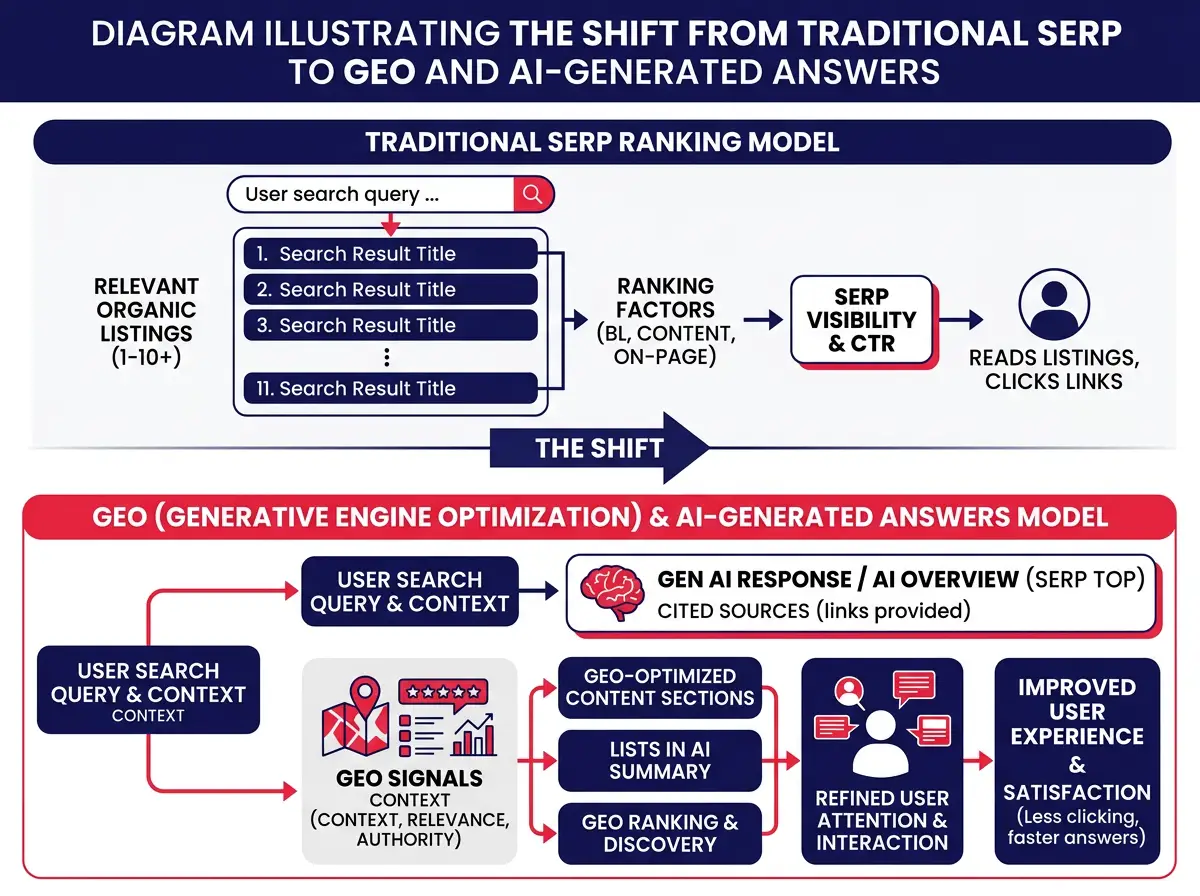
The search engine results page was the arena where visibility happened. Brands clawed for the top three spots because that’s where users clicked. Tools like ChatGPT, Google’s AI Overviews, and Perplexity are dismantling that model. Instead of a list of links, they generate a single synthesized answer, typically drawn from a small group of sources the model has decided to trust.
This is where Generative Engine Optimization (GEO) comes in. GEO is about structuring content so that AI models can actually absorb it, make sense of it, and use it when answering a user’s question. It’s not some trick to fool an algorithm. It’s about becoming the clearest, most credible source an AI can point to when someone asks something relevant to your space.
Why keyword indexing is no longer enough
Traditional SEO rewarded content that hit the right keywords at the right density. GEO needs something different. LLMs don’t parse keyword frequency the way crawlers do. They read for meaning, structure, and reliability. A well-organized piece that directly answers a specific question, cites real data, and takes a clear position is far more likely to show up inside an AI response than a keyword-stuffed page built for 2015-era ranking logic.
A useful mental shift: stop thinking about optimizing for a bot, and start thinking about briefing a knowledgeable colleague who will summarize your content to someone else. What would make their summary accurate and useful? Clarity, specificity, and structure. Not density.
Conversational intent and the new discovery model
The way people search has changed significantly, and I think this is the part most marketing teams are still underestimating. People aren’t typing “best CRM software 2026” anymore. They’re asking, “What CRM would work for a 50-person sales team that already uses Slack and Salesforce?” Those context-rich, conversational queries require content that anticipates real situations, not just generic informational topics.
The Capgemini Research Institute found that 73% of consumers now trust generative AI for product recommendations. That’s a big behavioral shift. Brands that structure content around how people actually ask questions will capture high-intent audiences with much better precision than traditional long-tail SEO ever allowed. The goal shifts from ranking near the answer to being the answer.
AEO, synthetic content saturation, and building authority in the AI index
GEO is about structure. Answer Engine Optimization (AEO) is about trust. As AI-generated content floods the web, both traditional search engines and generative AI tools are getting pickier about what they’re willing to cite. The bar for credibility is going up, not down, even as the volume of content explodes.
Marketing teams are dealing with a strange tension right now. The sheer quantity of low-quality AI-generated content makes it harder to stand out. But the systems evaluating content are also getting better at spotting genuine authority signals. AEO is the strategy that tries to solve both problems at once.
The trust gap and the rise of E-E-A-T
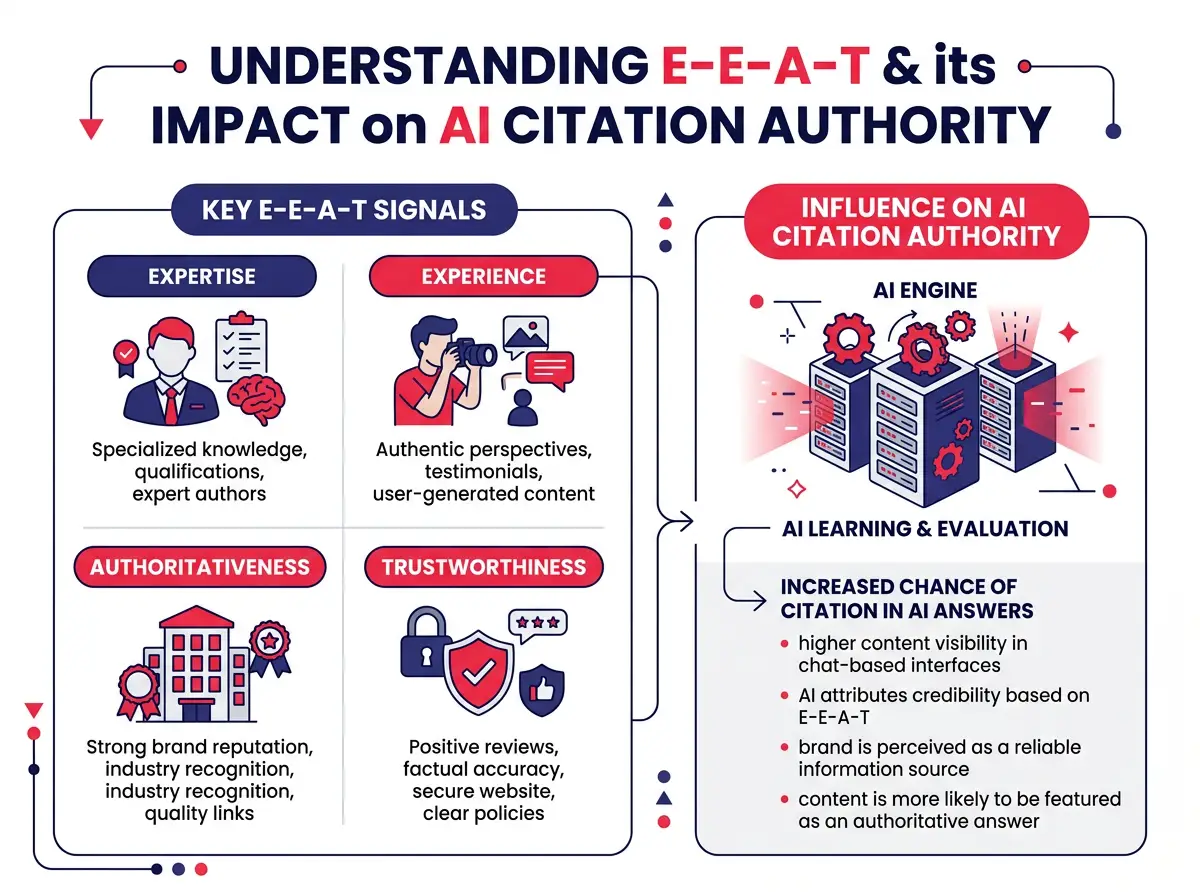
Google’s quality guidelines have referenced E-A-T (expertise, authoritativeness, trustworthiness) for years. More recently they added a fourth “E” for experience, making it E-E-A-T. That addition matters more now than when it was announced, because the volume of synthetic content has made experience signals genuinely useful for separating credible sources from filler.
When AI models pull content to generate a response, they’re looking for signs that a source can be trusted. A page authored by a credible expert, supported by original research, and backed by real user experience consistently outperforms generic content with no attribution. The flood of minimally edited AI-generated articles hasn’t made it easier to compete; it’s made the bar for genuine authority higher.
For marketing teams, this means going back through your content library with honest eyes. Does this page reflect real expertise? Is the author’s credibility visible? Are there supporting signals: case studies, user-generated content, third-party validation? If not, those gaps are worth closing.
Earned authority: the new currency of AI-driven visibility
In traditional search, authority largely came from backlinks. Other sites linking to you was the signal that mattered most. In the AI index, authority is assembled differently. Verified reviews, expert-authored analysis, original data, and consistent brand signals across multiple platforms all feed into whether an AI model trusts your content enough to cite it.
User-generated content has gone from nice-to-have to genuinely necessary. Real reviews, testimonials, community contributions, and customer stories provide the kind of human signal that AI tools need when deciding what to surface. A brand that publishes a well-researched industry report, backs it with real data, and earns citations from credible publications is building the kind of provenance that AI models look for. That’s harder to fake than a backlink profile.
There’s also something worth watching on the paid side. Platforms are beginning to introduce sponsored placements inside AI-generated answers. Brands that build strong earned authority now will be in a much better position when that competition heats up, because paid placement in an AI response next to organic citations is a very different game than buying a keyword.
The shift from traditional SEO to GEO and AEO isn’t something coming in a few years. It’s already happening, and the brands showing up inside AI-generated answers are the ones who started treating their content as citation material, not just web copy.
The most practical thing any marketing team can do right now: write clearly, demonstrate real expertise, support your claims with actual data, and make the human behind the content visible and credible. That combination is what earns a spot in the AI index. And the AI index is quickly becoming where discovery actually happens.