TL;DR
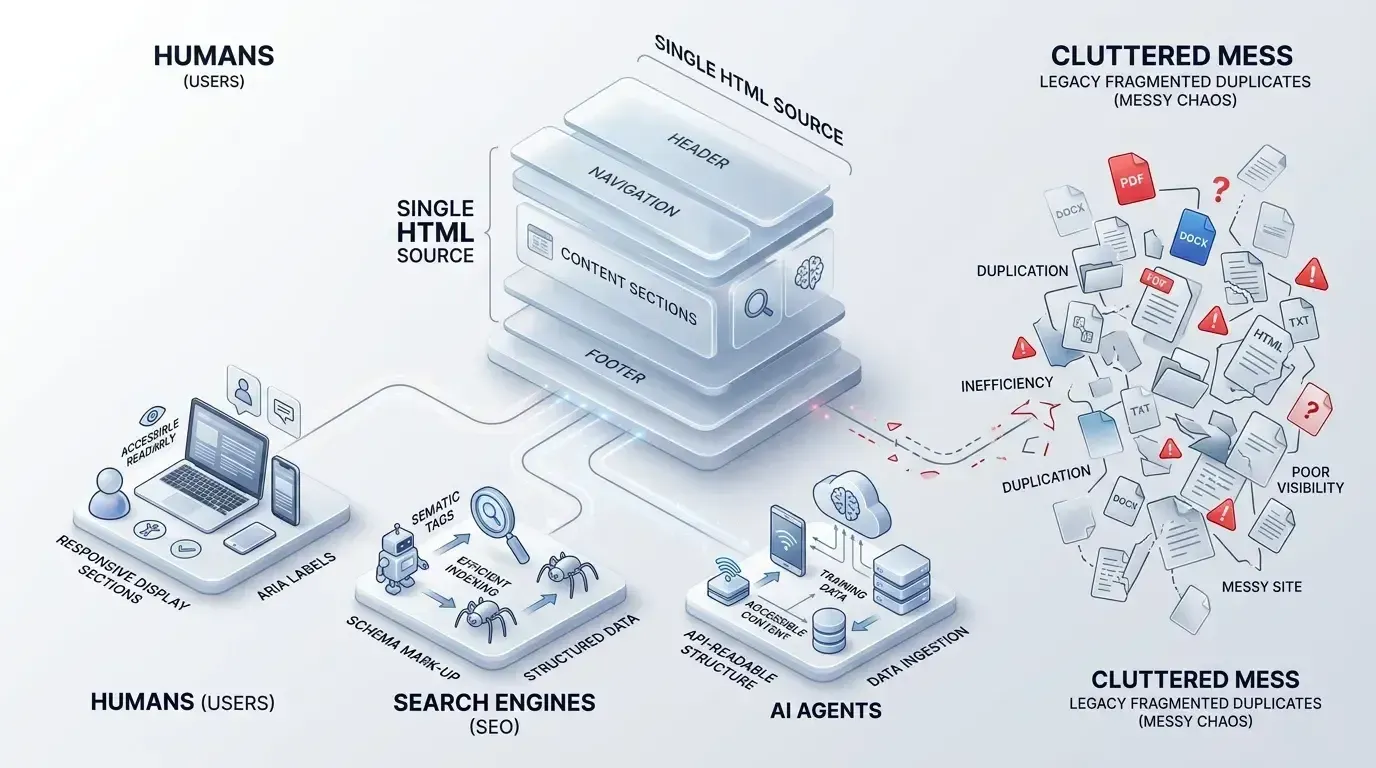
- A backlink is a link from another site to yours; it carries weight precisely because you do not control whether it gets placed.
- rel="nofollow", rel="sponsored" and rel="ugc" declare a link's relationship to Google; a paid followed link breaches Google's link spam policies.
- No public benchmark exists for how many links a page needs, a safe monthly rate, or a minimum domain score, and DA, DR and Authority Score are vendor metrics Google does not use.
- Search Console's Links report is a free first-party sample that omits follow status and discovery dates, so third-party crawlers fill the gap.
- The disavow tool only tells Google to ignore listed links; it is warranted mainly with a manual action or a known paid-link legacy, and most sites never need it.
A backlink is a link on someone else's website that points to a page on yours, and to a search engine it works a little like a citation in academic writing: another site is willing to put its own reputation behind the claim that your page is worth reading. This guide covers what a backlink is, what types exist, how to build them the white hat way, and how to check your own link profile and filter out the junk.
One thing this guide will not do is hand you invented benchmarks. There is no public number that tells you how many links a page needs to rank, no monthly link-building rate that Google has declared safe, and no minimum domain score that acts as an official cutoff. Most of the numbers circulating on this topic are either vendor metrics or guesses repeated often enough to sound like facts. What you can actually learn is how to judge a single link on its own merits.
What a backlink is in SEO
A backlink, or inbound link, is a link that sits on another domain and points at your page. It differs from an internal link, which you place yourself anywhere on your own site. The thing that gives an inbound link weight is that you did not decide to place it. Somebody else did. The moment you fully control where a link goes, it becomes a vote for yourself, and that single principle explains why some link types carry weight and others carry almost none.
Why links count as a signal at all
The founding idea behind search engines was that if many pages are willing to link to one page, that page is probably more useful than one nobody cites. The PageRank concept extended this by saying links are not all equal. A page that receives many good links accumulates value, and when it links out, it passes part of that value along. What it passes gets divided across the links on the page, so a link from a page carrying hundreds of outbound links is thinner than a link from a page that deliberately cites only a few sources.
Be clear about the limits here. Google no longer publishes PageRank values, the old toolbar score was retired years ago, and today's ranking systems are far more complicated than one formula. The idea of value flowing through links is still a good working model for practitioners. Use it as a way of thinking, not as a number you can calculate.
Links have a second role people forget: they are the paths crawlers walk to find new pages. A page with no links pointing at it, internal or external, will always be discovered more slowly, even when it sits in your sitemap.
Context around the link matters as much as the linking domain
Plenty of people evaluate a link with one question: how strong is the site it came from. That is half the picture. A link inside a paragraph of an article about the same subject as the destination page sends a different signal from a link sitting in a footer that repeats across every page of a site. The anchor text hints at what the destination page covers, and the sentences around the link add further context.
Topical relevance carries real weight. A link from a restaurant blog to an accounting software service page is a link nobody can explain editorially, no matter how large the site looks. The question worth asking of every link is this: with search removed from the equation entirely, would this link still have a reason to sit there, and would anyone actually click it?
How many types of backlinks are there
The question of how many types exist has more than one answer, because links split along at least two axes. The first is technical: what rel attribute, if any, is attached. The second is about origin: who decided to place the link. The two axes answer different questions, and you need both to evaluate a link.
Axis one: followed links and rel attributes
An ordinary link with no special attribute is a followed link, often called dofollow even though no such value exists in the HTML spec. It is simply the default. Three attributes are worth knowing beyond that.
- rel="nofollow" tells a search engine not to pass this page's credibility to the destination. It began life as a directive, and Google announced a change making it a hint the systems weigh themselves rather than an absolute wall.
- rel="sponsored" marks links that exist because of payment, sponsorship, or any commercial arrangement, affiliate links included.
- rel="ugc" marks links created by users, such as comments and forum posts.
The point to get right is that these attributes declare a relationship rather than hide one. Marking a link as sponsored does not make it worthless commercially: it still sends people, it still builds awareness. What it does is state honestly that the link should not count as an editorial endorsement. A paid link left as followed, on the other hand, is exactly what Google's link spam policies describe as a violation, whether payment took the form of money, goods, services, or any other exchange.
Axis two: editorial links versus self-created links
An editorial link is one somebody else chose to place because your content helped their piece. You have no control over whether they place it, and that is precisely why it carries weight. A self-created link is one you can add yourself in a slot open to anyone, such as a profile, a forum, a comment field, or an open directory. A slot anyone can fill is worth little by its own nature, because no one made a decision about it.
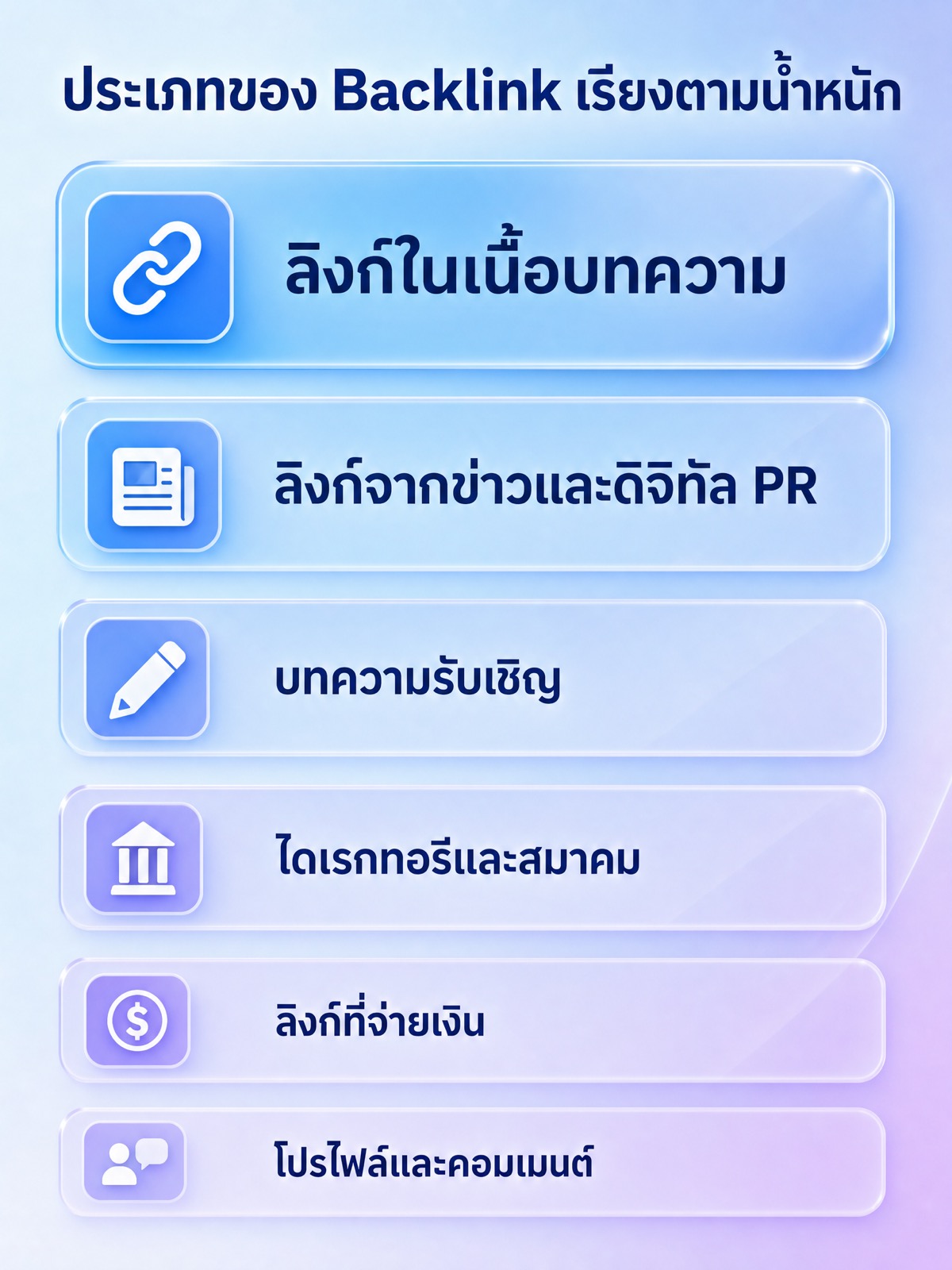
The table below summarises the link types you meet in practice, what each signals to a search engine, and the weight you should expect based on the principles above.
| Link type | What it signals to a search engine | Weight to expect |
|---|---|---|
| In-content links from media or blogs in your subject area | An editor chose to cite you in a relevant context | The highest of any link type |
| Links from news coverage or digital PR | You were a source, or part of the story being reported | High, when the outlet relates to your subject |
| Guest contributions written for real readers | Depends on whether the piece has value or exists to carry a link | Moderate, and falling as the tactic is scaled |
| Paid or sponsored placements | Must always carry rel="sponsored" or nofollow | Should pass no ranking value; left followed it violates policy |
| Business directories and professional association listings | Confirms identity and business details more than link value | Low for ranking, useful for local search |
| Profiles, comments, and forum posts | Usually marked ugc or nofollow automatically | Close to zero for ranking |
| Unlinked brand mentions | Not a link, but confirmation the brand exists | Passes no link value; an opening to ask for one |
Read that table and a pattern shows up. The types that are hardest to earn are the ones worth most, and the types you can generate hundreds of in one afternoon are worth almost nothing. That relationship is not a coincidence. It follows directly from the principle that a link has value because you cannot control it.
How to build backlinks safely and effectively
Every white hat method starts from the same condition: something on your site has to be worth citing. Skip that step and the rest of the work turns into asking strangers for sympathy, which takes enormous time and produces very little. Pages people link to tend to answer a question more completely than anything else available, hold data that is hard to find elsewhere, or offer a tool that is free to use. In practice, content marketing and link work cannot be separated.
Methods that work, in the order worth attempting them
- Build something worth citing first. A thorough guide on a subject you know deeply, a reference page you keep current, or a small calculator that solves a repeated problem. It costs the most effort up front and everything else rests on it.
- Be a source for journalists and content teams. Answer questions inside your expertise quickly and directly. The hard part is having someone who can genuinely speak for the brand and respond on a news timescale.
- Publish your own first-party data. Customer surveys, aggregate figures from your own systems, or an experiment somebody could repeat. People cite numbers more readily than opinions, but this demands real data in hand and a method you are willing to publish.
- Reclaim broken links. Find dead pages in your subject that still have links pointing at them, then offer a replacement that serves the same need. It is patient research work, but the pitch genuinely helps the site owner, so it earns replies at a better rate than a bare link request.
- Convert unlinked brand mentions. Set alerts on your brand name and reach out politely when someone names you without linking. This is the easiest of the group, because the other party has already written about you.
- Build partnerships and join industry bodies. Member pages, partner pages, event sponsor listings. These links rarely move rankings much, but they confirm the business exists in its field.
- Look for Thai-language opportunities specifically. Thai industry media, trade association sites, universities, and organisations that maintain supplier listings. This group gets overlooked because it does not surface in English-language tools.
Notice that none of those items comes with a count or a success rate. That depends on your subject, your brand's existing strength, and the quality of whatever you have made worth citing. Two sites running identical methods getting completely different results is normal. For a wider view of how links fit a full plan, look at how SEO work for the Thai market is structured.
What to avoid, and why none of it is a shortcut
- Private blog networks. A cluster of sites that exists to feed links to one owner's properties. It violates the link spam policies directly, and when a network is dealt with, every site that bought into it loses what it paid for at the same time.
- Buying links that pass ranking value. Bought as a post, on a monthly retainer, or traded for free product, a followed paid link is a violation Google states plainly. The correct handling is rel="sponsored", which means you are paying for traffic and visibility rather than for rankings.
- Mass directory submissions. A directory that accepts every site without review signals nothing to anyone. Beyond wasting time, it leaves your profile with an unnatural shape.
- Comment spam. Almost every comment field marks links nofollow or ugc already, so the work returns close to nothing from the outset while damaging how the brand reads to people.
- Systematic link exchanges. Two or three sites linking to each other because the content genuinely connects is ordinary internet behaviour. Scheduling reciprocal links at volume, whether direct or through a third party, is a pattern the link spam policies name as manipulation.
Worth remembering: the risk in these methods is not only penalties. The more common outcome is wasted money, because the systems quietly ignore the links. You paid, nothing happened, and you never find out why. If you want a team working the earning side in a way you can inspect, look at how a backlink service and link building work are run when they are built on content and outreach rather than on buying placements.
Why you need to check your own backlinks
The first reason is simple: links appear without you doing anything. Aggregators republish your content, scraper sites copy whole paragraphs with the links attached, automated directories pick up your business name on their own. All of this happens continuously and nobody asks permission. Your link profile is not something you built. It is something that grew.
The second reason is drift. A link earned years ago may sit on a site that has since changed owners, changed subject, or been abandoned to spam. The page that linked to you may have been deleted, or your own URL structure may have changed so the old link now lands on a 404. That last case is extremely common after a site rebuild, and it is free value thrown away for want of a redirect.
The third reason is negative SEO, meaning someone pointing low-quality links at your site hoping to cause damage. It is a real thing, but the full picture matters: Google's own documentation states that its systems work to ignore links that add no value automatically. Seeing odd links in a report does not mean your site is under attack, and it is not a reason to rush to disavow everything unfamiliar.
The genuine value of an audit is diagnosis rather than cleanup. You check to learn which of your pages earn links on their own, where competitors are getting links you have never approached, whether an earlier team left a legacy of bought links, and where fixable problems sit, such as links pointing at dead pages. That review fits naturally into the same pass as an SEO audit of your site structure.
How to check backlinks in a repeatable way
A process that works for almost any site has four steps: start with Google's own data, add third-party crawlers, then sample and summarise rather than reviewing every link. A site with tens of thousands of links cannot be reviewed line by line, and it does not need to be.
Step one: start in Google Search Console
The Links report in Search Console is first-party data from the platform itself and it is free. It shows the sites linking to you most, your pages receiving the most links, and the most common anchor text. It is the best starting point because it reflects what Google actually sees.
The limits matter too. The report is a sample rather than a complete list, the number of rows you can export is capped, it does not separate nofollow from followed links, it does not tell you what any link is worth, and it does not give you the date a link was found. For discovery dates you need an external tool.
Step two: add a third-party crawler
Commercial tools maintain their own link indexes built by their own crawlers, so they surface things Search Console does not: first-seen dates, follow status, links that have disappeared, and the profiles of sites you do not own. That last capability matters, because looking at where competitors earn links is one of the fastest ways to find opportunities.
Step three: sample instead of reviewing everything
The best use of your time is to group links by referring domain and sort by the domains sending the most. Review the top ten to twenty closely, then sample from the rest. For each domain, ask whether the page has content real people read, whether the link sits in a sensible context, whether the site links out to hundreds of unrelated places, and whether it gets any search traffic at all.
Only a handful of patterns should make you pause: exact commercial keyword anchor text repeated at an unusually high share, many links appearing together in a short window from domains with nothing in common, links from pages whose text is incoherent or crudely machine translated, and links from sites openly selling placements. These are observations rather than verdicts, and they always need the wider picture around them.
Step four: understand the disavow tool before touching it
The disavow tool in Search Console does one thing: it tells Google not to count links from the URLs or domains listed in the file you upload. It does not remove links from the internet, it does not contact site owners, and it does not improve rankings merely because you used it.
The cases where using it genuinely makes sense are narrow. One is a manual action for links in your Search Console account. The other is knowing for certain that the site has a history of bought links or link networks that you cannot get removed. Outside those two situations, most sites never need it across their entire lifetime.
The warning has to be stated plainly: disavow is a tool you can hurt yourself with. Put a domain in the file that was actually sending good links and you are discarding value you already had, and the effect does not reverse the moment you fix the file. Guessing and sweeping links away as a precaution is the worst possible approach. When you are unsure, doing nothing is the better answer.
Popular tools for checking backlinks
Tools fall into two groups. The first is Google Search Console, which is first-party data at no cost, and every site should have it installed and verified from day one. The second is commercial software that crawls the web with its own bots, such as Ahrefs, Semrush, Moz and Majestic. Each maintains its own link index, crawls at its own frequency, and applies its own rules for dropping dead links from reports.
The consequence is that the numbers from different tools never agree, and they should not. If tool A reports one count of referring domains and tool B reports another, neither is wrong. They are seeing different portions of the web. The right response is to pick one primary tool and track the trend inside it. Switching between tools and comparing figures across systems is a reliable way to misread your own data.
A few things are worth using as selection criteria: the size and freshness of the index in the market you care about, which matters a lot for Thai sites because coverage of Thai-language content varies between vendors; the ability to export raw data for your own analysis; whether it shows first-seen and lost dates; and whether it lets you inspect profiles of sites you do not own. As for the ready-made scores each vendor supplies, treat them as a way to order your attention and nothing more.
The numbers everyone wants that do not exist
The questions asked most often about backlinks are the ones that cannot be answered with a number, and admitting that openly serves you better than holding a fabricated figure.
How many links does a page need to rank? There is no numeric answer, because the amount required depends on who you are competing with for that query. A page targeting a narrow specialist term can rank with almost no external links, while a heavily contested commercial term may need links, content, and brand credibility built over years. The closest thing to an answer is to look at the link profiles of the pages currently ranking for your query and use that as a reference picture rather than a target number.
How many links per month is safe? Google has published no safe rate. The notion of a safe link velocity is something the industry invented. A site that lands major coverage and picks up hundreds of links in two days has done nothing wrong, while a site acquiring a few bought links a day at a steady pace is still in breach of policy. The meaningful variable is where links come from, not how fast they arrive.
What domain score should I accept? Scores such as Moz's DA, Ahrefs' DR, Semrush's Authority Score and Majestic's Trust Flow are metrics their vendors designed. Google does not use them and has never endorsed them. They are useful for deciding which sites to examine first, but setting a fixed cutoff hands your judgement to another company's formula and makes life easier for anyone inflating those scores to sell you links, because a score can be manipulated while topical relevance is much harder to fake.
What does a link cost in Thailand? That question has no answer, and it should not have one. Link markets exist in every country, but a price somebody quotes tells you nothing about a link's value, and buying links that pass ranking value breaches policy regardless. What you can genuinely budget for is the cost of producing something worth citing and the cost of putting it in front of people who might care.
What replaces the missing numbers is a short set of questions applied to one link at a time. Does the linking page have real readers? Does the content around the link concern the same subject as the destination? Could an editor explain why the link sits there? And if search engines vanished tomorrow, would the link still have a reason to exist? Answer yes four times and you do not need anyone's score to confirm it.
How earning links for a Thai site differs
The clearest difference is the size of the pool. The number of sites publishing Thai-language content consistently, with real editors behind it, is far smaller than on the English-language side. A plan written for the American market that assumes contacting hundreds of specialist blogs collapses the moment you apply it to a Thai subject, because the list you can assemble may not reach a fraction of that.
What stands in its place is Thai business and trade press, trade and professional association sites, universities and research bodies, plus the sites of distributors and partners you already work with. That last group gets overlooked most often despite being the easiest to reach, because the business relationship already exists.
Something else to get right is the role of social platforms here. Facebook and LINE are where Thai audiences share content most, but links created there are usually nofollow or sit in spaces crawlers cannot reach at all, such as group chats and LINE official accounts. A piece of content can spread widely in Thailand without producing a single link in any tool's report. The effect shows up instead as traffic, brand searches, and site owners who see the content and cite it in their own articles later.
The practical conclusion is not to measure Thai content work by link count alone, and not to translate an English link plan directly. Start instead from what people in your industry in Thailand read and who they trust, then work out how those sources could reasonably cite you. The same reasoning applies to AI SEO work, since systems that summarise answers for users also lean on sources with a clear identity.
FAQ about backlinks
How many backlinks do I need to rank?
There is no number that answers this, because what you need depends on the competition for that query and the strength of the pages already ranking. The workable approach is to look at the link profiles of the top results for the term you want and use them as a reference for the level required, rather than picking a round number and working towards it.
How long until backlinks start working?
No timeframe can be guaranteed, because a crawler has to find the page carrying the link first, after which the systems assess it and any effect follows. Crawl frequency varies enormously between a news site crawled daily and a small site visited rarely, and ranking changes also depend on everything else happening at the same time. Read the trend over months, not days.
Is buying backlinks safe?
Buying links that pass ranking value is a direct breach of Google's link spam policies, whether payment is money, goods, or services in exchange. The correct handling is to mark such links rel="sponsored", which means you are buying visibility and traffic rather than rankings. More common than a penalty is simply wasting money on links the systems already ignore.
Does DA or DR matter?
They matter as a way to prioritise which sites to look at, not as a decision rule. These scores are metrics designed by the companies selling the tools; Google does not use them and has never endorsed them. Setting a fixed minimum also makes it easier for anyone inflating those scores to sell you links. Judge topical relevance and the context the link sits in instead.
Do nofollow links help?
They do help, even though they are not meant to pass ranking value. Google changed nofollow from a directive into a hint its systems weigh themselves, and commercially a nofollow link from an outlet people actually read still sends traffic and builds recognition. A profile made up purely of followed links also looks less natural than the mix an ordinary site accumulates.
Where to start
If you have never looked at your own link profile, start with the Links report in Search Console in a single afternoon. See which pages earn the most links and where they come from. Then find links pointing at dead pages and redirect them properly. Those two jobs return more per hour spent than anything else in link work, and neither needs paid software.
After that it becomes long-term discipline: make things worth citing, put them in front of people likely to care, and review the profile on a schedule so you know what is happening. If you want help across both the auditing side and the earning side, work out a scope that suits your site and start with the part that pays back first.