If setting up automated bidding in Microsoft Advertising has ever felt like it required one too many decisions, you’re not alone. The platform just made a change that cuts through some of that complexity without stripping away the controls that actually matter.
Microsoft is consolidating Target CPA and Target ROAS into two core bidding strategies instead of keeping them as separate campaign settings. The underlying bidding behavior stays exactly the same — what changes is the setup experience, which is now faster and less confusing for pretty much everyone.
Whether you manage one campaign or a hundred, this update changes how you configure automated bidding going forward. Here’s what you need to know.

What Microsoft Ad is actually changing with automated bidding
The change sounds minor, but it removes real friction from campaign setup. Microsoft is restructuring how bidding options are presented — not how the bidding engine itself works.
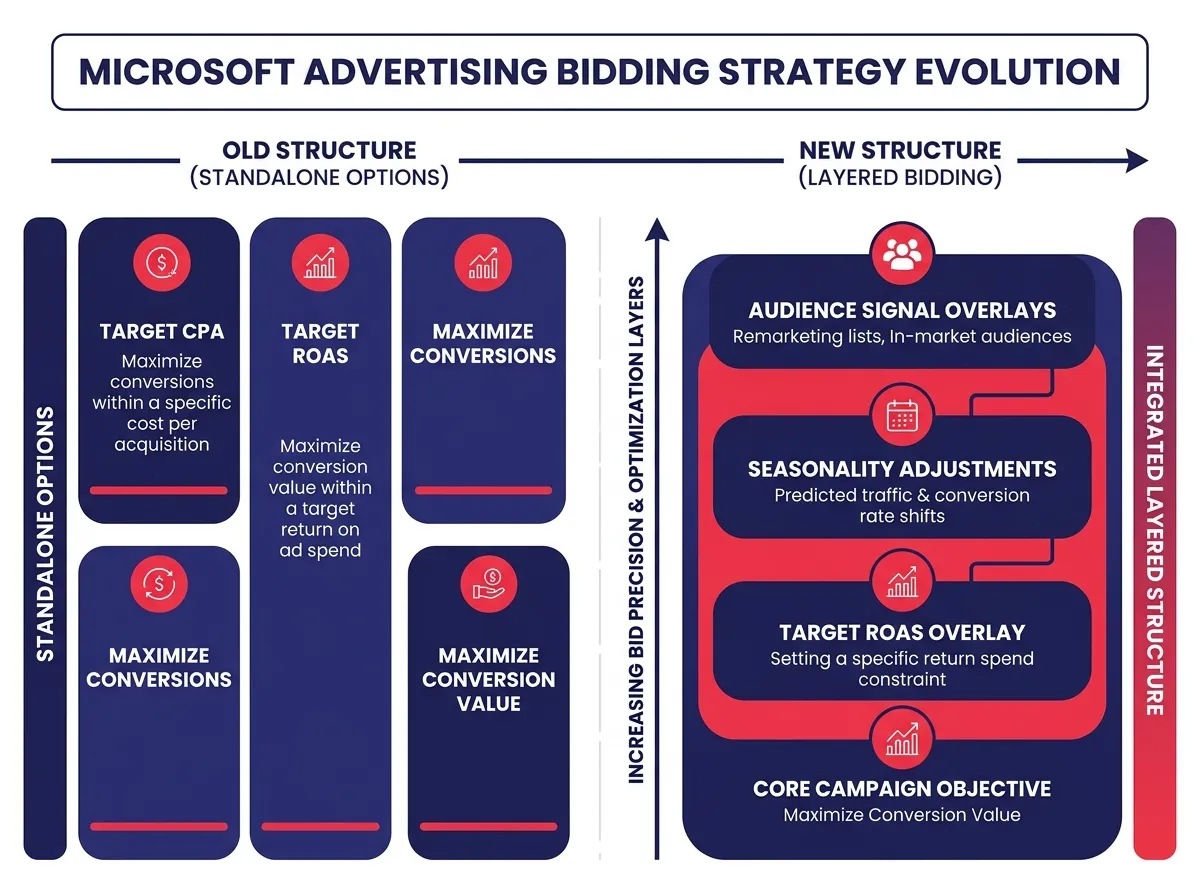
From standalone targets to layered strategy options
Previously, Target CPA and Target ROAS were standalone strategies. You’d pick one, set your target, and move on. Now, Microsoft Ad bidding works differently: those targets become optional layers on top of one of two core strategies.
The new setup looks like this:
- You choose either Maximize Conversions or Maximize Conversion Value as your base
- You then decide whether to add a performance target on top, like a target CPA or target ROAS
- If you skip the target, the strategy runs on its own to maximize results within budget
Two questions and you’re done. That’s a noticeably shorter decision tree than scrolling through a list of named strategies that all sound vaguely similar.
How the two core bidding approaches work
Maximize Conversions goes after as many conversions as possible within your budget. Add a Target CPA and you’re telling the system to keep chasing conversions while staying near a specific cost per acquisition.
Maximize Conversion Value focuses on the total value of those conversions rather than just the count. Layer in a Target ROAS and you’re asking the system to hit a return on ad spend goal at the same time.
Microsoft has confirmed that the actual bidding logic hasn’t changed. The algorithms are the same. The only thing that’s different is how you get to them.
Why this update actually matters for campaign performance
Reorganizing settings doesn’t sound like much. But this kind of structural change has a real effect on how accounts get built and managed over time.
Fewer setup decisions, faster campaign launch
Too many options that look almost identical is a genuine problem. It leads to second-guessing, inconsistent configurations across campaigns, and slower launches while someone tries to figure out whether they picked the right thing.
Consolidating the bidding options helps with all of that:
- Campaigns behave more consistently because they’re built from the same basic structure
- Configuration mistakes become less likely when there are fewer branching decisions to make
- Launches move faster, which matters when you’re managing accounts at any kind of scale
For teams running a lot of campaigns, that saved time compounds. Less time on structural setup means more time on copy, creative, and audience work — which is where most of the actual performance gains come from anyway.
Keeping control without the extra complexity
The fair concern with any simplification is whether it takes something away from experienced advertisers. This one doesn’t.
If you were running Target CPA or Target ROAS as standalone strategies before, you still get exactly the same control. The targets are still there. They’re just optional layers now rather than the primary selection — which, if anything, is a more honest representation of what they are.
This setup works for both ends of the experience spectrum:
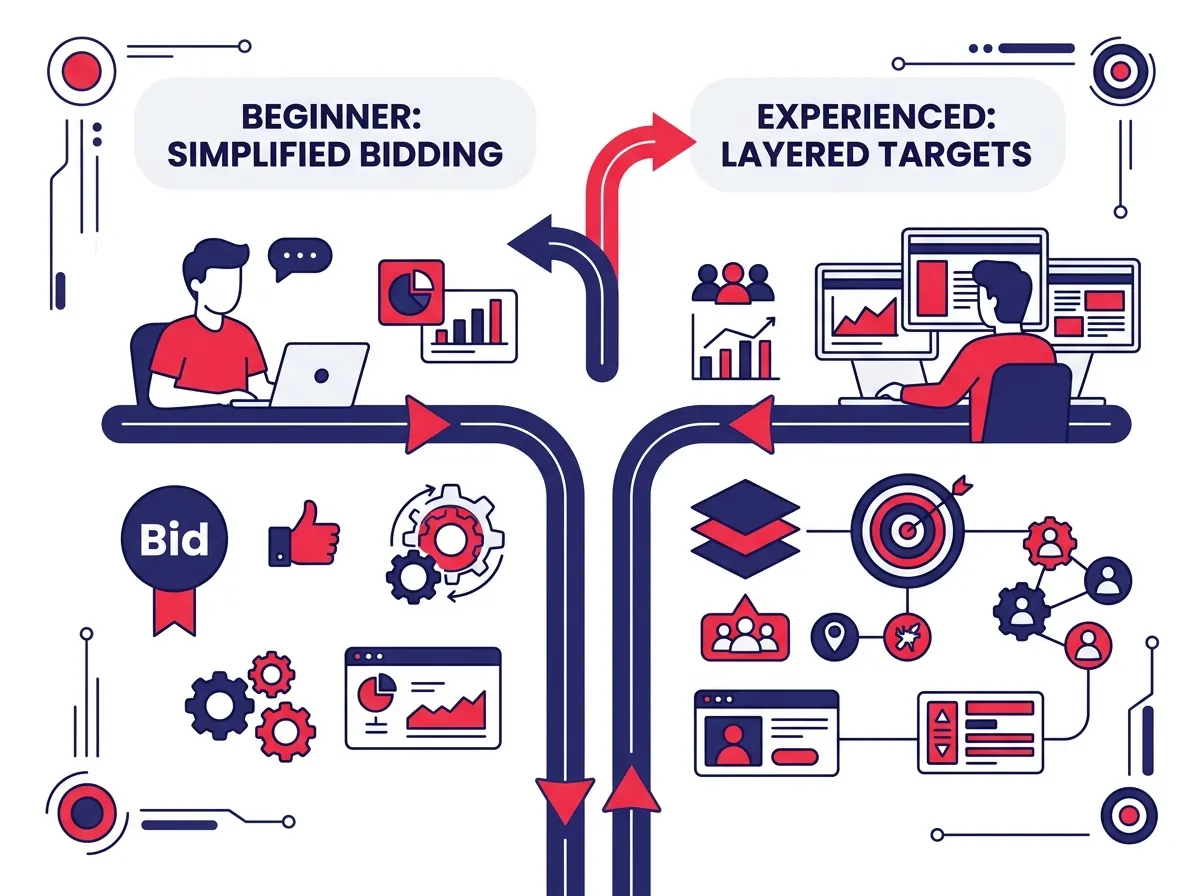
- Someone newer to paid search can start with Maximize Conversions or Maximize Conversion Value, let the system learn, and add targets later once there’s enough data to set them sensibly
- A more experienced advertiser can go straight to layering in a precise CPA or ROAS target from day one
Microsoft Ad bidding is simpler now in a way that doesn’t penalize people who know what they’re doing. It just removes the unnecessary gatekeeping that made basic setups more complicated than they needed to be.
What stays the same and where Microsoft Advertising is headed
If you’re worried about your existing campaigns getting disrupted, don’t be. Microsoft has been clear on this point.
Existing campaigns are not disrupted
Campaigns already running on Target CPA or Target ROAS keep working as-is. Nothing needs to change on your end. Portfolio bid strategies stay in place too, with no modifications required.
This matters: Microsoft isn’t forcing a migration. The new structure applies to how campaigns get configured from here on out, not to anything already live.
A broader push toward accessible automation
This fits a pattern that’s been building across the major ad platforms for a while now. Simplifying the path to automation lowers the barrier to running high-performance campaigns — and that raises the floor for the whole ecosystem.
For agencies managing a lot of client accounts, a more standardized bidding structure makes onboarding faster. Less variation in how campaigns are built means audits, troubleshooting, and handoffs between team members are all smoother.
For in-house teams without a dedicated paid search specialist on staff, cleaner automation tools mean they can run competitive campaigns without needing deep platform expertise on day one.
The direction here isn’t subtle. Platforms want automation to be the default path, not the advanced option. Microsoft Advertising is following the same logic Google has applied to its own smart bidding rollouts — meeting advertisers where they actually are rather than where the platform assumed they’d be.
If you’ve been hesitant to lean into automated bidding because the setup felt like too much, this is a good moment to take another look.