TL;DR
- In white label SEO the end client contracts only with the agency; the partner never invoices, emails or appears in reports to the client.
- Link building carries the most risk: links bought or exchanged to manipulate rankings count as link spam under Google's policies, and penalties hit the client's domain.
- Partners usually price per client per month, per deliverable, or by the hour or day for technical projects such as migrations.
- Have the client add the agency to Search Console and GA4, and the agency add the partner, so access can be removed cleanly when a partnership ends.
White label SEO is an arrangement where one company does the SEO work for an agency's clients, and the agency sells and reports that work under its own brand. The client deals only with the agency; the partner who runs the audits, writes the content and builds the links stays out of sight.
The model lets an agency add search services without hiring a full SEO team first. It also moves a lot of risk around, so the details of how the partnership is set up matter more than the label on it.
What is white label SEO, exactly?
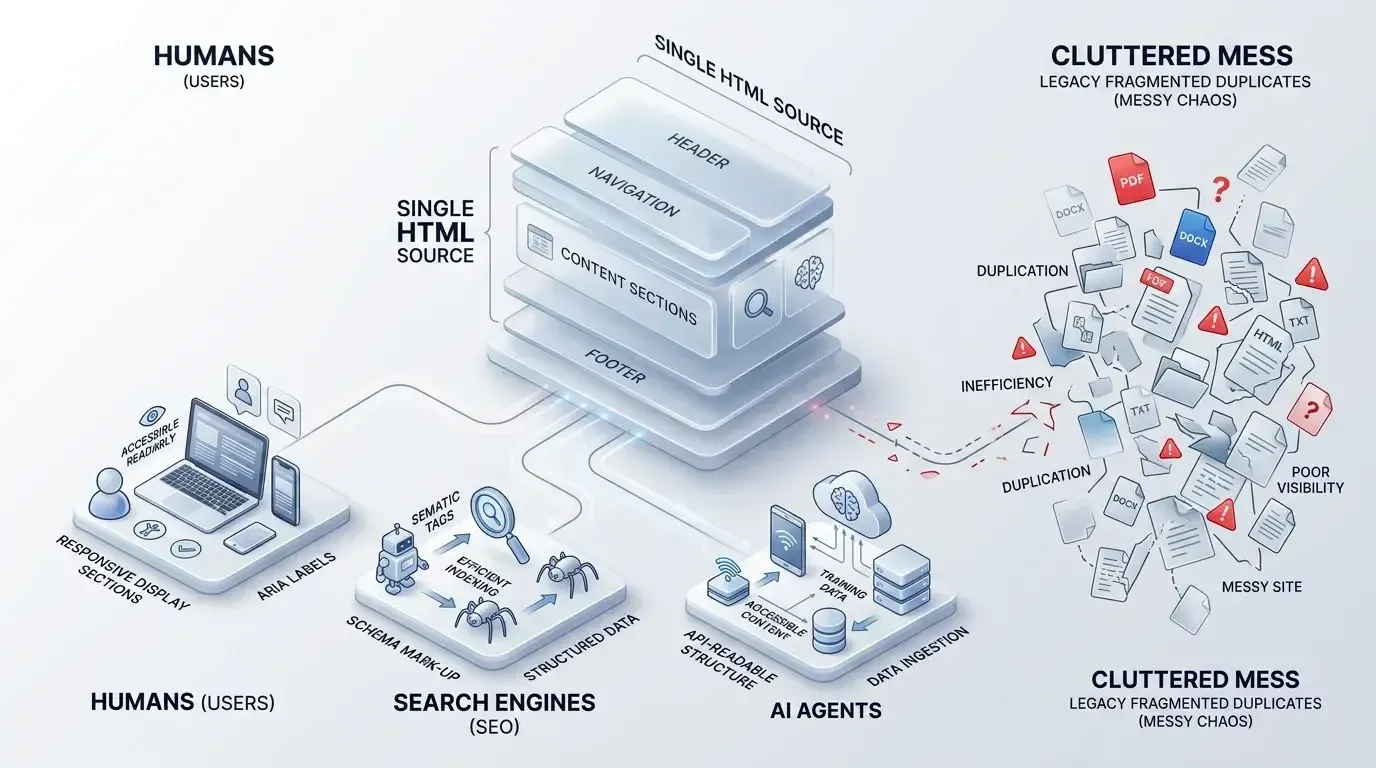
In a white label SEO setup there are three parties. The end client owns the website and pays the agency. The agency owns the client relationship, sets the price and presents every deliverable. The white label partner does some or all of the production work and hands it back to the agency unbranded, so the agency can put its own name, logo and report template on it.
The client contract sits between the client and the agency. A second contract sits between the agency and the partner. The partner normally never invoices the client, never emails the client and never appears in reports. That separation is the whole point, and it is also why the agency stays accountable for results even when it did not do the work.
White label SEO is different from reselling software. A rank tracker with a custom logo is a white labelled tool. White label SEO is a white labelled service: people doing technical fixes, research, writing and outreach on a real website, with all the judgment calls that involves.
How a white label SEO partnership works for agencies
Most partnerships follow the same sequence, whatever the size of the agency.
- Scoping. The agency shares the client's site, goals, markets and any constraints (a CMS the client's developers control, a legal review step for content, a brand style guide). The partner says what it can deliver and what it needs.
- Access. The client grants access to Google Search Console, Google Analytics 4 and, where needed, the CMS. Best practice is for the client to add the agency's account as a user, and for the agency to add the partner, so that access can be revoked cleanly if the partnership ends.
- Audit and plan. The partner runs a technical and content audit and turns it into a prioritised plan. The agency reviews it, adjusts it to what the client will actually approve, and presents it as its own recommendation.
- Monthly production. The partner delivers the agreed work each month: fixes, briefs, articles, on-page changes, outreach. The agency checks quality before anything reaches the client.
- Reporting. The partner supplies data and commentary in a neutral format; the agency rebrands it and walks the client through it.
- Feedback loop. Client comments flow back through the agency to the partner. Nobody on the partner side contacts the client directly unless all three parties agree.
The agency's own job does not disappear. Someone at the agency still needs enough SEO knowledge to judge the plan, catch weak content and explain results honestly. An agency that resells without anyone able to read the work is exposed the first time a client asks a hard question.
What is included: audits, content, link building, reporting
Scope varies between partners, so treat this as a checklist for the conversation rather than a standard package.
Technical audits and fixes
Crawling the site for broken links, redirect chains, duplicate titles, missing canonical tags, blocked resources, slow templates and indexing problems reported in Search Console. A good audit separates what the partner can fix (titles, internal links, meta data) from what needs the client's developers (server responses, template changes). See how a full SEO audit is structured before agreeing what "audit" means in a contract.
Keyword research and content
Mapping search queries to pages, writing briefs, producing articles and service-page copy, and refreshing pages that have lost traffic. Ask who writes, in which languages, and how many rounds of edits are included. Content is where white label quality differences show up fastest, because the client reads it.
Link building
Outreach, digital PR, guest contributions and unlinked brand mentions. This is also the riskiest line item. Google's spam policies treat links bought or exchanged to manipulate rankings as link spam, and a penalty lands on the client's domain, not on the partner. Ask for the method in writing and a sample of placements. A dedicated link building service should be able to explain exactly how each link is earned.
Reporting
Unbranded dashboards or exports covering clicks, impressions and average position from Search Console, organic sessions and conversions from GA4, ranking movement for agreed terms, and a list of work completed. The commentary matters as much as the charts: what changed, why, and what happens next month.
| Model | Who does the work | Main trade-off |
|---|---|---|
| White label SEO | A partner, delivered under the agency's brand | Fast to add a service; agency carries the accountability without full control |
| Outsourced SEO (disclosed) | A named specialist the client knows about | Clear responsibility; agency gives up some of the relationship |
| In-house SEO | The agency's own employees | Full control and margin; fixed salary cost before revenue is secured |
White label vs outsourced vs in-house SEO
The three models differ in two things: who the client thinks is doing the work, and who carries the fixed cost.
With white label, the client believes the agency does the work. The agency pays per client or per deliverable, so cost rises and falls with sales. The downside is dependence: if the partner slips on quality or deadlines, the agency finds out late and takes the blame.
With disclosed outsourcing, the agency introduces a specialist by name. The client may speak to them directly. This suits complex technical projects where the client's developers need to talk to the person who wrote the recommendations. The agency earns less control over the relationship but avoids pretending to expertise it does not have.
With in-house, the agency hires. It keeps all the margin and knowledge, but salaries run whether or not clients sign.
How white label SEO pricing usually works
Partners tend to price in one of three ways. None of them is automatically better; the right one depends on how predictable the client's needs are.
- Monthly retainer per client. A fixed fee for a defined monthly scope (for example, a set number of articles, a set number of hours of technical work, one report). Easy to resell because the agency's own client retainer can sit on top.
- Per deliverable. A price for each audit, article or placement. Flexible, but harder to forecast and easy to drift into buying volume instead of results.
- Hourly or day rate. Common for technical projects such as migrations, where scope is hard to fix in advance.
Here is an illustrative example only, with made-up numbers to show the arithmetic. Say a partner charges an agency 30,000 THB a month for a client's SEO scope, and the agency bills the client 50,000 THB. The 20,000 THB difference is not all profit: it has to cover the agency's account manager time, quality review, client calls and the risk of a refund if results stall. If the account manager spends 15 hours a month on that client, the agency should know what those 15 hours cost before setting the markup.
Watch for contracts that lock the agency in for a long term while letting the client leave at 30 days. The mismatch leaves the agency paying a partner for a client it no longer has.
What to check before choosing a white label SEO partner
- Method in writing. How do they build links? Who writes content, and is it reviewed by an editor? Do they use AI drafting, and if so how is it checked?
- Sample deliverables. Ask for a redacted audit, an article and a monthly report. Judge them as if a client were reading.
- Access and ownership. Accounts, content and any links built should belong to the client. Confirm that nothing is held hostage if the partnership ends.
- Language and market fit. A partner strong in English search may have no Thai writers. Ask who handles each language.
- Confidentiality. A non-solicitation clause so the partner does not approach the agency's clients, and an NDA covering client data.
- Turnaround and escalation. Agreed response times, and a named contact for urgent issues such as a traffic drop after a site update.
- Exit terms. Notice period, hand-over of work in progress, and what happens to monthly data exports.
The common and costly mistake is choosing on price per article. Cheap content that the client rejects costs the agency its review time, the rewrite and some of the client's trust.
How reporting stays under the agency's brand
Keeping reports on-brand is mostly a matter of process:
- The partner delivers raw data and written commentary in a neutral template, or builds dashboards in a reporting tool under the agency's account so the agency's logo and domain appear.
- Google Search Console and GA4 access is granted by the client to the agency, which then adds the partner. Whoever manages users on the property (owners in Search Console, administrators in GA4) sees every user's email address, so some agencies give partners an email on the agency's own domain.
- Report emails go out from the agency, never from the partner.
- Commentary is edited by the agency before sending, so the voice matches what the account manager says on calls.
White label does not mean misleading the client about results. Report the real numbers from Search Console and GA4, including the months that go down. The brand on the report can change; the data on it should not.
White label SEO in the Thai market
Thailand adds a few specific considerations. Many Thai businesses need SEO in both Thai and English, and the two languages behave differently. Thai is written without spaces between words, so keyword research has to account for several spellings and spacing variants of the same query, and content written by machine translation from English tends to read poorly to Thai searchers. Ask any partner who writes the Thai content and whether a native speaker edits it.
Local search matters too. Businesses with a physical location in Bangkok or other provinces depend on their Google Business Profile, Thai-language reviews and consistent Thai addresses. A partner focused only on blog content may skip this.
Finally, under Thailand's Personal Data Protection Act, client data shared with a partner (analytics exports, CRM lists, lead details) should be covered by a written data processing agreement. Keep the data you pass to partners to what the work actually needs.
For a view of what a Thailand-focused programme covers, see SEO in Thailand.
White label SEO FAQ
Is white label SEO legal and ethical?
Yes, white label SEO is a normal subcontracting arrangement, provided the agency's client contract allows subcontractors and the results reported are real. Problems start when an agency misrepresents the work done or the data, not when someone else produces it.
Will the client know a partner is involved?
Not unless the agency tells them, because the partner works under the agency's brand and never contacts the client. Some agencies choose to say they work with specialist production partners, which avoids awkward moments if the client later asks.
How long before white label SEO shows results?
The timeline is the same as any SEO programme, since the partner is doing the same work. Technical fixes can show up in Search Console within weeks of Google recrawling the pages; content and links usually take months, and the speed depends on the site's starting point and competition.
Can an agency white label only part of SEO?
Yes. One split is to keep strategy and client communication in-house and white label production such as content writing, technical fixes or outreach.
What happens to the work if the partnership ends?
That depends on the contract, which is why ownership terms should be agreed up front. Content, on-site changes and links built for the client should stay with the client's site, and the agency should receive the work in progress and data exports.
Working with a white label partner in Thailand
Relevant Audience offers white label packages to other digital marketing agencies, covering SEO alongside search ads, social media and video ads. The agency picks the package that fits each client and keeps the client relationship, with no lock-in contract. See the white label services for agencies page for how the programme works.