For a long time, the hospitality industry has been in a complicated relationship with Online Travel Agencies (OTAs). Platforms like Expedia and Booking.com are undeniable powerhouses. They bring in guests, fill rooms during low seasons, and handle a massive amount of marketing heavy lifting. But they also take a significant cut. Commission fees ranging from 15% to 25% are standard, and that eats directly into your profit margins.
The antidote to this dependency is direct bookings. When a guest books directly through your website, you own the data, the relationship, and the revenue. However, getting those direct bookings requires potential guests to find your website before they find an OTA listing. This is where a robust strategy regarding SEO for hotels comes into play.
Search Engine Optimization (SEO) isn’t just about tricking Google into ranking you higher. It is about creating a seamless, helpful, and convincing experience for travelers who are planning their next trip. In 2025, the way people search for travel has shifted. It is more conversational, more visual, and highly dependent on local context. If your hotel isn’t showing up when someone asks their phone for a “boutique hotel with a rooftop bar nearby,” you are missing out on the most valuable traffic available.
Understanding How Travelers Search
Before diving into technical fixes, you have to understand the mindset of your potential guest. The travel customer journey is rarely linear. It usually starts with a dreaming phase, moves to planning, and ends with booking. Your SEO strategy needs to address each of these stages.
In the dreaming phase, people search for destination-based terms. They might type in “best places to stay in Miami for couples” or “family vacation spots in Vermont.” If your hotel’s blog has a high-quality article covering these topics, you introduce your brand early in the process.
As they move to the planning phase, searches get more specific. They might look for “hotels in downtown Chicago with parking” or “pet-friendly resorts near the beach.” This is where your specific amenities and location pages need to shine.
Finally, in the booking phase, they might search for your brand name directly to compare prices. If your site is slow, hard to navigate, or looks less secure than an OTA, they will bounce back to the big aggregator and book there. SEO for hotels is about ensuring you are the authority at every single one of these touchpoints.
The Foundation: Keyword Research with Intent
Many hoteliers make the mistake of targeting broad, high-volume keywords that are impossible to rank for. Trying to rank #1 for “Hotel in New York” is a losing battle against billion-dollar corporations. Instead, you need to find your specific niche.
Focus on long-tail keywords. These are longer, more specific phrases that have lower search volume but much higher conversion intent. A user searching for “luxury hotel” is browsing. A user searching for “luxury boutique hotel in SoHo with balcony” has a credit card in hand.
Think about what makes your property unique. Do you have a historic speakeasy in the basement? Are you located walking distance from a specific convention center? Do you offer vegan breakfast options? These specific attributes are your golden tickets. You should weave these specific phrases into your headers, page titles, and body content.
It is also crucial to think about the questions people ask. With the rise of voice search and AI-driven results, people are asking full questions like, “Where is the best place to stay for a bachelorette party in Nashville?” Creating content that directly answers these questions positions you as a helpful resource and increases your chances of appearing in featured snippets or AI-generated summaries.
Local SEO: Your Most Important Asset
For physical businesses, and especially hotels, Local SEO is everything. When someone searches for a hotel, Google almost always triggers the “Map Pack”—that block of three or four business listings that appears above the standard organic results.
If you are not in that Map Pack, you are invisible to a huge chunk of mobile users. The core of your Local SEO strategy is your Google Business Profile. In 2025, this profile acts almost like a second homepage. It needs to be meticulously maintained.
Ensure your name, address, and phone number (NAP) are consistent across the entire web. If your website says “St. James Hotel” but your Google profile says “Saint James Hotel,” that slight discrepancy can confuse search engine algorithms.
Photos are incredibly important here. Users are scrolling through images on Maps before they ever click through to a website. Upload high-resolution photos of your rooms, your lobby, your food, and your exterior. Show the experience, not just the bed.
Reviews are the fuel that powers Local SEO. You need a strategy to consistently generate new, positive reviews. It is not enough to just hope guests will write them. Send post-stay emails thanking them for their visit and kindly asking for a review. When you get reviews, respond to them. Respond to the good ones to show appreciation, and respond to the bad ones to show you care about service recovery. Google favors businesses that are active and engaged with their customers.
On-Page Optimization: telling the Right Story
Once you get a visitor to your site, on-page SEO ensures they stay there and that search engines understand what they are looking at. This goes beyond just sprinkling keywords into the text.
Title tags and meta descriptions are your first impression in the search results. Your title tag shouldn’t just be “Home – My Hotel.” It should be “Luxury Downtown Hotel | My Hotel Name | City, State.” Your meta description should be a compelling ad copy that encourages a click. Mention your best selling point, whether that is free parking, ocean views, or a central location.
The content on your room pages needs to be descriptive and sensory. Don’t just list “King Bed, TV, Wi-Fi.” Describe the plush bedding, the view of the skyline, and the ergonomic workspace perfect for business travelers. Search engines are getting better at understanding context and sentiment. Rich, descriptive text helps Google match your page with specific user needs.
Heading tags (H1, H2, H3) provide structure to your content. Your H1 should always be the main topic of the page. Use H2s to break up sections like “Room Amenities,” “Dining Options,” and “Local Attractions.” This makes the content scannable for humans and easy to parse for search bots.
Technical SEO: Speed and Usability
You can have the most beautiful photos and the most engaging copy, but if your website takes ten seconds to load, no one will see it. Technical SEO is the backbone of your strategy.
Page speed is a direct ranking factor. Travel websites are often heavy with images, which can slow things down. You must ensure that every image is compressed and optimized for the web. Use next-gen formats like WebP to keep quality high and file sizes low.
Mobile usability is non-negotiable. In 2025, the vast majority of last-minute bookings happen on a smartphone. If your booking engine is clunky on a small screen, or if users have to pinch and zoom to read the menu, you will lose the sale. Google uses mobile-first indexing, meaning it looks at the mobile version of your site to decide where you rank. If your mobile site is an afterthought, your rankings will suffer.
Schema markup is another technical element that gives you an edge. This is a specific code you add to your website that helps search engines understand the data on your page. There is a specific “Hotel” schema that allows you to tag your check-in times, price range, star rating, and amenities. This helps Google display rich snippets in the search results, such as showing your star rating right next to your link, which increases click-through rates.
Content Marketing: Selling the Destination
A major part of successful SEO for hotels is realizing that you aren’t just selling a room; you are selling a destination. People travel to experience a place, and your hotel is the basecamp for that experience.
Your blog or “Things to Do” section should be a resource for potential guests. Write guides on the best local coffee shops, the hidden parks nearby, or how to navigate the local public transport. If you are a hotel in New Orleans, write about “How to experience Jazz Fest like a local” or “Best walking routes in the French Quarter.”
This strategy does two things. First, it captures traffic from people searching for those activities who may not have booked a hotel yet. Second, it builds authority. When Google sees that you have a wealth of relevant, high-quality content about your location, it views your site as more authoritative, which boosts the rankings of your main sales pages.
Keep this content fresh. If you wrote a guide to the best restaurants in 2021, update it. Restaurants close and new ones open. Search engines favor content that is current and accurate.
The Importance of User Experience (UX)
Google’s Core Web Vitals are a set of metrics that measure user experience, specifically focusing on loading performance, interactivity, and visual stability. If your site layout shifts around while it loads (causing someone to click the wrong button), or if the booking calendar lags when clicked, these are negative signals to search engines.
A smooth direct booking process is vital. How many clicks does it take to book a room? Is the “Book Now” button always visible, or does it disappear as the user scrolls? High friction during checkout leads to cart abandonment. While this is technically conversion rate optimization (CRO), it overlaps heavily with SEO because Google tracks user engagement signals. If users constantly leave your site without interacting, it tells Google your site might not be the best result for that query.
Building Authority Through Links
Off-page SEO, primarily link building, remains a powerful driver of rankings. This involves getting other reputable websites to link back to yours. In the hotel industry, this doesn’t mean spamming forums. It means building relationships.
Reach out to local tourism boards and ensuring you are listed on their accommodation pages. Partner with local event venues or wedding planners and ask to be listed as a preferred vendor on their websites. These local links are incredibly relevant and signal to search engines that you are an integral part of the local community.
Collaborating with travel bloggers or influencers can also generate high-quality links. If a popular travel writer reviews your property and links to your site, that is a strong vote of confidence in Google’s eyes. However, focus on quality over quantity. One link from a highly respected travel publication is worth more than hundreds of links from low-quality directories.
Measuring Success and Adapting
SEO is not a “set it and forget it” task. It requires constant monitoring. You need to be looking at your analytics regularly to see what is working. Which pages are bringing in the most traffic? Which keywords are driving the most bookings?
Look at your organic traffic growth year over year. Look at the conversion rate of that organic traffic. Are people finding you but not booking? That might indicate a pricing issue or a problem with your landing page.
The search landscape changes frequently. New competitors open up, search algorithms update, and consumer behaviors shift. By staying on top of your data, you can pivot your strategy as needed. Maybe you notice a surge in traffic from a specific country; you could then create a landing page specifically for travelers from that region.
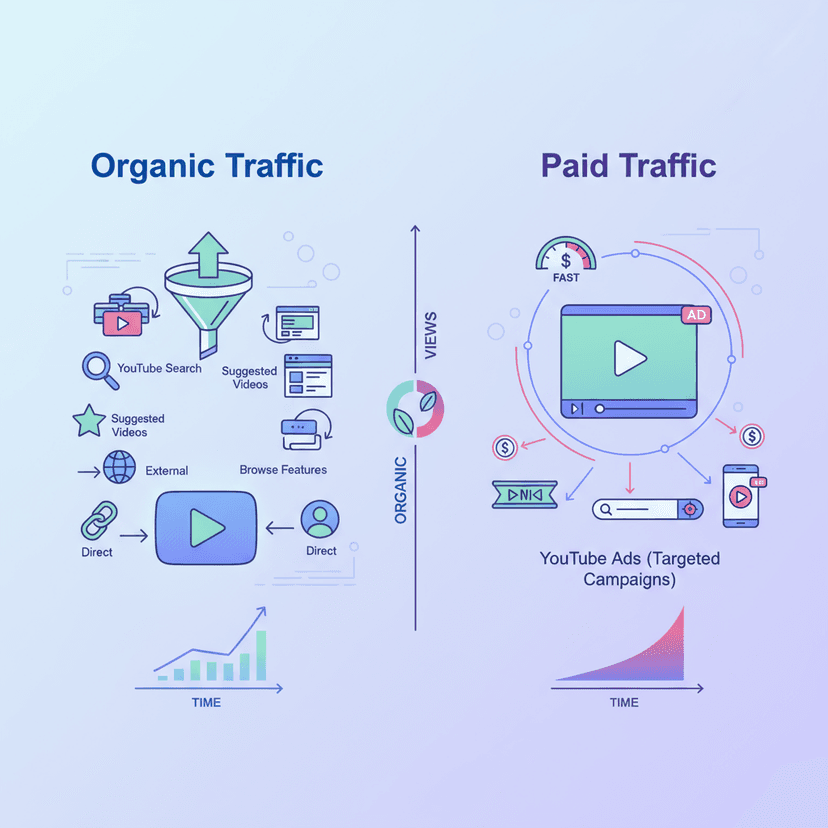
Investing in SEO for hotels is a long-term play. It takes time to build authority and climb the rankings. But unlike paid advertising, where the traffic stops the moment you stop paying, the value of SEO compounds over time. A well-optimized article you write today can bring in potential guests for years to come. It is the most sustainable way to reduce your reliance on OTAs and build a healthy, profitable direct booking channel.