TL;DR
- Platform attribution models only see their own touchpoints: Google's data-driven attribution cannot see email campaigns, organic social or an offline trade show, and Meta has by default credited conversions up to 28 days after a view with no click required.
- Adding up every platform's reported conversions typically produces a total 1.5x to 2x actual sales, and a 20 to 50 percent gap between platform-reported conversions and CRM-verified revenue is described as statistically normal in mid-to-large accounts.
- The post treats that gap as a calibration factor rather than a fixable tracking bug: 200 conversions reported by Google Ads against 130 closed CRM leads in the same period gives a ratio you apply consistently across reporting cycles.
- The measurement hierarchy has three layers: platform attribution as a directional signal, CRM conversion data as the revenue anchor, and incrementality testing as the arbitration layer when the first two conflict.
- Two incrementality tests need no data science team: geographic holdout tests run two to four weeks and measured on CRM data, and branded term pause tests that show how much branded spend cannibalises clicks organic search would have delivered anyway.
Your PPC dashboard says you had a record month. Your CRM says otherwise. Both are telling the truth, and that gap is exactly where most media buyers are bleeding money without realizing it.
Platform attribution models are built to flatter platforms. They are not designed to reflect actual business outcomes. Google wants to show you that Google worked. Meta wants to show you that Meta worked. That is not a conspiracy. It is just how ad platforms are structured and how they retain ad spend.
The future of PPC measurement is not about finding the perfect attribution model. It is about building a system that pulls from multiple sources and gives you enough confidence to make better budget calls. This piece covers why your current setup is probably misleading you, how AI is making the problem harder to see, and what a practical measurement framework actually looks like.
- Why Your PPC Attribution Model Is Working Against You
- AI Blind Spot and Decentralized Customer Journey
- Building a Measurement Hierarchy That Reflects Actual Business Outcomes
Why Your PPC Attribution Model Is Working Against You
Most PPC teams treat attribution as a technical problem. The tracking is off, the pixels are misconfigured, the UTM parameters need cleaning. So the team opens tickets, runs audits, and tries to reconcile the numbers. That work is not useless, but it usually misses the bigger issue.
The bigger issue is structural. Attribution models built into ad platforms are not neutral measurement tools. They are designed to report conversions in a way that justifies continued spending on that platform.
The Platform Trap: When the Scorekeeper Also Plays the Game
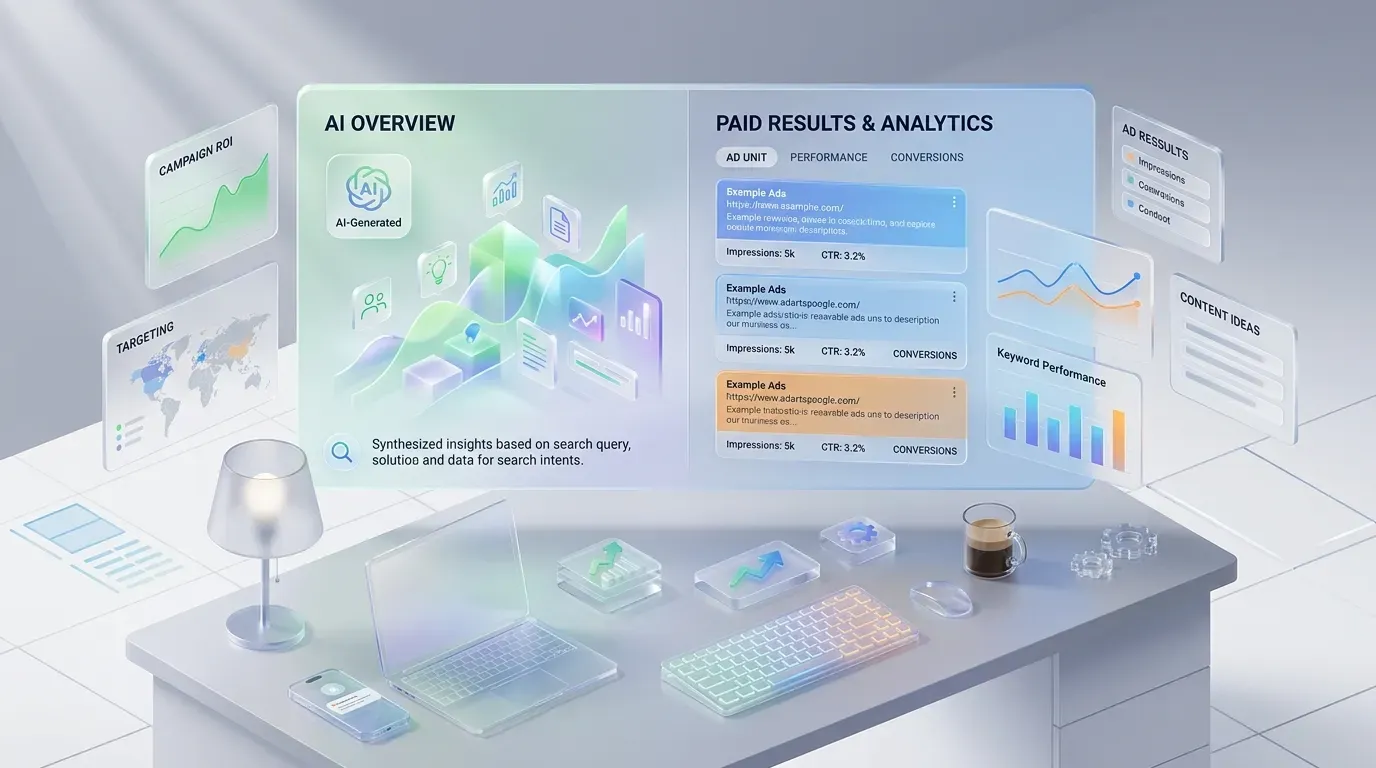
Google’s data-driven attribution model uses machine learning to assign credit across touchpoints. That sounds rigorous, but the model only has visibility into Google-owned touchpoints. It cannot see your email campaigns, your organic social traffic, or the trade show your sales team attended last quarter. It works with what it knows, and what it knows is Google.
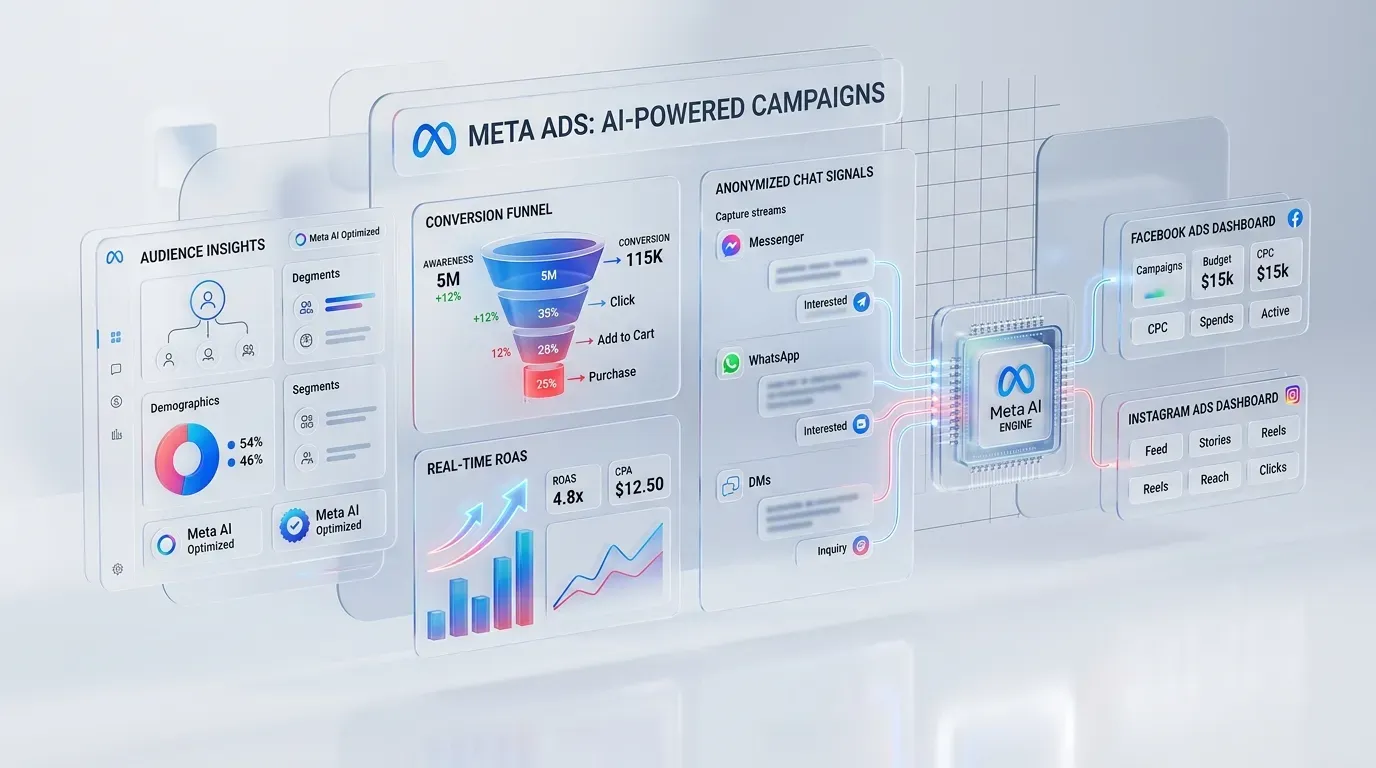
Meta’s view-through attribution windows are even more aggressive. A user can see your ad, do nothing, convert on your site three days later from a direct visit, and Meta still claims that conversion. By default, Meta’s attribution window has historically credited conversions that happened up to 28 days after a view, with no click required.
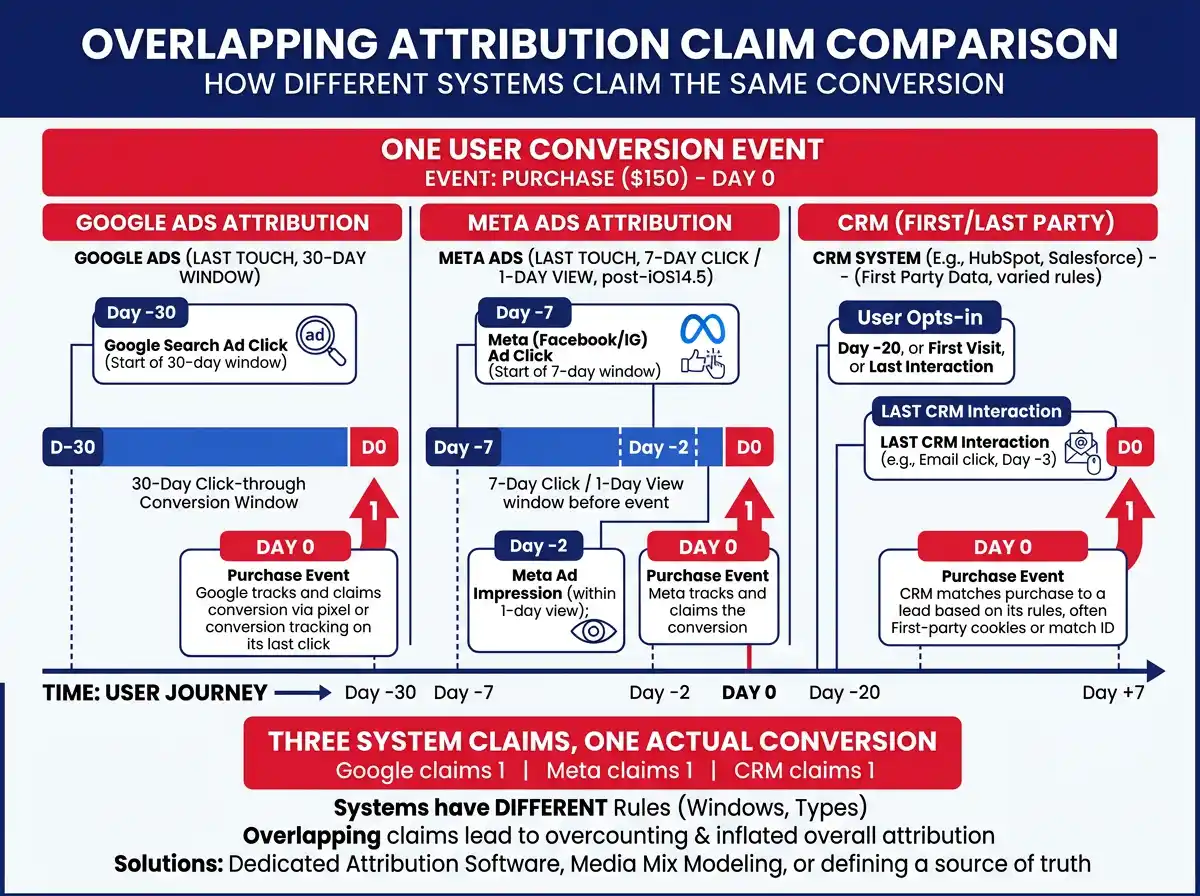
The result is that if you add up every platform’s reported conversions, you often get a number that is 1.5x to 2x your actual sales. Each platform is technically correct within its own model. Together, they are giving you a fiction.
This is the Platform Trap. The scorekeeper is also playing the game, and the rules favor the house.
The 20-50% Delta Is Not a Bug, It Is a Business Signal
Across mid-to-large PPC accounts, a 20-50% gap between platform-reported conversions and CRM-verified revenue is statistically normal. Most teams respond by trying to fix the gap. They update tracking code, switch consent management platforms, rebuild conversion events.
Some of that work matters. But spending three sprints trying to shrink a 30% discrepancy down to 25% is not a high-leverage use of anyone’s time. That gap is largely a structural artifact of how platform attribution works, not a solvable tracking bug.
The smarter move is to treat the discrepancy as a signal. When Google Ads reports 200 conversions and your CRM shows 130 closed leads from the same period, that delta tells you something concrete about how much credit Google is over-claiming. That ratio becomes a calibration factor you can apply consistently across reporting cycles.
Pay-per-click teams that internalize this stop chasing perfect tracking and start building decision frameworks that account for known measurement error. The goal shifts from reconciling numbers to making directionally correct budget calls with imperfect data. That is a genuinely different mindset, and it changes how you run the account.
AI Blind Spot and Decentralized Customer Journey
PPC attribution was already imperfect before AI search became mainstream. Now it faces a structural challenge that no amount of pixel work can solve.
AI Overviews in Google Search, ChatGPT, Perplexity, and other LLM-based tools are increasingly answering purchase intent queries directly. A user asks “what is the best project management software for a ten-person team” and gets a curated answer with no reason to click through to your site at all. Your ad never appeared. Your organic listing was not visited. But that user’s consideration was shaped.
When Discovery Happens in an LLM, Your Funnel Data Goes Dark
This matters for PPC attribution because a significant portion of the “proof” that pay-per-click campaigns work has always come from branded search volume. The logic goes: you run campaigns, awareness grows, branded searches increase, conversions follow. It is a reasonable proxy signal.
But when discovery happens inside an AI assistant instead of a search results page, that branded search lift may not happen at all, or it happens at a smaller scale and with a longer delay. Users can skip the branded search entirely and navigate directly to your site, contact sales, or ask the AI a follow-up question instead.
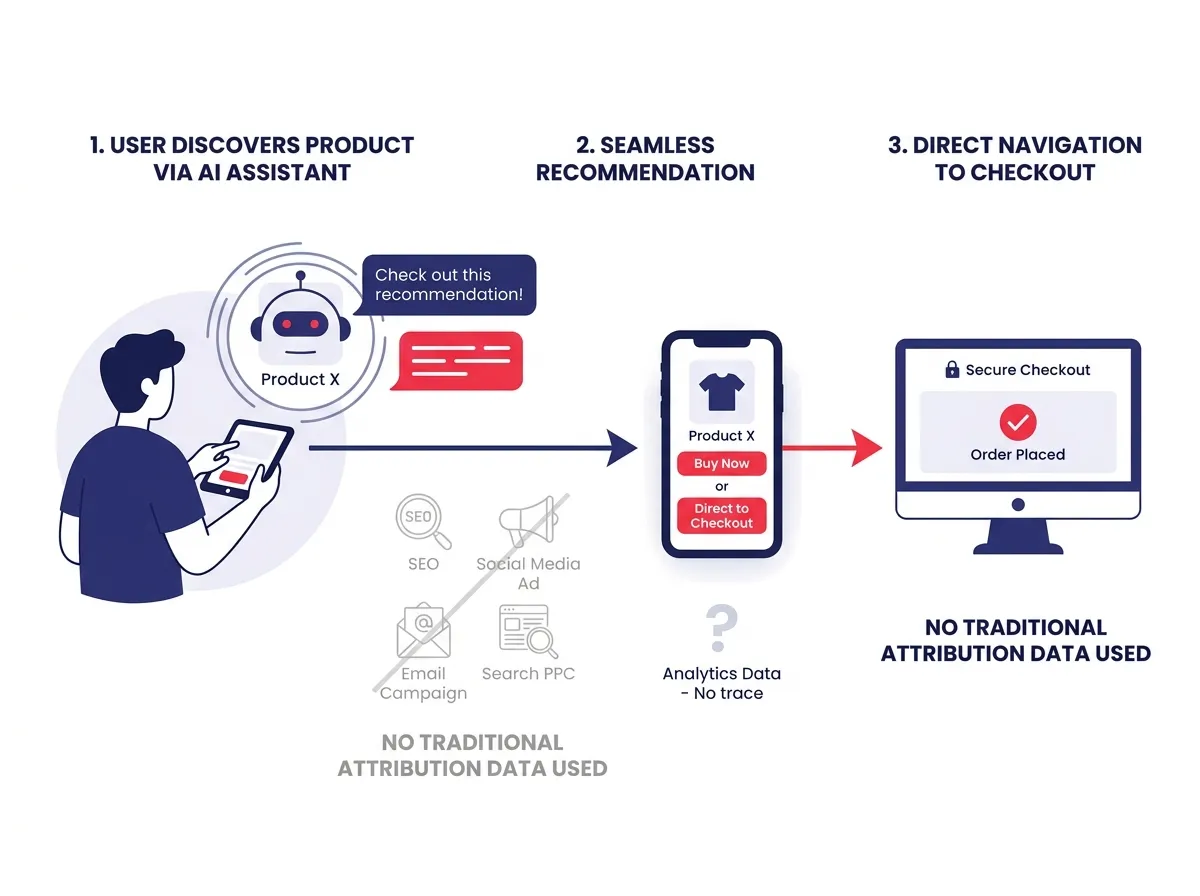
This means the baseline that PPC attribution relies on is eroding. Branded search volume as a proof point for PPC effectiveness becomes less reliable as more discovery moves into AI-generated experiences. Attribution models built on click-based data cannot account for intent that forms entirely outside trackable sessions.
The problem is not just theoretical. Search impression share data from many B2B and SaaS categories has shown flattening or declining click-through rates over the past two years even as impression volumes held steady. Users are reading AI-generated answers and not clicking. That behavior does not show up anywhere in your attribution reports.
Demand Creation vs. Demand Capture: Why the Distinction Defines Your Budget Allocation
One of the most useful frameworks for PPC teams operating in an AI-influenced search environment is separating demand creation from demand capture.
Demand capture campaigns target people who already know what they want. Branded keywords, competitor terms, high-intent bottom-of-funnel queries. These campaigns harvest existing intent. Attribution works reasonably well here because the user’s journey is short and click-based.
Demand creation campaigns introduce your product to people who do not yet know they need it. Display, YouTube, top-of-funnel search, Performance Max. Attribution works poorly here because the impact shows up weeks or months later in branded search, direct visits, and sales conversations that have no traceable click origin.
AI is compressing and rerouting the demand creation phase. If someone discovers your product through an AI overview or a ChatGPT recommendation, they arrive in your demand capture funnel with no traceable origin. That makes your branded and direct traffic look more efficient and makes your upper-funnel spend look less accountable.
The budget allocation implication is real. Teams that only fund what is attributable will systematically defund demand creation over time. That is a rational response to the data and a strategically dangerous one.
Building a Measurement Hierarchy That Reflects Actual Business Outcomes
Given the structural flaws in platform attribution and the growing blind spots created by AI, what does a practical measurement system actually look like?
The answer is not a single better model. It is a layered system that uses multiple evidence sources and assigns different levels of confidence to each.
System Triangulation: Using Multiple Models to Reach a Confidence Level
Think of measurement as a three-layer stack.
Layer 1 is platform attribution, treated as a directional signal. Use platform-reported data to understand relative performance. Which campaigns, ad groups, and creatives are trending up or down? Do not use these numbers as revenue truth. Use them to spot directional changes worth investigating.
Layer 2 is CRM-fed conversion data, which serves as your revenue anchor. Your CRM is the closest thing to ground truth you have. When a lead closes or a transaction completes, that event is tied to a real business outcome. Mapping CRM revenue back to PPC spend, even roughly, gives you a return metric that is not inflated by attribution window games.
Layer 3 is incrementality testing, which acts as your arbitration layer. When layers 1 and 2 conflict, incrementality tests tell you what is actually driving business outcomes. This is the layer most teams skip because it feels complicated, but it does not have to be.
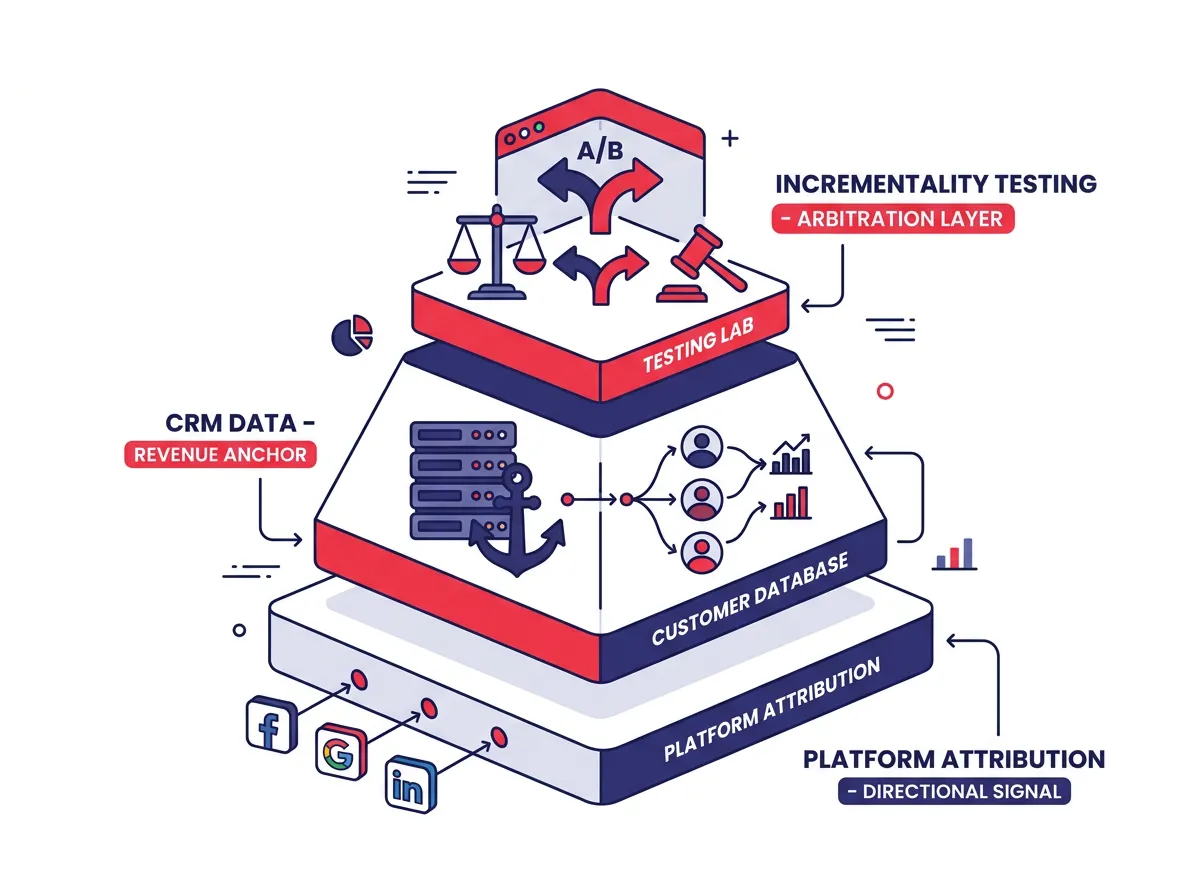
The confidence level approach matters here. You are not trying to find a final, perfect answer. You are trying to reach a threshold of confidence sufficient to make a spending decision. If all three layers point in the same direction, confidence is high. If they conflict, you run a test before reallocating budget.
This framework works for teams without a dedicated data science function. It requires discipline and a willingness to hold decisions until you have enough signal, but it does not require custom modeling or any specialized data engineering infrastructure.
Practical Incrementality Testing Without a Data Science Team
Incrementality testing sounds intimidating. In practice, two test types are accessible to any PPC team managing a seven-figure budget.
Geographic Holdout Tests
Split your target geography into matched pairs. Run your campaigns normally in one group and pause or significantly reduce spend in the matched group for a defined period, typically two to four weeks. Then compare business outcomes across the two groups using CRM data, not platform data.
This tells you the actual incremental revenue contribution of your PPC activity. If revenue drops meaningfully in the holdout regions compared to the active regions, your campaigns are driving real business impact. If revenue is flat across both groups, the campaigns may be capturing demand that would have converted regardless of your ads.
A few things to keep in mind:
- Match regions on historical revenue patterns, not just population size
- Use a holdout period long enough to see conversion cycles complete
- Measure revenue outcomes, not platform conversions
- Account for seasonal overlap when interpreting results
Branded Term Pause Tests
This one is simpler. Pause branded keyword campaigns for a defined period in one region or for one segment of your audience. Measure whether organic branded traffic and revenue hold steady or decline.
For many accounts, branded PPC campaigns primarily capture traffic that would have arrived via organic search anyway. A pause test tells you how much of that spend is genuinely incremental versus how much is cannibalizing free clicks. The answer is often uncomfortable, but it is something you can actually act on.
Both test types can be run within a standard campaign cycle by a small PPC team. They require no specialized tooling beyond your existing CRM and campaign management setup.
The broader point is that no PPC attribution model, regardless of how sophisticated it looks, can replicate what an incrementality test measures. Attribution models distribute credit across observed touchpoints. Incrementality tests measure whether removing a touchpoint changes business outcomes. Those are fundamentally different questions, and only one of them answers what your CFO is actually asking.
PPC in the post-attribution era is not about giving up on measurement. It is about measuring the right things with honest expectations about what each data source can and cannot tell you. Platform metrics have a place in that system. They just should not be running it.
Teams that build measurement hierarchies anchored in CRM data, supplement them with incrementality evidence, and use platform attribution as directional guidance rather than revenue truth will make better budget decisions than teams still trying to reconcile pixel counts. That is the practical path forward for any team serious about connecting PPC spend to actual business performance.