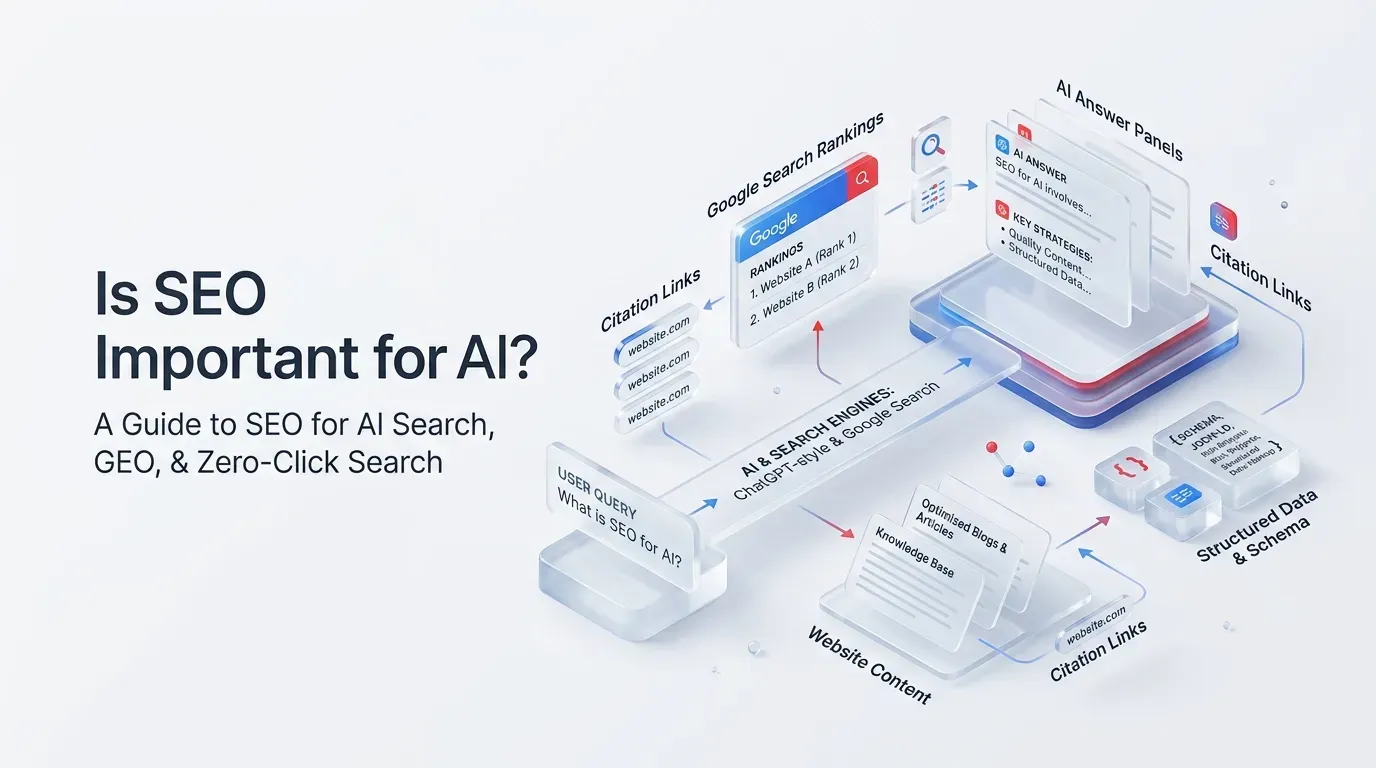
In an era where AI technology plays an increasingly central role in daily life, consumer search behavior is undergoing a complete transformation. Imagine you want to find information about something, like "which SEO agency is good." In the past, you'd type that query into Google and click through websites appearing in the SERPs one by one. Today, many people instead choose to ask ChatGPT, Gemini, or Perplexity, or simply read the answer from Google AI Overviews.
What's interesting is that AI doesn't show you ten links to go find your own answer. Instead, it reads, understands, and synthesizes information from multiple sources to create a single, newly composed answer. The critical question marketers and business owners must consider is: How does AI decide whose content to use? And how can we make our brand the one that gets "chosen" in that answer?
The answer to this question leads us to a new discipline in digital marketing called Generative Engine Optimization, or GEO.
- What is Generative Engine Optimization (GEO)?
- How AI Search and GEO Work
- Factors That Influence Rankings in GEO
- SEO vs. GEO: Which One Matters More?
- Business Benefits of Implementing GEO
- How to Get Started with GEO and Stay Ahead of Competitors
- Elevate Your AI SEO Strategy with Relevant Audience
What is Generative Engine Optimization (GEO)?
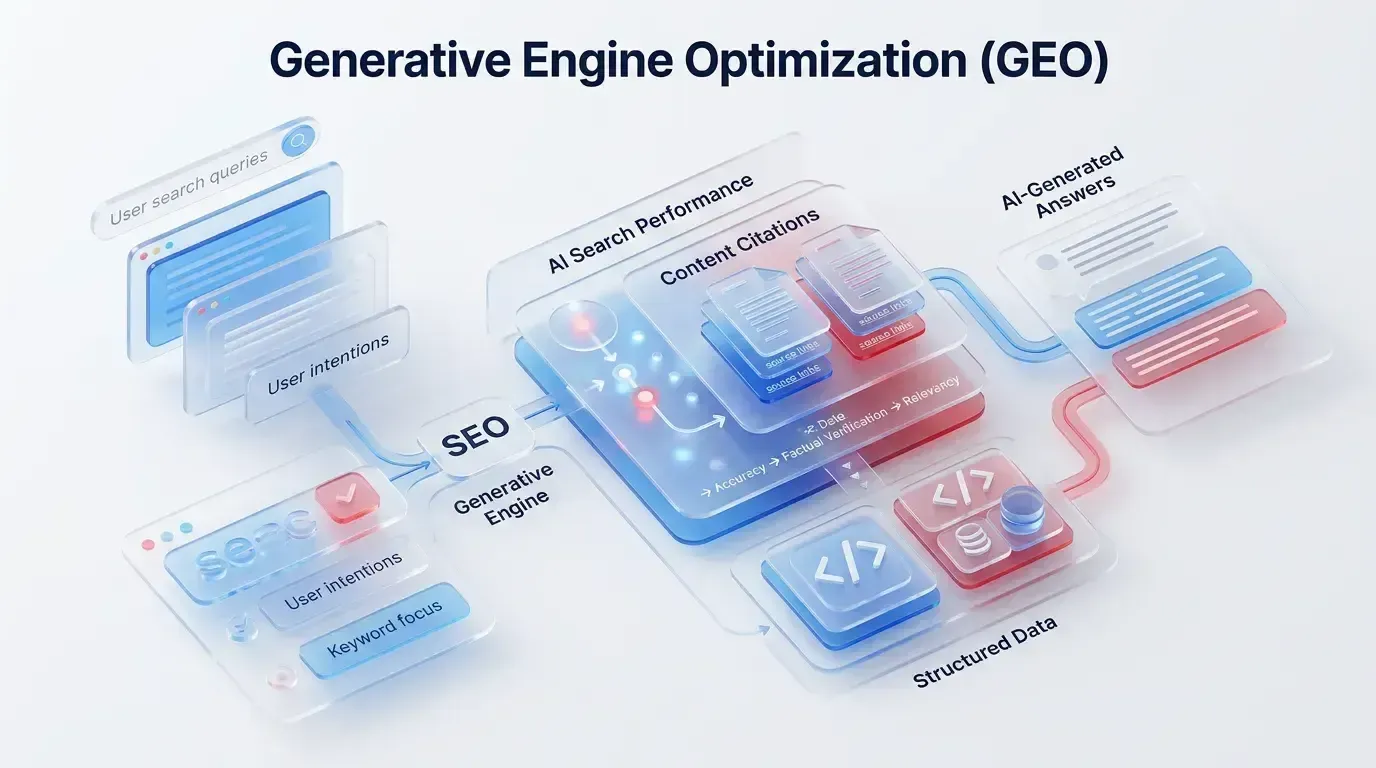
Generative Engine Optimization (GEO) is a strategic process of optimizing content, data structure, and overall website design so that search tools powered by Generative AI (such as ChatGPT, Google SGE, and Bing Chat) can understand, process, and decide to "pull" information from your website to reference in answers given to users.
Here's a clearer comparison:
- Traditional SEO – Competing for the "top spot" on search results pages (SERPs), with the primary goal of driving users to "click" through to your website.
- GEO – Goes a step beyond SEO. The goal isn't waiting for clicks, but becoming a "core component of the answer" that AI generates and serves directly to the user.
In other words, SEO is a competition to drive clicks, while GEO is a competition to drive citations from AI systems.
How AI Search and GEO Work
To effectively practice Generative Engine Optimization, we first need to understand how AI-powered search tools operate. This process can be divided into three main stages:
1. Query Understanding
AI receives a command or question from the user (prompt) and analyzes the true intent behind that query.
2. Retrieval
AI scans its trained database, along with pulling real-time data from the internet, to find the most relevant sources of information.
3. Synthesis & Generation
AI takes information gathered from multiple sources, analyzes and compares it, verifies accuracy, and composes it into a single answer that's easy to read and directly on point.
GEO comes into play at stages 2 and 3. The job of a Digital Marketing Agency is to get content past AI's selection process. The key trick is that AI favors text that's "ready-to-use" — such as concise, clear definitions, easy-to-read summaries placed at the start of paragraphs, statistics or figures with citable sources, and logically structured content. Simply put, the easier you make it for AI to digest your information, the higher your chances of being cited on your website.
Factors That Influence Rankings in GEO
Although AI algorithms are complex, experiments and research from AI SEO experts reveal several key factors that influence whether AI chooses to use your content:
- Content Clarity & Directness – AI dislikes long-winded introductions. Content that performs well in GEO should answer questions directly, without beating around the bush. A popular technique is the Inverted Pyramid format — placing the main answer/conclusion at the beginning of the paragraph, then elaborating with details afterward.
- Authority & Trust – Current AI models are configured to avoid providing false information (hallucination). As a result, they look for content with clearly identified sources (citations), referenced statistics, and named authors with demonstrated expertise (E-E-A-T) to ensure the answers they generate are trustworthy.
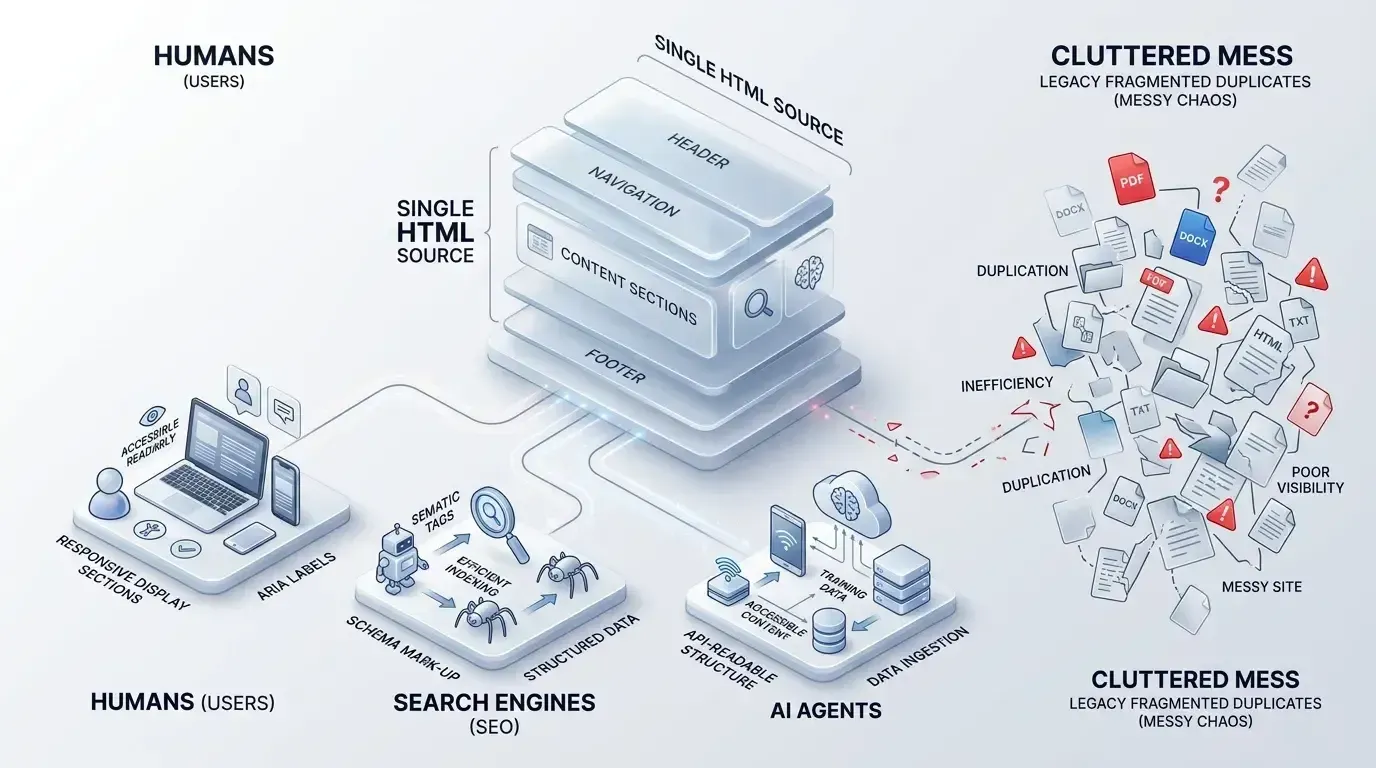
- Structured Data & Formatting – Long, unbroken paragraphs make it difficult for AI to extract information. Using subheadings (H2, H3), bullet-point lists, comparison tables, and backend Schema Markup helps signal to AI a clearer understanding of the page's context.
- Topical Authority – AI evaluates whether your website genuinely has expertise in a given subject. In-depth content that comprehensively covers a topic without being scattered will score higher in relevance than superficial articles.
- Brand Mentions & Co-Occurrence – The more your brand is mentioned on websites, forums, or research that AI trusts, the greater the chance AI will learn to recognize your brand as an "expert" in that industry.
SEO vs. GEO: Which One Matters More?
With a new term like GEO emerging, many people ask, "Should we stop doing SEO altogether?" The answer is absolutely not — because these two disciplines aren't meant to replace one another. Here's a comparison table for clarity:
| Aspect | SEO (Search Engine Optimization) | GEO (Generative Engine Optimization) |
|---|---|---|
| Main goal | Rank as high as possible on the search results page | Get your content cited and mentioned inside AI-generated answers |
| Where you show up | Blue links on Google and Bing results pages | Answers from ChatGPT, Perplexity, Google AI Overviews (SGE) and Gemini |
| Who you optimise for | Search engine crawlers and ranking algorithms | Large language models that read, summarise and generate the answer |
| How people find you | They click your link from the results page | The AI quotes or summarises you, usually with a citation back to your site |
| Core signals | Keywords, backlinks, technical health, page speed | Authority and citations, structured data, topical authority, brand mentions |
| Content style | Keyword-focused pages built around search intent | Clearly sourced, well-structured content that AI can extract cleanly |
| How you measure success | Rankings, organic traffic, click-through rate | Citations, brand mentions, share of voice inside AI answers |
In reality, SEO and GEO work together. Many AI Search tools (especially Google SGE and Perplexity) still rely on existing search engine indexes for initial information retrieval. This means that if your website has strong fundamental SEO — fast loading times, good structure, high rankings — the chances that AI will notice and pull your data for use in GEO increase accordingly.
Business Benefits of Implementing GEO
Brands that start creating AI-ready content today will gain enormous advantages that competitors won't be able to catch up with:
- Reach Early Adopters – Users who turn to AI for search tend to be younger generations or working professionals with purchasing power. Positioning yourself to be found by them in AI Search means expanding your customer base into new territory.
- Capture Brand Awareness Space – AI answer pages typically cite only 2-3 sources. If you can secure a spot there, you'll stand out far more than competitors who are still waiting for clicks from traditional Google results pages.
- Build on Existing Assets – Businesses don't need to discard old websites to do GEO. You can take articles that were previously optimized for SEO and restructure or rewrite them to align with AI behavior patterns right away.
- Build Lasting Credibility – When your website or brand is repeatedly cited by AI, you accumulate "trust credit" within LLM databases — something that takes time to build and cannot be bought through advertising shortcuts.
How to Get Started with GEO and Stay Ahead of Competitors
Moving into the world of automated answers isn't beyond your capabilities if you plan systematically.
- Analyze Questions Instead of Keywords – Shift from searching for short keywords to compiling the "questions" customers commonly ask about your products (long-tail Q&A), then turn those questions into content topics.
- Restructure Content – Write content that answers questions better than anything else in the market. Place concise answers at the top (TL;DR), then expand with details afterward.
- Integrate Techniques Systematically – Apply foundational knowledge from ChatGPT SEO together with your GEO strategy so your content communicates smoothly with language models.
Additionally, for businesses with physical storefronts or location-specific services, GEO must go hand-in-hand with Local SEO to ensure AI recommends your business when someone asks about services in that particular area.
For businesses just starting out, incorporating GEO into your marketing strategy plan from the beginning will help save on advertising budgets in the long run. If you want speed and want to avoid trial and error, consulting an online marketing company or a Digital Marketing Agency with expertise in AI Search will help you build a precise foundation and save you significant time.
In summary, Generative Engine Optimization (GEO) isn't a passing trend, nor is it a replacement for SEO. Rather, it's a critically important extension of it. Brands that understand the connection between these two disciplines and adapt their content to appeal to both users and artificial intelligence are the ones that will stand strong and grow in an era where the search results landscape is transforming entirely.
Elevate Your AI SEO Strategy with Relevant Audience
Relevant Audience is a full-service digital agency covering every dimension of online marketing with a team of experts and cutting-edge technology, ensuring your business always stays ahead of the competition.
Our Services
- Paid Performance: Precise advertising across leading platforms (Google, Meta, TikTok, LINE)
- SEO & GEO: Boost your search rankings to the top of page one, making it easier for customers to find you
- Creative & Branding: Distinctive brand design and content that communicates effectively
- Web Development: Building and developing high-performance websites tailored to your business needs
- Growth Services: Additional services and solutions for businesses ready to scale
Contact us today for a quote
- Phone: 02 038 5055
- E-mail: info@relevantaudience.com