The blue link is dying. When's the last time you actually clicked through ten results instead of just reading the AI summary at the top? That one behavior shift is basically the whole game now, and most brands still haven't caught up.
Search has moved from ranking pages to becoming the trusted source inside AI-generated answers. Google's AI Overviews, ChatGPT, and Perplexity pull information straight into their responses, and if your content isn't the one getting quoted, you're invisible, even if you technically rank on page one. This is why Generative Engine Optimization (GEO) has become something every brand needs to think about alongside traditional SEO this year. It's not a replacement for SEO. It's the layer sitting on top of it.
- What Generative Engine Optimization Actually Means in 2026
- 5 Techniques to Get Cited by AI Search Engines
What Generative Engine Optimization Actually Means in 2026
GEO is the practice of shaping content so AI models choose to cite it, quote it, or summarize it directly inside their answers. It sounds a lot like SEO on the surface, but the mechanics work differently. SEO gets you a spot on a results page. GEO gets you a spot inside the answer itself, and often that means someone reads your words without ever clicking through to your site.
From Ranking #1 to Being the Cited Source
For years, the goal was simple: rank first, get the click. That model is falling apart. Someone can ask ChatGPT a question and walk away with a complete answer, having never seen your site's name unless your content happened to be the one pulled into that response. Being cited is worth more than ranking high now, because a citation carries visibility, trust, and brand exposure all at once.
That changes what "winning" even looks like. A page sitting at position seven on Google but getting quoted regularly inside AI answers might genuinely be outperforming the page ranked first that never gets referenced anywhere. Traffic numbers alone don't tell the whole story anymore. I'd argue they haven't for a while.
How AI Overviews, Perplexity, and ChatGPT Choose Answers
AI models don't just favor sources with strong rankings. They favor sources they trust, meaning content that's clear, well organized, and easy to lift without twisting the original point. These systems are looking for entities, not just keywords. That's where entity-based SEO 2026 comes into play. Search engines and AI models build a working picture of who you are, what you're known for, and whether other credible sources back that up.
Topical authority matters more than keyword density ever did. If your site consistently covers a subject in depth, with facts that hold up across multiple pages, AI models start treating you as a dependable source on that topic. Scattered, thin content rarely makes it into an answer no matter how many keywords you cram in.
This is the exact shift shaping Duke Agency digital growth strategies right now. Instead of chasing rankings alone, the focus is building content AI systems trust enough to quote, since that citation is quickly turning into the new conversion metric. A brand mentioned inside an AI answer builds recognition even without a click, and that recognition adds up over time. If you want to see how this plays out in practice, our services walk through how we structure content and authority signals for exactly this outcome. You can also dig through our case studies to see real brands that have made this shift.
5 Techniques to Get Cited by AI Search Engines
Getting quoted inside an AI answer isn't luck. It comes down to specific, repeatable moves that make your content easy for a model to find, trust, and lift. Here are five that actually move the needle.
Structuring Content for AI Overviews
Optimizing for AI overviews starts with how you organize information on the page. AI models favor content that answers a question clearly within the first couple of sentences, without burying the point under a long intro or unnecessary context. A decent test: if someone only skimmed the first two sentences of a section, would they still walk away with the answer? If not, rework it.
Formatting matters just as much as the words themselves. Short paragraphs, numbered steps, and clear subheadings make it easier for AI crawlers to spot distinct, quotable chunks. Walls of text get skipped over because there's nothing clean to pull out. Treat every section like it needs to stand on its own, since these tools often grab isolated snippets rather than whole paragraphs.
- Lead with the direct answer, then explain further
- Break complex ideas into short, labeled sections
- Use bullet points or numbered lists for processes
- Keep paragraphs under four or five sentences
- Repeat key facts in slightly different phrasing across the page
Building Fact-Dense, Quotable Content
Content fact-density for AI means backing up claims with real numbers, studies, or clear attributions instead of vague statements. AI models are cautious about lifting opinions or unsupported claims, but they're a lot more comfortable quoting specific data points, especially when the source and context are obvious.
Instead of saying "many businesses have seen growth," say "businesses using structured content saw a 34% increase in AI citations over six months, according to internal tracking." The second version gives a model something it can actually use with confidence. Specificity gets you quoted. Filler language doesn't.
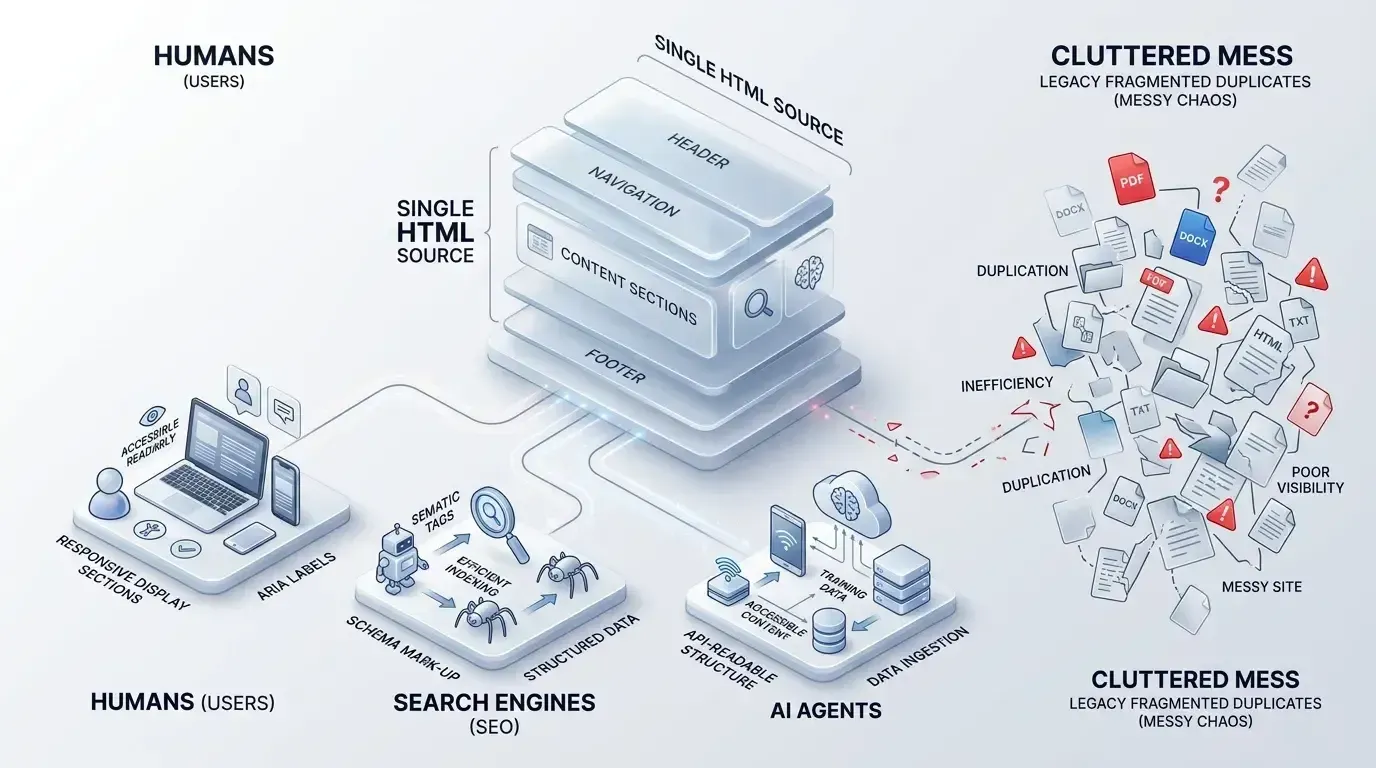
Structured data plays a bigger role here than most people realize. Adding schema markup, FAQ sections, and clearly labeled lists gives AI crawlers organized signals about what your content covers and how it's built. That doesn't guarantee a citation, but it removes friction that might otherwise send a model to a competitor's cleaner page instead.
None of this happens by accident. It takes a repeatable process for researching, structuring, and updating content so it stays fact-dense and easy to pull from. That's what our AI content workflows are built around, taking the guesswork out of formatting content for traditional search and generative engines at