TL;DR
- SparkToro, using Similarweb clickstream data, found 68.01 percent of U.S. Google searches ended without a single click in the first four months of 2026, up from 60.45 percent in 2024, a 7.56-point jump in two years.
- Split by device, desktop zero-click sits around 50 percent while mobile approaches 77 percent, and mobile accounts for roughly two-thirds of all searches.
- AI Overviews appear in more than 20 percent of Google searches, and when they do, click-through rates drop by nearly 60 percent.
- Google said at I/O 2026 that AI Mode had passed 1 billion monthly users with query volume more than doubling every quarter, although only 0.34 percent of searches moved into AI Mode during the January to April 2026 study window.
- Research cited in the post found brands appearing inside AI Overviews get 35 percent more organic clicks and 91 percent more paid clicks than brands absent from those surfaces.
Here’s something worth sitting with: a brand’s Google referral traffic drops 30% year over year, but revenue from search stays flat. The clicks disappeared, but the buyers didn’t. That’s not a fluke. That’s the zero-click reality SEO teams are navigating right now.
According to SparkToro’s research using Similarweb clickstream data, 68.01% of U.S. Google searches ended without a single click during the first four months of 2026. That’s up from 60.45% in 2024, a 7.56-point jump in two years. The share of searches resulting in at least one click fell 9.51 percentage points over that same period, a 22.9% decline. Meanwhile, searches that led to another Google search rose by 7.2 percentage points.
This isn’t a traffic blip. It’s a structural change in how search works. The headline sounds alarming, but the more useful question is what to actually do about it. And the answer isn’t traffic recovery. It’s visibility capture, brand citation, and a different set of metrics that track how your business shows up inside AI-generated results.
- What Zero-Click Searches Actually Measure?
- How AI Mode and AI Overviews Are Rewiring Search Behavior
- Adapting SEO Strategy: From Traffic Recovery to Visibility and Citation Capture
What Zero-Click Searches Actually Measure?
Before making any strategic decisions, it helps to understand what “zero-click” actually counts and what it doesn’t.
A zero-click search is any query where the user doesn’t click through to an external website or a Google property like Maps or YouTube. Follow-up searches within Google are counted separately. So that 68% figure reflects searches where the SERP itself was the final destination, whether the user got a quick answer, gave up, or decided to search again.
SparkToro’s analysis covers U.S. Google searches from January through April 2026, using desktop and mobile web panel data from Similarweb. It excludes searches through Google’s mobile app, where zero-click behavior is probably even higher. The study assumes roughly two-thirds of searches happened on mobile and one-third on desktop, which lines up with broader web traffic patterns.
The 68% aggregate makes a good headline, but it papers over a device-level split that matters a lot more for practical SEO planning.
 ### Desktop vs. Mobile: Why 77% Mobile Rate Matters
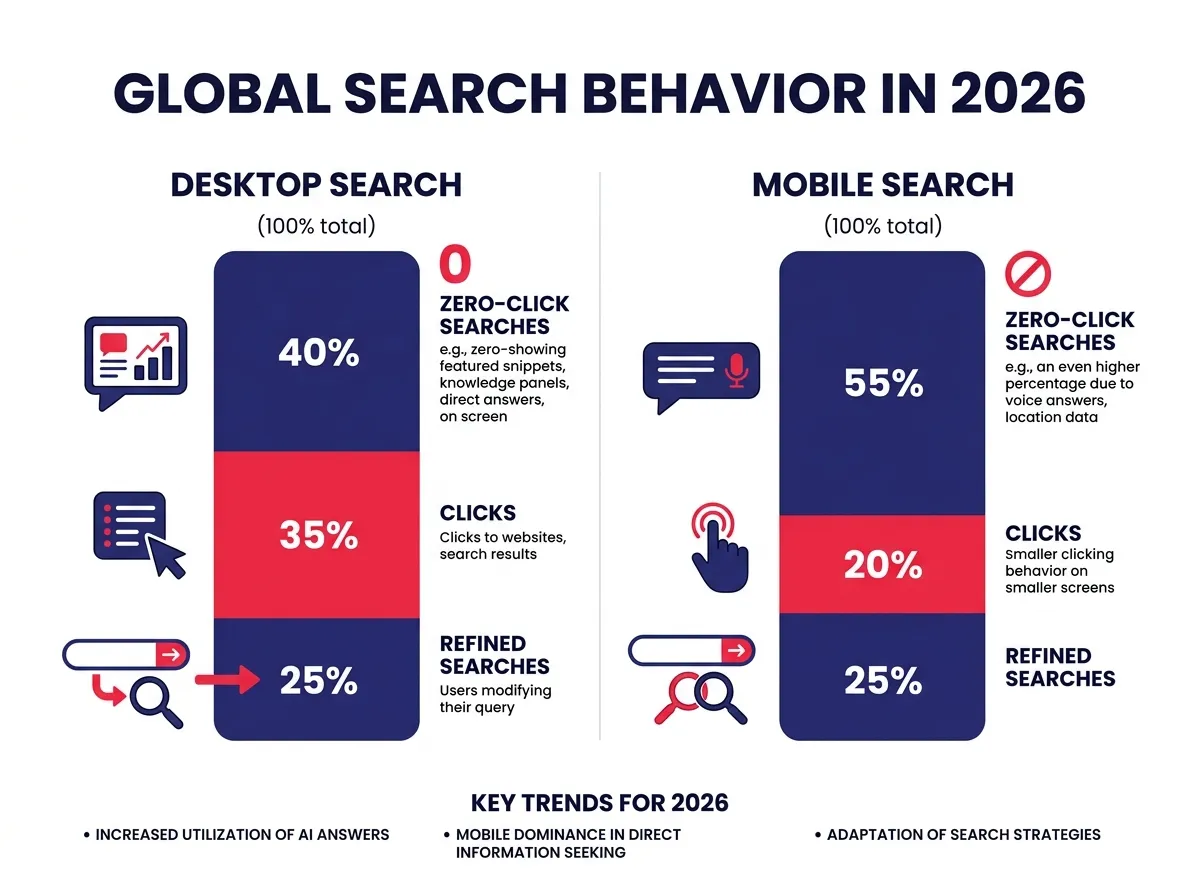
Break the zero-click number apart by device, and the picture shifts. Desktop zero-click sits around 50%, which is already substantial. Mobile zero-click approaches 77%.
Since mobile accounts for roughly two-thirds of all searches, the mobile figure is what most brands are actually experiencing in their analytics, whether they’ve noticed it or not. If your audience skews mobile, you’re not dealing with a 68% zero-click rate. You’re closer to 77%.
That has real consequences for how content gets built. Mobile users are more likely to search in quick-lookup mode: weather, sports scores, unit conversions, business hours, and basic factual questions. These are exactly the query types Google has been most aggressive about answering directly on the SERP. AI Overviews and featured snippets were essentially designed for this behavior. The format rewards brevity and punishes depth.
3 Types of Zero-Click Sessions: Satisfied, Refined, and Abandoned
Not all zero-click sessions are the same, and lumping them together leads to bad strategy.
1. Satisfied Session
Satisfied users got what they needed from the SERP itself. An AI Overview answered their health question. A knowledge panel showed a company’s phone number. A featured snippet explained how something works. These users weren’t lost leads. They were served, just not through your website.
2. Refined Session
Refined-query users didn’t find what they wanted and searched again within Google. The 7.2-point rise in follow-up searches between 2024 and 2026 reflects this group’s growth. These are recoverable. If your content isn’t specific enough to satisfy them, they’re probably landing on a competitor on their second attempt.
3. Abandoned Session
Abandoned users left entirely. They got frustrated, or they moved to ChatGPT, Reddit, YouTube, or social. These are the sessions most likely gone for good from a search perspective.
Each group calls for something different. Satisfied users mean you need to show up in the AI Overviews and SERP features that answered them. Refined users need more specific, follow-up-ready content from you. Abandoned users are a signal that search may not be the right channel for certain types of content at all.
How AI Mode and AI Overviews are Rewiring Search Behavior
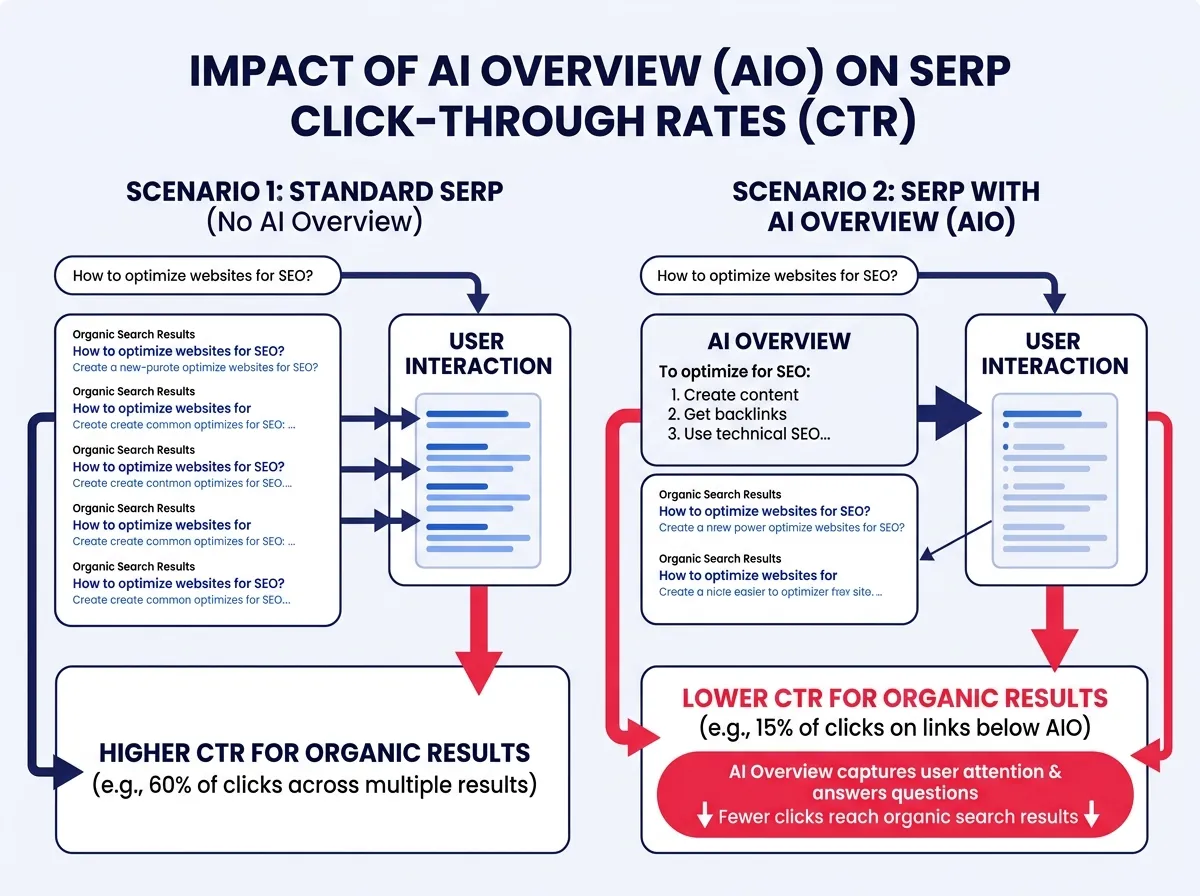
Google has been building toward this kind of search experience for years, but AI Overviews were the feature that made the zero-click shift show up in data. They appear in more than 20% of Google searches now, and when they do, click-through rates drop by nearly 60%.
That’s a significant compression. A results page with an AI Overview is essentially a page where most of the informational demand has already been met before the user thinks about clicking anything.
 ### The Done-in-One Behavior: How AI Overviews Cut CTRs by Nearly 60%
AI Overviews work by pulling information from multiple sources and presenting a synthesized answer at the top of the page. For users, convenient. For publishers, it means the click that would have previously gone to one of the top organic results often just doesn’t happen.
SparkToro’s research notes that AI Overviews are likely contributing to the rise in zero-click behavior, though the study doesn’t precisely isolate how much of the 7.56-point increase between 2024 and 2026 comes from AI Overviews specifically versus other SERP features.
The trajectory, though, is clear enough. Google announced at I/O 2026 that AI Mode had surpassed 1 billion monthly users and that query volume in AI Mode was more than doubling every quarter. During the study period (January through April 2026), only 0.34% of searches transitioned into AI Mode. That sounds small. But given the growth rate Google disclosed, AI Mode’s share of search behavior is going to look very different by the end of 2026.
Industry Fault Lines: High-Capture Categories vs. ClickResilient Transactional Searches
Zero-click exposure isn’t distributed evenly across industries. Some content categories are almost perfectly designed to get captured by an AI-generated answer. Others retain strong click-through behavior because the intent behind the search requires something AI can’t fully deliver yet.
High-capture categories, where Google zero-click risk is highest:
- Health and medical information queries
- Recipe and cooking content
- How-to and explainer content in B2B tech
- General knowledge questions and definitions
- News summaries and event recaps
Click-resilient categories, where organic traffic holds up better:
- Branded searches (users looking for a specific company or product)
- Local business queries (restaurant nearby, plumber in a specific city)
- High-intent transactional searches (buying signals with specific product names or comparison intent)
- Complex research tasks that require pulling from multiple sources
SparkToro co-founder Rand Fishkin specifically pointed to branded, local, and high-intent transactional searches as areas where SEO still generates meaningful returns. Teams producing general health content or educational material face a different threat level than an e-commerce site optimizing product category pages. That distinction matters when deciding where to put effort.
Adapting SEO strategy: from traffic recovery to visibility and citation capture
Chasing 2023-era traffic benchmarks in 2026 is a losing goal. The more useful question is: where does your brand appear when someone searches for a topic you should own, even if no click happens?
That reframe shifts strategy from keyword rankings to citation authority. And it changes which metrics matter.
The referral quality paradox: why the clicks that remain convert better
Here’s what raw traffic numbers miss: users who still click through in a high zero-click environment aren’t average searchers. They’ve already been pre-qualified. An AI Overview summarized multiple sources, and they still chose to click. That signals a level of intent that tends to correlate with higher engagement and conversion.
Research on AI Overview citations shows that brands appearing within these AI-generated answers see 35% more organic clicks and 91% more paid clicks than brands absent from those surfaces. That’s a substantial performance gap, and it points to a winner-take-most dynamic where citation authority has replaced keyword ranking as the primary competitive lever in many categories.
The clicks that survive zero-click competition are worth more individually. That’s why brands seeing a 30% drop in raw traffic are sometimes also seeing flat or improved revenue from search. The funnel has a tighter top, but a more efficient bottom.
Becoming the brand AI cites: original data, entity authority, and share of model metrics
Being cited by AI Overviews means giving AI systems something concrete to work with. Generalized narrative content and listicles that repackage common knowledge are easy for AI to replace with its own synthesis. Content built around original data, proprietary research, and specific factual claims is harder to replicate and more likely to get cited as a source.
A few things worth prioritizing:
-
Publish original research and data. Industry surveys, internal benchmark reports, and original analysis create citation-worthy content that AI systems tend to reference rather than replace.
-
Structure content around direct factual claims. Clear, declarative sentences stating a specific fact or finding are more likely to get pulled into an AI-generated answer than vague explanations.
-
Build topical authority, not just keyword coverage. Google’s entity recognition systems need a coherent picture of what your brand knows well. Publishing loosely related content across a wide range of topics works against this. Consistent, deep coverage of a defined subject area builds the entity signal AI systems use when deciding what to cite.
-
Track Share of Model and Brand Search Volume. Google Search Console doesn’t surface brand mentions within AI Overviews, which creates a real measurement gap. Share of Model (how often your brand appears in AI-generated answers across tracked queries) and Brand Search Volume (changes in direct searches for your brand name) have become more reliable signals of whether your AI search visibility is actually growing.
-
Invest in brand awareness off-platform. Fishkin’s recommendation in response to the zero-click data was direct: build brand recognition on the platforms where your audience already spends time. When users already know your name before they search, they’re more likely to click your result even when an AI Overview is present, and more likely to search for you directly.
The zero-click shift isn’t a reason to abandon SEO. It’s a reason to practice a different version of it, one where success isn’t measured purely in traffic volume but in how accurately and prominently your brand shows up across every surface where people look for answers.