TL;DR
- A citation means an AI pulled a fact from your page, while a mention means it named your brand as a trusted answer, and the post argues the second does not follow automatically from the first.
- Own-brand content accounts for roughly zero to three percent of the source weight behind recommendation queries, so recommendations are decided by co-occurrence in third-party editorial coverage rather than domain authority.
- The Dictionary Tell is the diagnostic: if an AI describes your brand in generic reference language on a category-level query, the model has processed your owned content but has not met the brand often enough in third-party category coverage.
- AI recommendation lists are probabilistic. Research into LLM response behaviour puts the chance of generating the same recommendation list twice as low as one in a hundred responses, so there is no fixed position one to capture.
- The metric proposed is visibility percentage: run a hundred category-level prompts, and if your brand appears in thirty of them your visibility rate is thirty percent.
Your website ranks on page one of Google. Your domain authority is solid. Your content is well-structured and polished. But when someone asks an AI to recommend the best tools in your category, your brand isn’t there. The problem isn’t SEO. The problem is how LLMs decide who gets named.
AI recommendations aren’t a ranking system. They’re a pattern-recognition system built on who gets mentioned alongside whom in third-party editorial content. The gap between being a “cited source” and a “named recommendation” is probably the most important distinction that marketers need to wrap their heads around right now. These are two completely different outcomes, and most brands are only hitting one of them.
 ## Table of Contents
- Citations vs. Mentions: The Core Gap Driving AI’s Recommendation Blind Spot
- How to Enter the Category Cluster: The Co-Mention Strategy LLMs Actually Respond To
Citations vs. Mentions: The Core Gap Driving AI’s Recommendation Blind Spot
Most marketers assume that if an AI pulls data from their website, it also recommends their brand. That assumption is wrong, and it’s costing brands real revenue.
The Mention-Source Divide: Two Very Different Signals
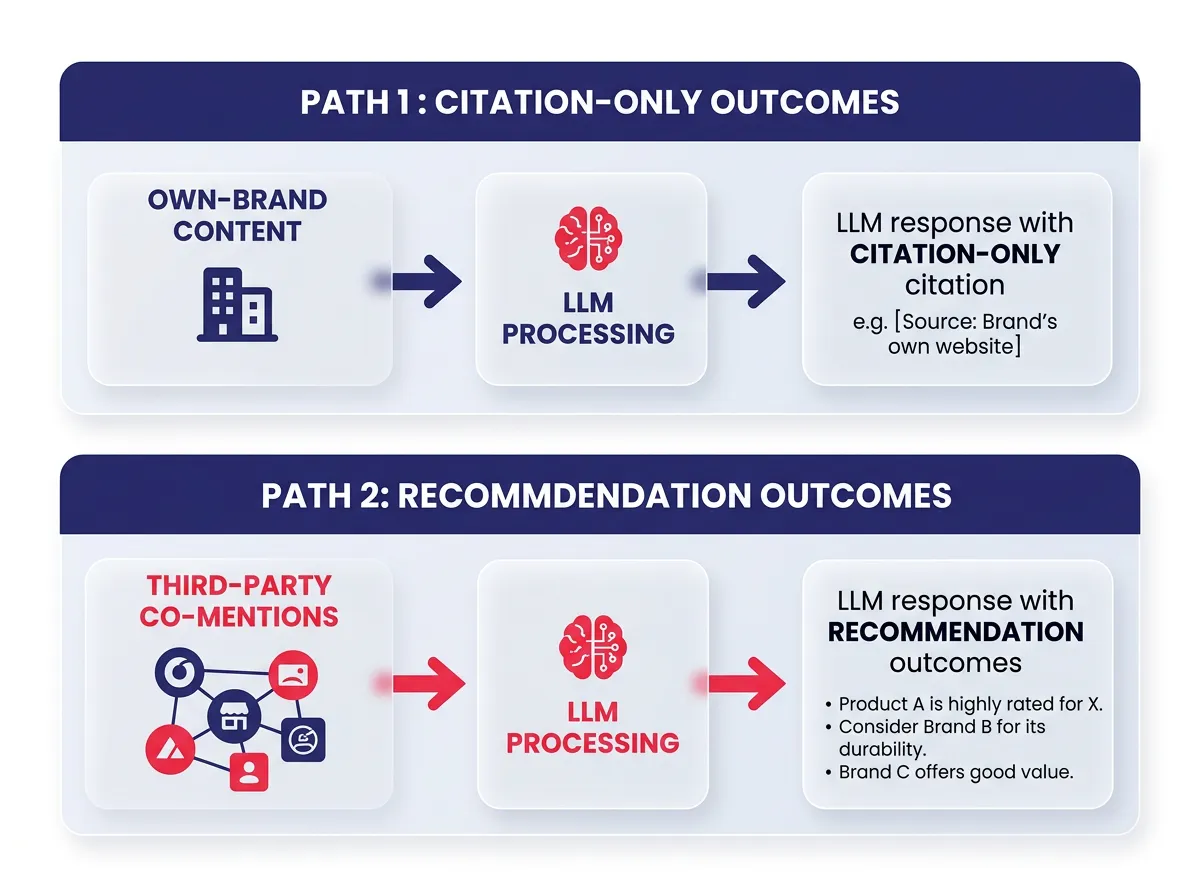
A citation means the AI pulled a fact from your page. A mention means the AI named your brand as a trusted answer to a problem. These outcomes are driven by completely different signals. Treating them as the same thing is an expensive mistake.
Here’s what that looks like in practice:
- Citation signal: The AI uses your content as a reference to back up a fact, statistic, or definition.
- Mention signal: The AI names your brand in response to something like “What are the best project management tools for agencies?”
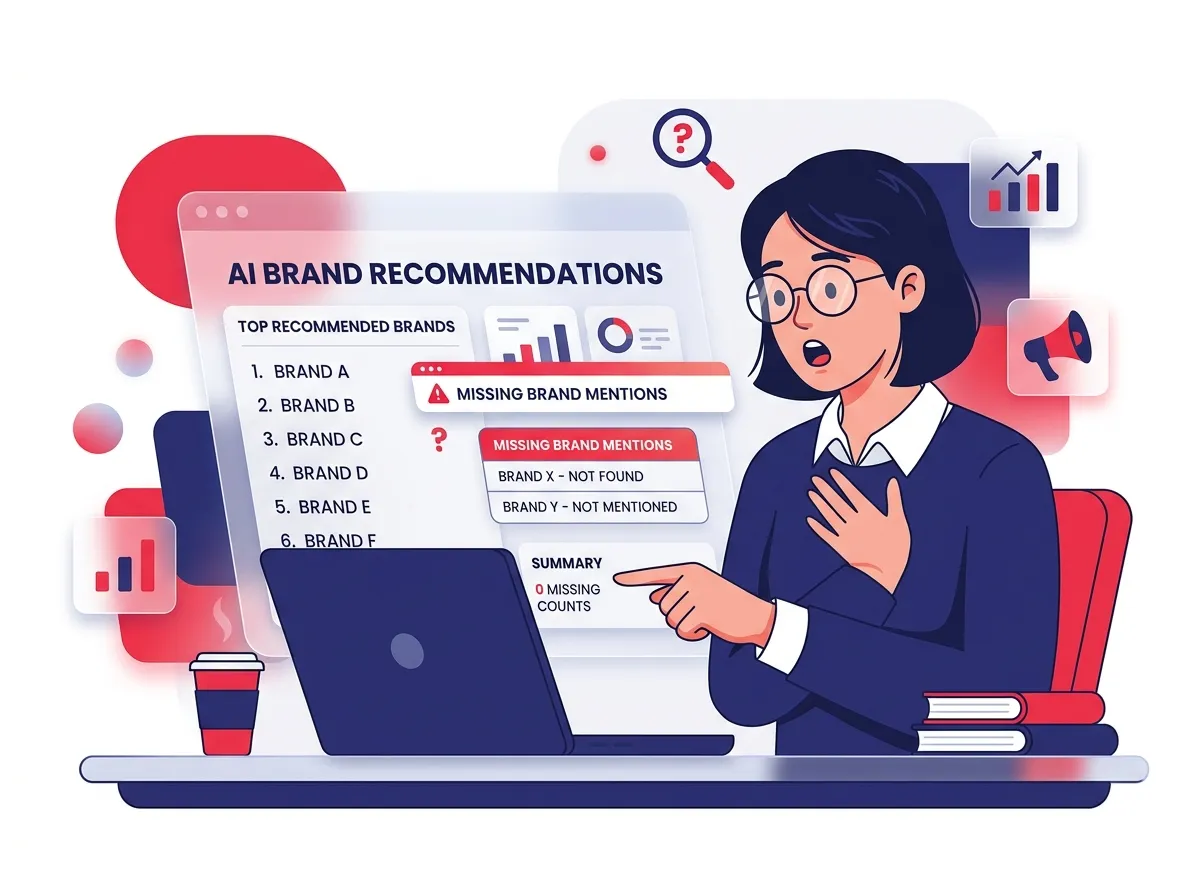
The second outcome doesn’t follow automatically from the first. You can have thousands of indexed pages, a flawless technical SEO setup, and still be missing from every AI-generated recommendation list in your category.
Why? Because recommendation queries are answered through co-occurrence patterns, not domain authority scores. LLMs learn which brands belong in a category by observing which brands get named together, repeatedly, across independent editorial sources. Your blog posts and service pages don’t contribute much to that signal. Own-brand content accounts for roughly zero to three percent of the source weight that drives recommendation queries. High domain authority doesn’t compensate for low co-occurrence density in earned media.
The Dictionary Tell: A Diagnostic You Cannot Ignore
There’s a simple test to see where your brand actually stands. Ask an AI assistant a category-level question your brand should be answering. Something like: “What tools are experts using for [your category] right now?”
Pay attention to how your brand gets described, if it gets named at all.
If the AI describes your brand using generic, reference-style language when you ask a category query, that’s a direct signal. It means the model has processed your owned content but hasn’t encountered your brand often enough in third-party, category-aligned editorial coverage to confidently recommend it.
This is what I’d call the Dictionary Tell. The AI sounds like it’s reading your About page. That’s basically what’s happening. The model doesn’t have the external validation signals it needs to treat your brand as a category authority.
The fix isn’t technical. You don’t need faster load times or better schema markup. You need your brand name showing up alongside your competitors in articles, roundups, and reports written by sources the model actually trusts.
 ## How to Enter the Category Cluster: The Co-Mention Strategy LLMs Actually Respond To
LLMs don’t think about your brand in isolation. They think about categories as clusters of associated entities. When someone asks for a recommendation, the model returns the brands it has learned belong together in that category. If your brand hasn’t appeared consistently alongside those cluster members in earned media, you’re outside the room entirely.
Category-Cluster Association: You Need to Be in the Room
The brands dominating AI recommendation lists share one thing. They appear together, across many independent editorial sources, in comparison articles, expert roundups, analyst reports, and buyer guides. Each co-mention reinforces the model’s understanding that these brands belong in the same category conversation.
To build that association for your own brand, the strategy has to focus on external placement rather than internal production. Specifically:
- Comparison content placement: Get your brand included in “X vs. Y” or “Top [Category] Tools” articles published on sites with genuine editorial credibility.
- Expert roundups: Pitch to journalists and editors who write category-level roundup pieces. Being named once on a trusted domain does more for you than publishing ten blog posts on your own site.
- Analyst and report mentions: Industry analyst reports and research roundups carry real weight in LLM training data. A single mention in one of these can outperform months of owned content for AI visibility.
The goal is co-occurrence density, meaning your brand name appearing in the same editorial breath as the brands that already define your category, across multiple independent sources. This is what co-mentions actually refers to in the context of AI visibility. Each placement builds a data point reinforcing category membership.
Measuring What Actually Matters: Visibility Percentage Over Vanity Rankings
One thing that trips up marketers moving into this space is trying to track AI recommendations the same way they track search rankings. It doesn’t work like that.
AI recommendation lists aren’t stable. Research into LLM response behavior shows that the chance of generating the same recommendation list twice can be as low as one in a hundred responses. The model is probabilistic. It generates a slightly different answer each time based on sampling. There’s no fixed “position one” to capture.
This changes how you measure success. The right metric is visibility percentage, which is how often your brand appears across a large sample of prompts relevant to your category. If you run a hundred category-level prompts and your brand appears in thirty of them, your visibility rate is thirty percent. That’s the number you track, improve, and report.
Budget allocation needs to reflect this shift too. If your current content strategy is weighted toward internal production, that investment isn’t building the signal that drives AI recommendations. Resources should move toward:
- External PR campaigns targeting editorial placements in category-relevant publications
- Building real relationships with journalists and analysts who write category-level coverage
- Securing ongoing inclusion in comparison and roundup content across multiple independent domains
The brands winning in AI recommendations aren’t winning because of better SEO. They’re winning because they’ve built a dense web of co-mentions across trusted third-party editorial sources. Every placement is a vote telling the model your brand belongs in the category conversation.
If your brand is invisible to AI recommendations right now, the audit starts with earned media coverage. Count how many times your brand appears alongside your top competitors in articles you didn’t write. If that number is low, you’ve found the gap. Closing it through strategic, category-aligned co-mentions is the most direct path to AI recommendation visibility you have available.