Search used to be simple. You typed a question, got a list of blue links, clicked one, and moved on. That model is dying. Google Ads now runs on Gemini, and it's changing what "showing up in search" actually means. Campaigns don't just match keywords anymore. They react, adjust, and behave more like a conversation partner than a matching algorithm.
If your ad strategy still leans on old keyword bidding rules, there's a good chance you're missing entire placements without even knowing it. Google Ads is moving toward intent-based, conversational discovery through AI Mode and AI Overview, and the new ad formats only show up if your campaigns are structured correctly. Here's what's changed and what you actually need to do about it.
- The New Google Ads Playbook: From Links to Conversations
- Getting Campaign-Ready: AI Max, Data Hygiene, and What to Fix Today
The New Google Ads Playbook: From Links to Conversations
Why One Search, One Link Is Dead
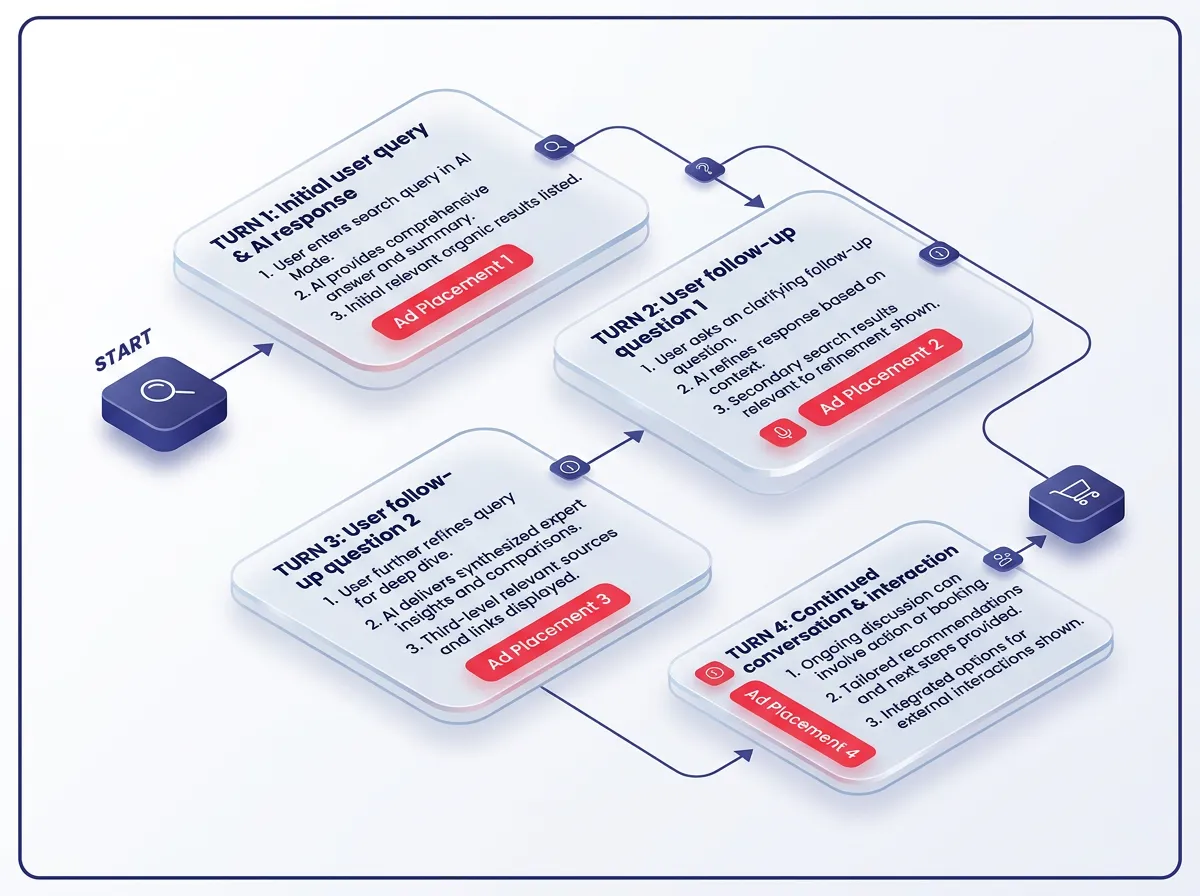
For two decades, search worked like a vending machine: put in a query, get a result, done. AI Mode breaks that entirely. Search is now a back-and-forth. Someone might ask about "best running shoes for flat feet," get an answer, then follow up with "under $100" or "for trail running." Each follow-up shifts the context, and your ads have to keep pace with it.
That's the part people underestimate. AI Mode isn't answering one question in isolation, it's tracking the whole thread of the conversation. An ad built to match only the first query and nothing after it tends to disappear fast. AI Overview works on similar logic, pulling from multiple sources to produce a summarized answer instead of a stack of links. If your ad wasn't built to fit inside that summary, you simply don't show up.
I'd argue this is less about ranking for a phrase and more about being the right answer to a target that keeps moving. Treat this like a minor platform update and you'll watch your impressions shrink quietly while whoever adapted faster eats up the space.
The Four New Formats You'll See in AI Mode
Four formats matter right now, and each does something different.
Conversational Discovery ads change their creative based on what's happening in the exchange. Instead of a fixed headline and description, the copy adjusts depending on the user's follow-up. Someone moves from general browsing to a specific budget question, and the ad copy moves with them.
Highlighted Answers are sponsored picks placed directly inside AI Overview's list of recommendations. This one's significant because your product or service can become part of the answer itself, not a separate ad sitting below it. Whether you land here depends heavily on how well your data matches what Gemini is trying to summarize.
AI-powered Shopping ads go further and explain why a product fits someone's situation. Gemini factors in budget, use case, or stated preferences, then generates a short explanation of fit next to the listing. It's not "here's a shoe." It's "here's a shoe that matches what you said you needed."
Business Agent chat units are showing up in high-intent placements now, letting people talk to a chat-style unit tied to your business right inside the search results. Instead of clicking through to a website, someone asks a question and gets an answer pulled straight from your business data.
None of these behave like a standard display or search ad. They need different inputs, different data, and frankly a different way of thinking about what an "ad" even is at this point.
Getting Campaign-Ready: AI Max, Data Hygiene, and What to Fix Today
Knowing these formats exist is the easy part. Getting your campaigns to actually qualify for them is where most advertisers are going to stall out if they don't act soon.
AI Max for Search as Your Orchestration Layer
AI Max for Search is turning into the control center for what Gemini shows and where it shows it. Here's what a lot of people get wrong: Broad Match and keywordless targeting used to feel like a shortcut, something you flipped on when you didn't want to build out granular keyword lists. That's not optional anymore. It's a required input for AI Max to function at all.
If your account still runs entirely on exact and phrase match with tight keyword lists, you're actually starving Gemini of signal. That doesn't mean scrapping match type strategy altogether, but it does mean auditing what's actually in your account before assuming you've lost reach. A lot of advertisers panic when impressions drop, convinced they've been cut out, when the real issue is their account structure never gave AI Max enough to work with in the first place.
Go through your active campaigns and check how much of your targeting depends on tightly controlled match types versus broader signals. AI Max works best when it has room to interpret intent instead of just matching strings.
Data, Tracking, and Brand Controls You Can't Skip
This part is less flashy but arguably matters more. None of the new formats matter if your underlying data is a mess.
Highlighted Answers and Shopping ads both rely on Gemini pulling accurate information from your product feeds and first-party data. If your feed has outdated pricing, missing attributes, or vague descriptions, Gemini has nothing solid to build from. It won't guess in your favor either. It'll skip your listing or surface a competitor whose data is cleaner. This used to only ding your Shopping performance a little. Now it's the difference between showing up in a conversational answer or not showing up at all.
Tracking deserves a second look too. Plenty of accounts still run tracking templates built for static landing pages. But with dynamic, conversation-driven placements, where a user lands can change based on what they asked. If your tracking template can't handle that variability, you lose visibility into what's actually driving results.
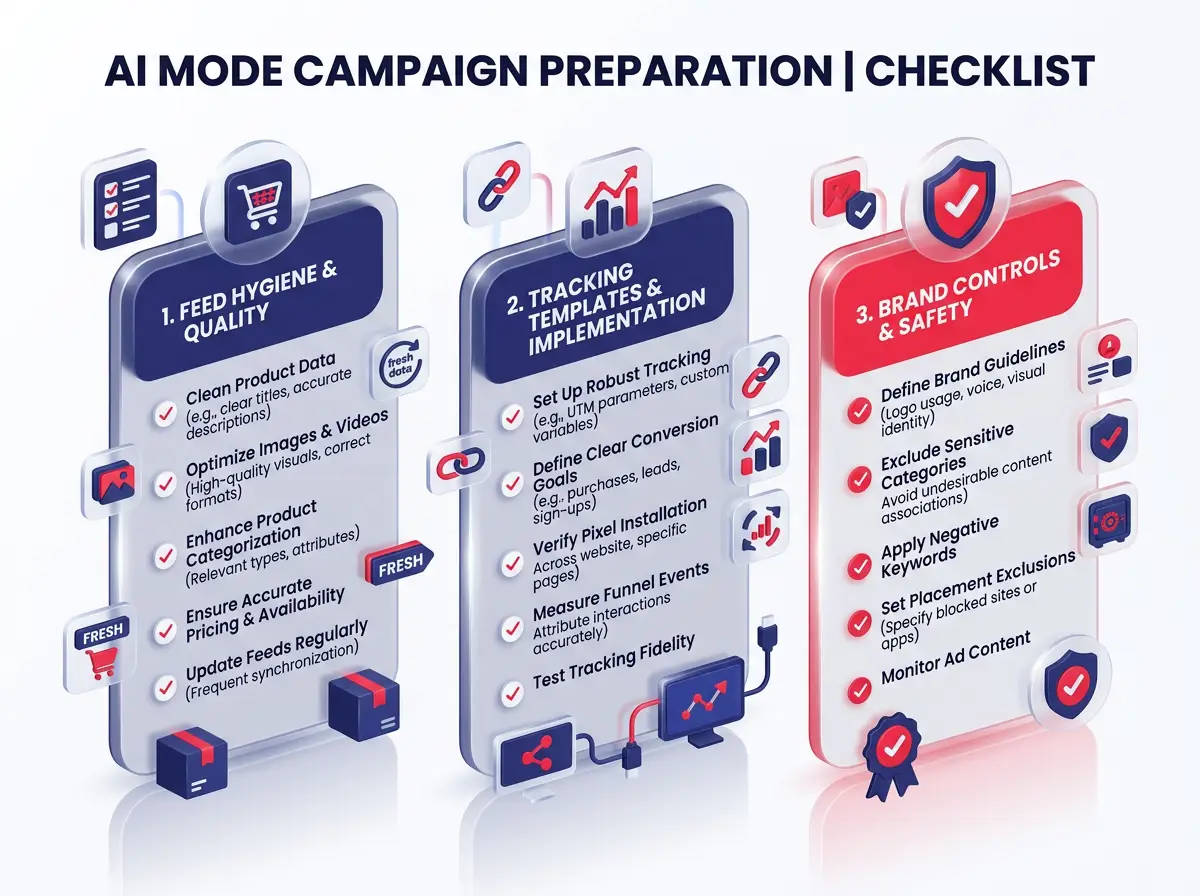
Brand inclusions and exclusions matter more here as well. Gemini is generating explanations and responses on your behalf now, so you want clear guardrails so it doesn't attach your brand to the wrong context or tone. Set these deliberately instead of leaving the defaults in place.
Here's what to check this week:
- Audit match types across campaigns to confirm AI Max has enough signal
- Clean up product feed attributes, pricing, and descriptions
- Update tracking templates for dynamic landing page destinations
- Set brand inclusion and exclusion lists
- Compare Google's own AI-mode reporting against your third-party attribution data
That last one is worth sitting with. Google's reporting inside AI Mode is naturally going to make its own placements look good. Pull your third-party attribution numbers and put them side by side. You'll often find gaps between what Google